Biology (Objective & Essay) — 10:00am – 12:30pm
Information reaching us suggests that different states may have different sets of Biology questions.
Please hold your phone and wait for our next update before moving forward.
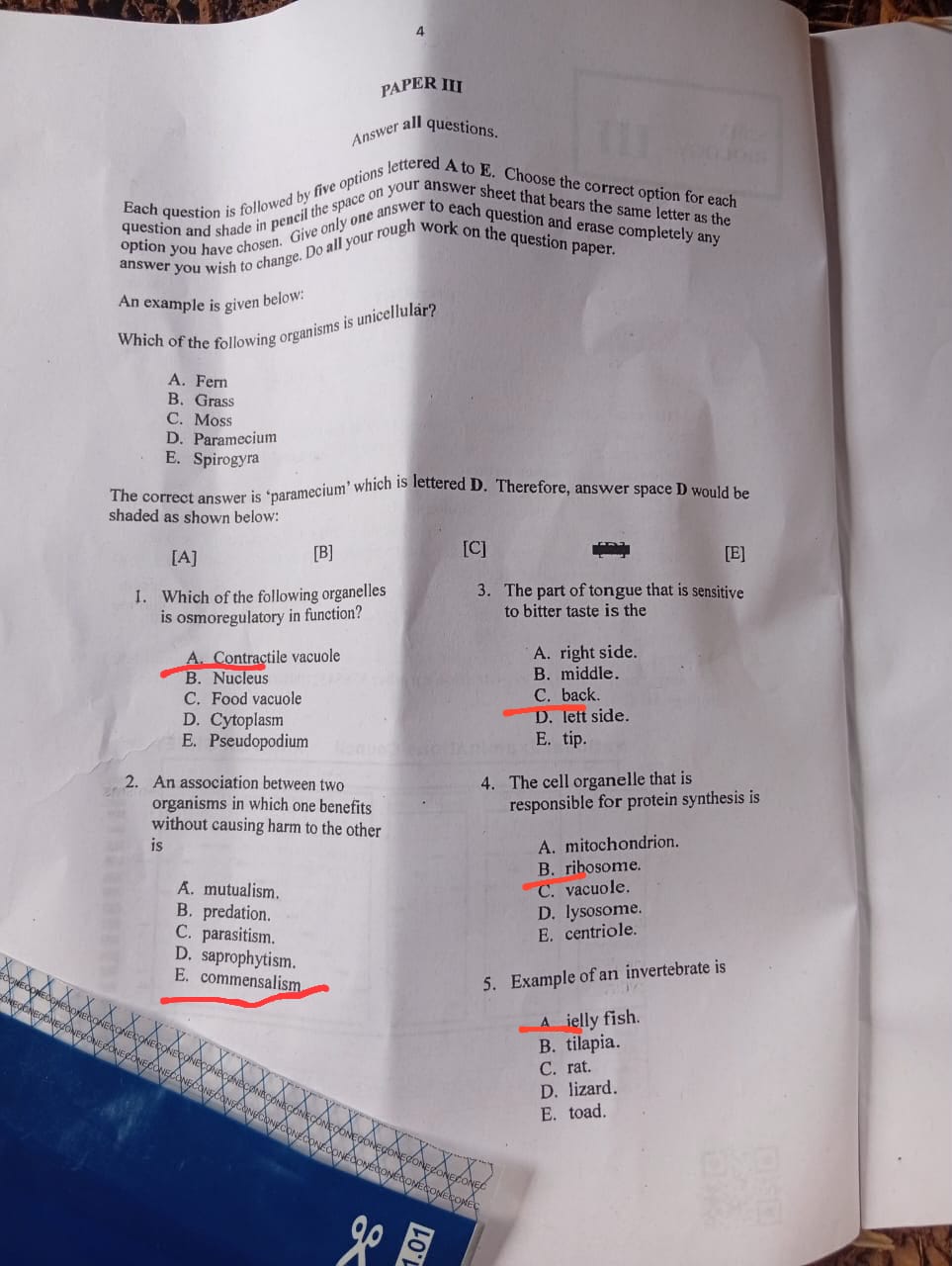
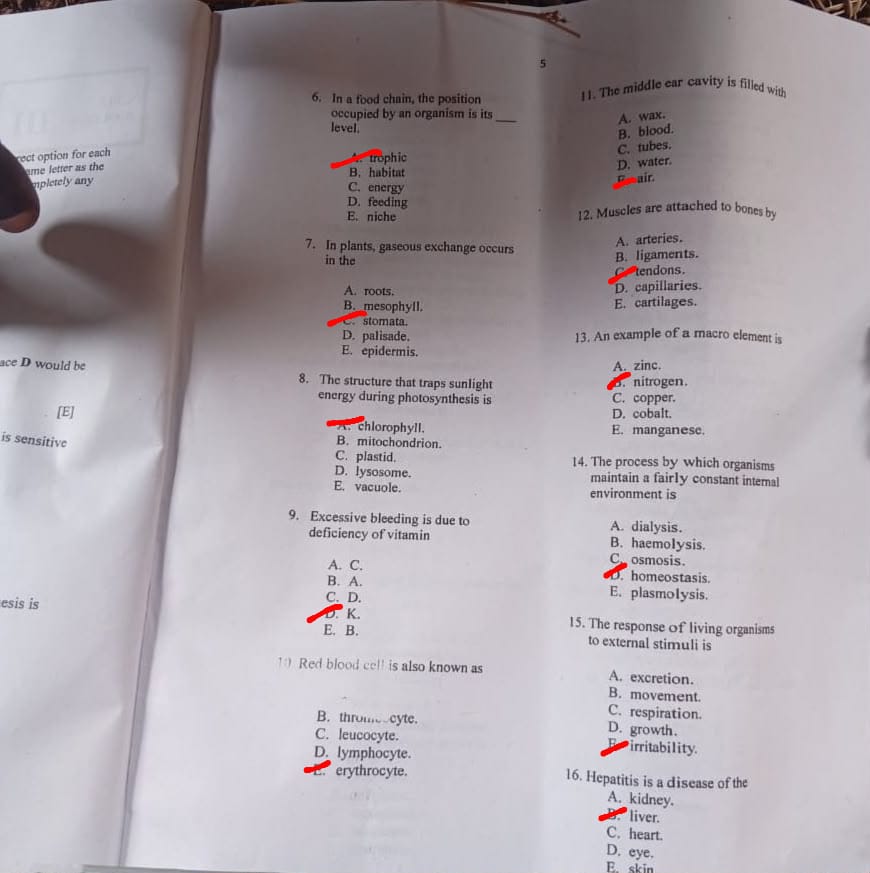
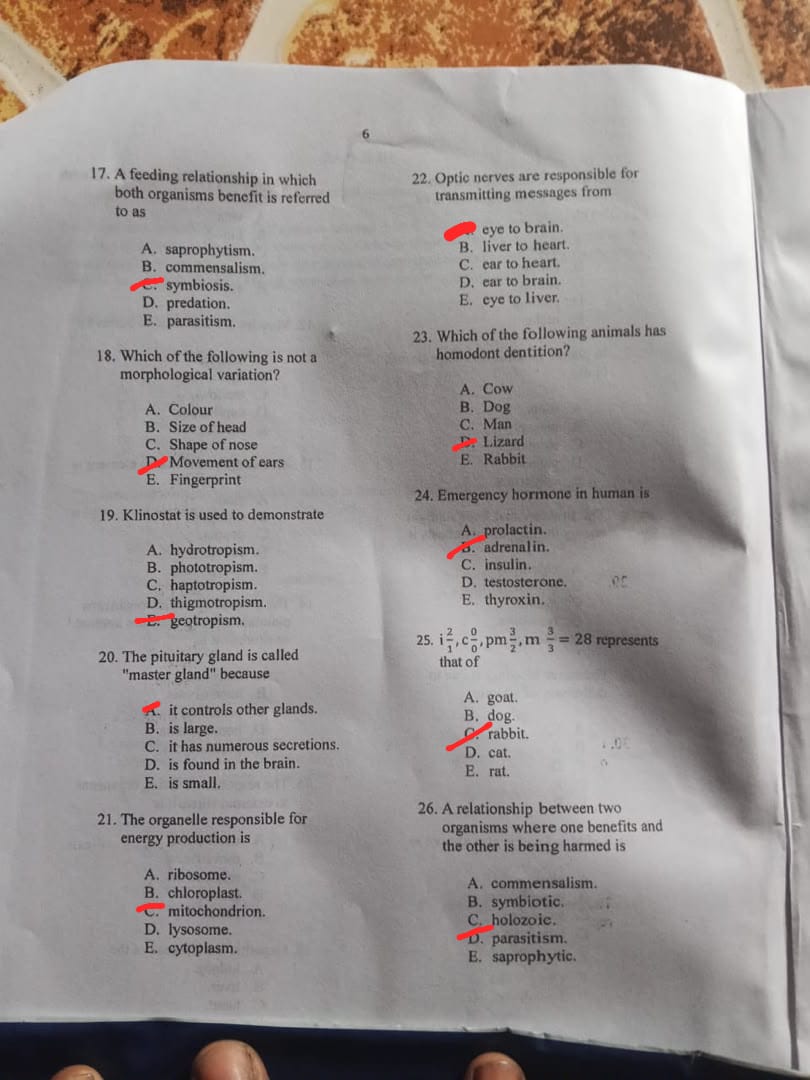
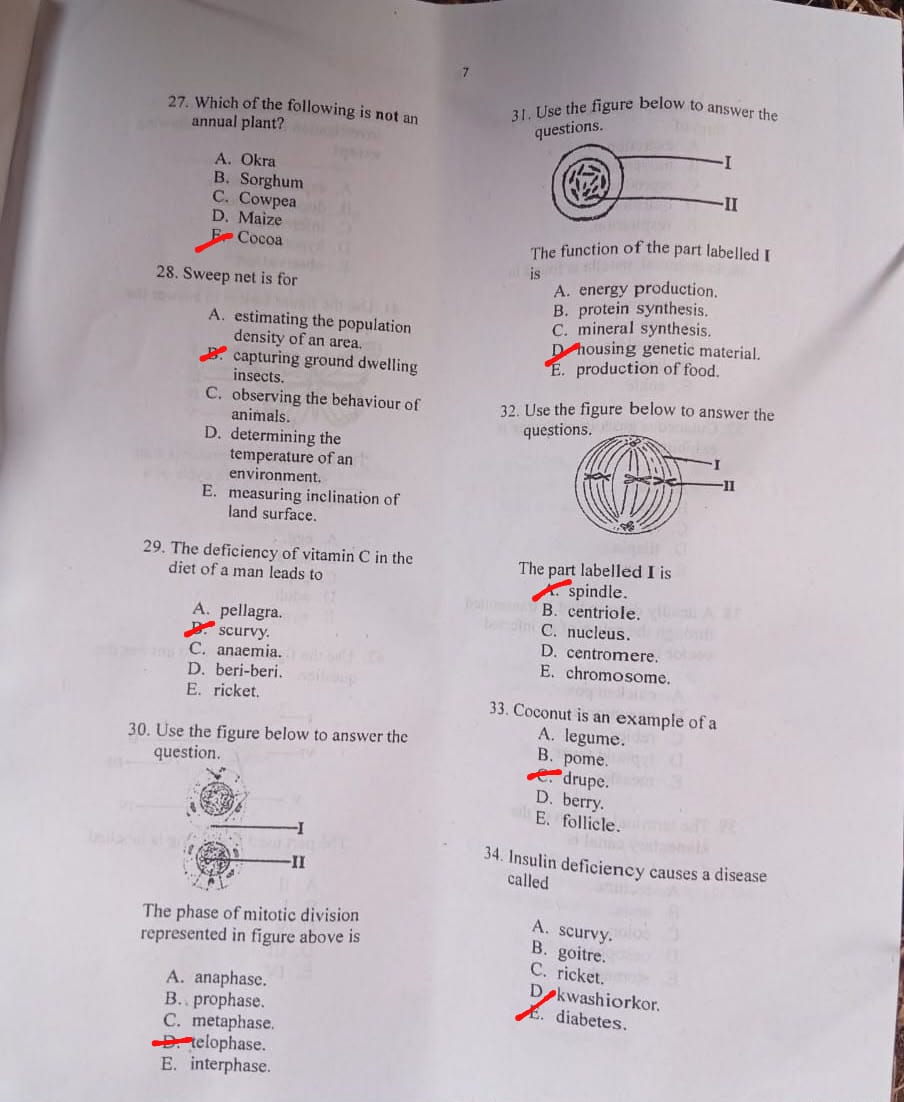
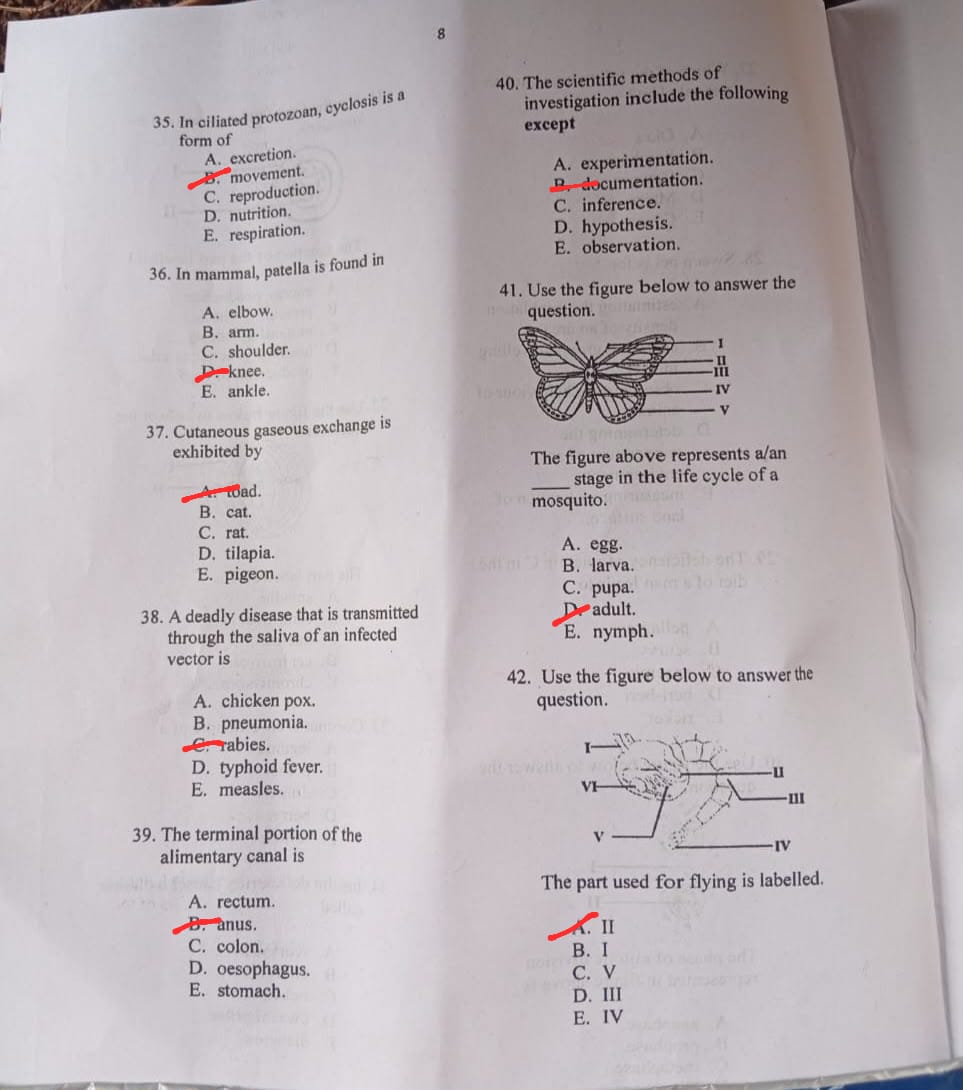
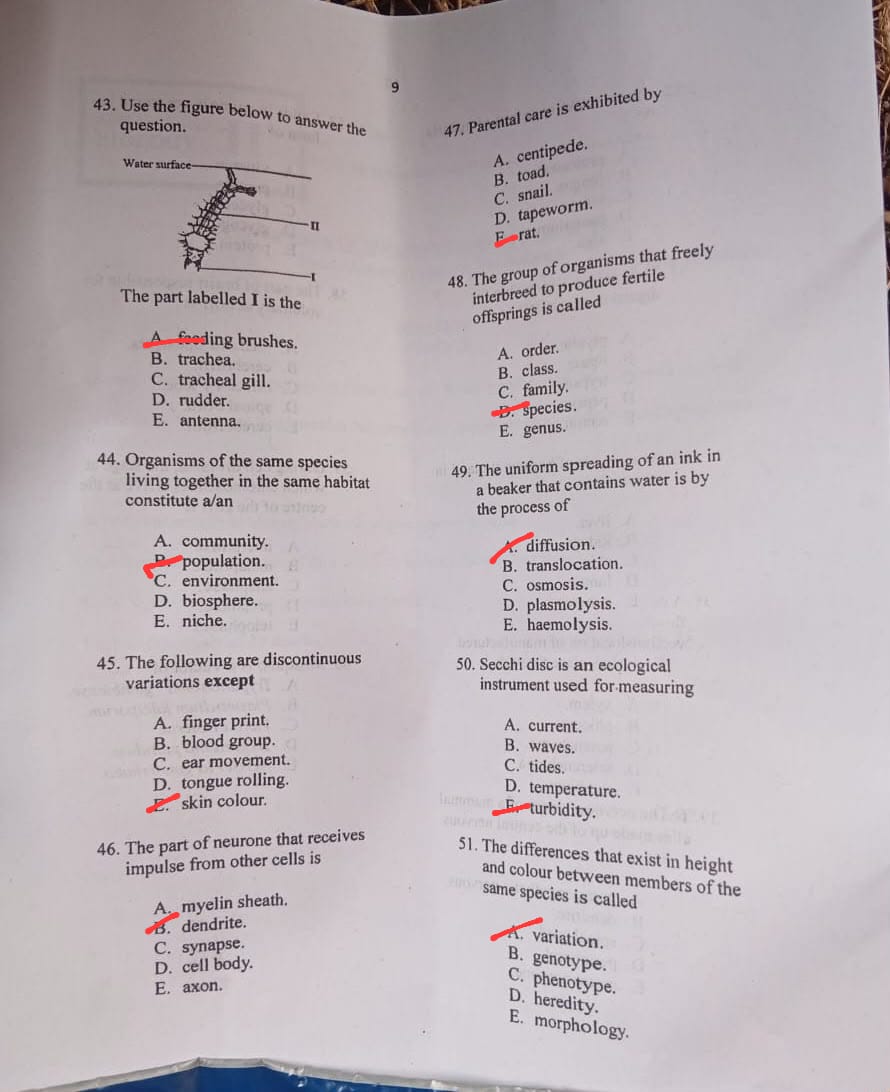
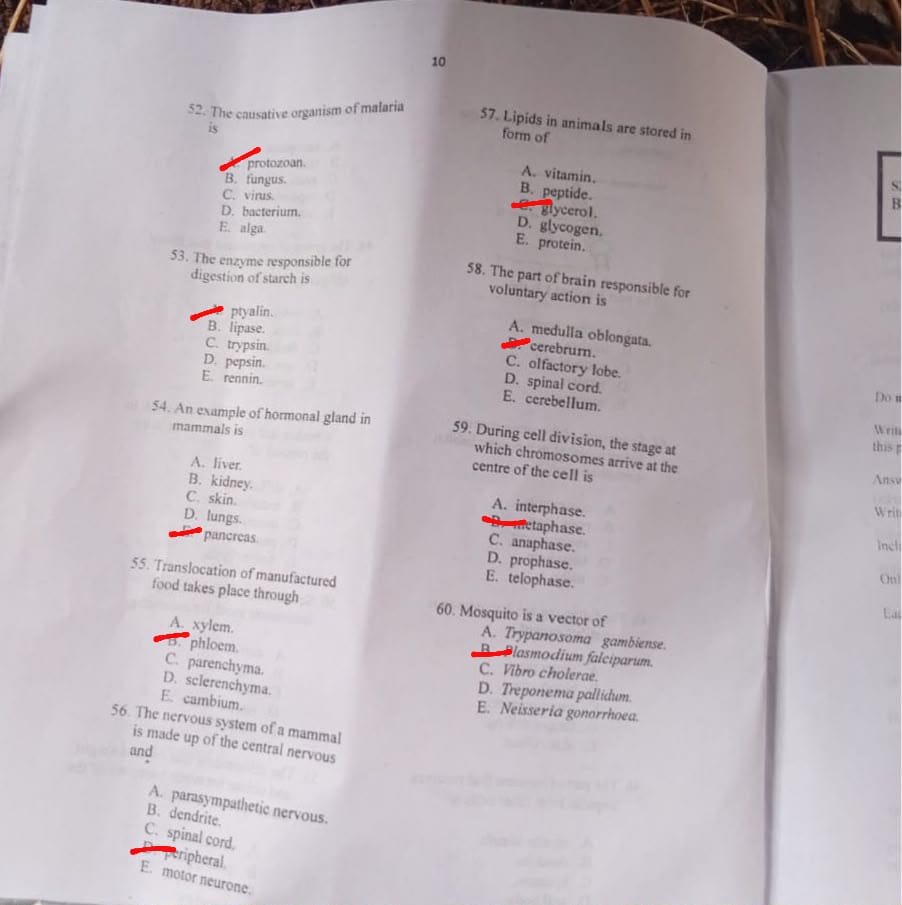
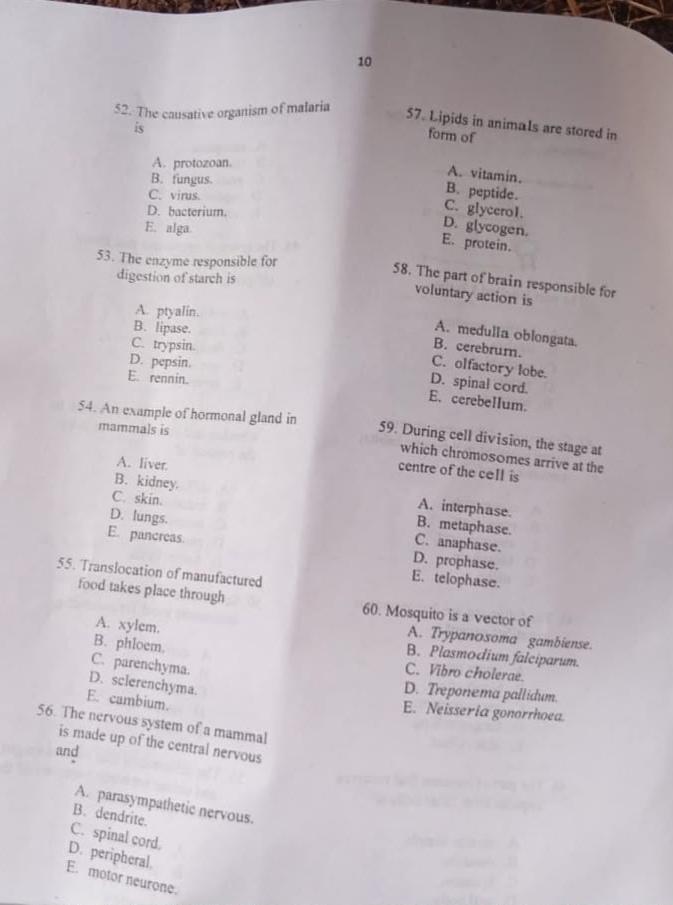
SOKOTO IS THE SAME WITH ENUGU.
----------------------------------------------------------
ANAMBRA & KANO have same question
That’s the question we solved this early morning, the first answers with version I and II
KADUNA, RIVERS & OTHERS
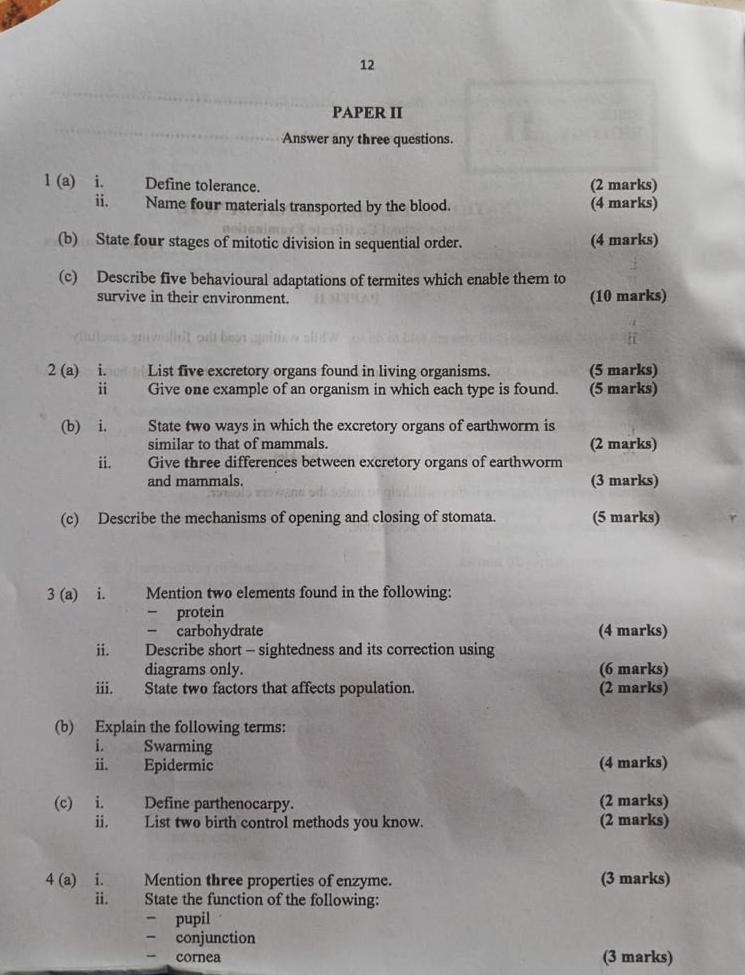
(1ai)
Nutrition is the process by which living organisms obtain, digest, absorb and utilize food nutrients for growth, energy production, repair of worn-out tissues and maintenance of body functions.
(1aii)
(PICK ANY FOUR)
(i) Building and repairing body tissues.
(ii) Promoting growth and development.
(iii) Forming enzymes.
(iv) Producing hormones.
(v) Forming antibodies for body defence.
(vi) Transporting oxygen and other substances.
(vii) Supplying energy when necessary.
(viii) Maintaining fluid and acid-base balance.
(1aiii)
(i) They are white blood cells.
(ii) They can change their shape.
(iii) They move by amoeboid movement.
(iv) They engulf and digest pathogens by phagocytosis.
(v) They contain many lysosomes.
(vi) They can move out of blood vessels into body tissues.
(vii) They destroy germs and other foreign particles.
(viii) They remove dead cells and tissue debris.
(1bi)
=stoma=
(PICK ANY ONE)
(i) Allows carbon dioxide to enter the leaf.
(ii) Allows oxygen to leave the leaf.
(iii) Permits transpiration.
(iv) Regulates water loss.
(v) Facilitates gaseous exchange.
(vi) Maintains the plant’s water balance.
(1bii)
=synovial fluid=
(PICK ANY ONE)
(i) Lubricates the joints.
(ii) Reduces friction between bones.
(iii) Absorbs shock during movement.
(iv) Nourishes the articular cartilage.
(v) Removes waste products from cartilage.
(vi) Allows smooth movement of joints.
(1biii)
=Tendon=
(PICK ANY ONE)
(i) Attaches muscles to bones.
(ii) Transmits muscular force to bones.
(iii) Enables body movement.
(iv) Stabilizes joints.
(v) Maintains posture.
(vi) Prevents excessive stretching of muscles.
(1biv)
=Root hair=
(PICK ANY ONE)
(i) Absorbs water from the soil.
(ii) Absorbs mineral salts.
(iii) Increases the surface area for absorption.
(iv) Anchors the plant firmly in the soil.
(v) Transfers absorbed water into the root.
(vi) Improves nutrient uptake.
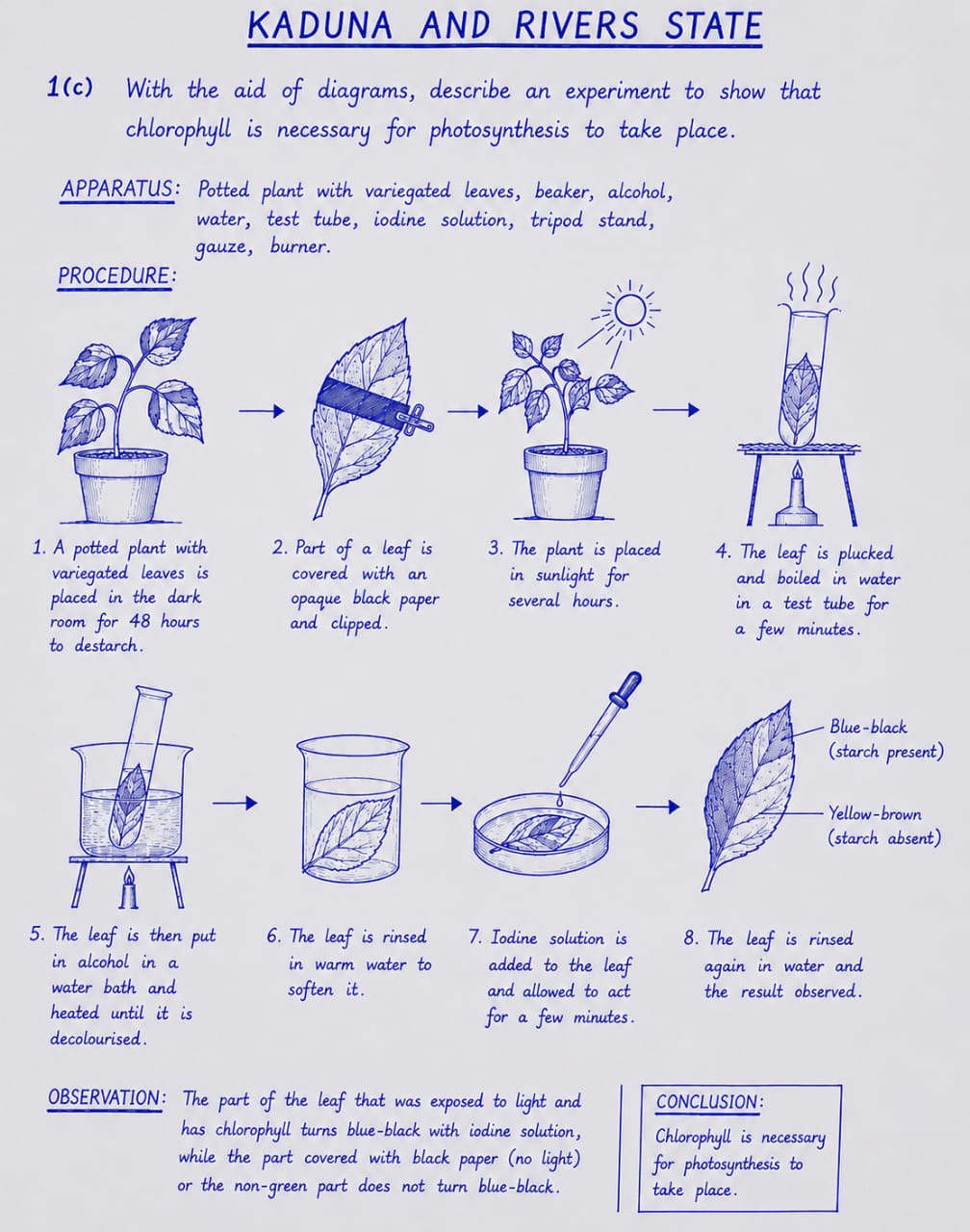
(1c)
(2a)
The process of seed and fruit formation in plants. After pollination, a compatible pollen grain lands on the stigma and germinates to produce a pollen tube. The pollen tube grows down through the style into the ovary and enters the ovule through the micropyle. The male gametes are carried through the pollen tube into the embryo sac. One male gamete fuses with the egg cell to form a zygote, while the other fuses with the two polar nuclei to form the endosperm. This process is known as double fertilization.
The zygote develops into the embryo, while the endosperm serves as stored food for the developing embryo. The integuments of the ovule become the seed coat (testa), and the entire ovule develops into a seed. At the same time, the ovary enlarges and develops into the fruit, while the ovary wall becomes the pericarp. Other floral parts such as the petals, sepals, stamens and style usually wither and fall off, leaving the mature fruit containing one or more seeds.
(2bi)
(PICK ANY FOUR)
(i) Produces bile which helps in the emulsification of fats.
(ii) Stores excess glucose as glycogen and converts glycogen back to glucose when required.
(iii) Detoxifies harmful substances such as drugs, alcohol and poisons.
(iv) Deaminates excess amino acids and converts ammonia into urea.
(v) Stores vitamins such as A, D, E, K and B₁₂.
(vi) Stores iron and other mineral salts.
(vii) Breaks down worn-out red blood cells and recycles their components.
(viii) Synthesizes plasma proteins such as fibrinogen and prothrombin needed for blood clotting.
(2bii)
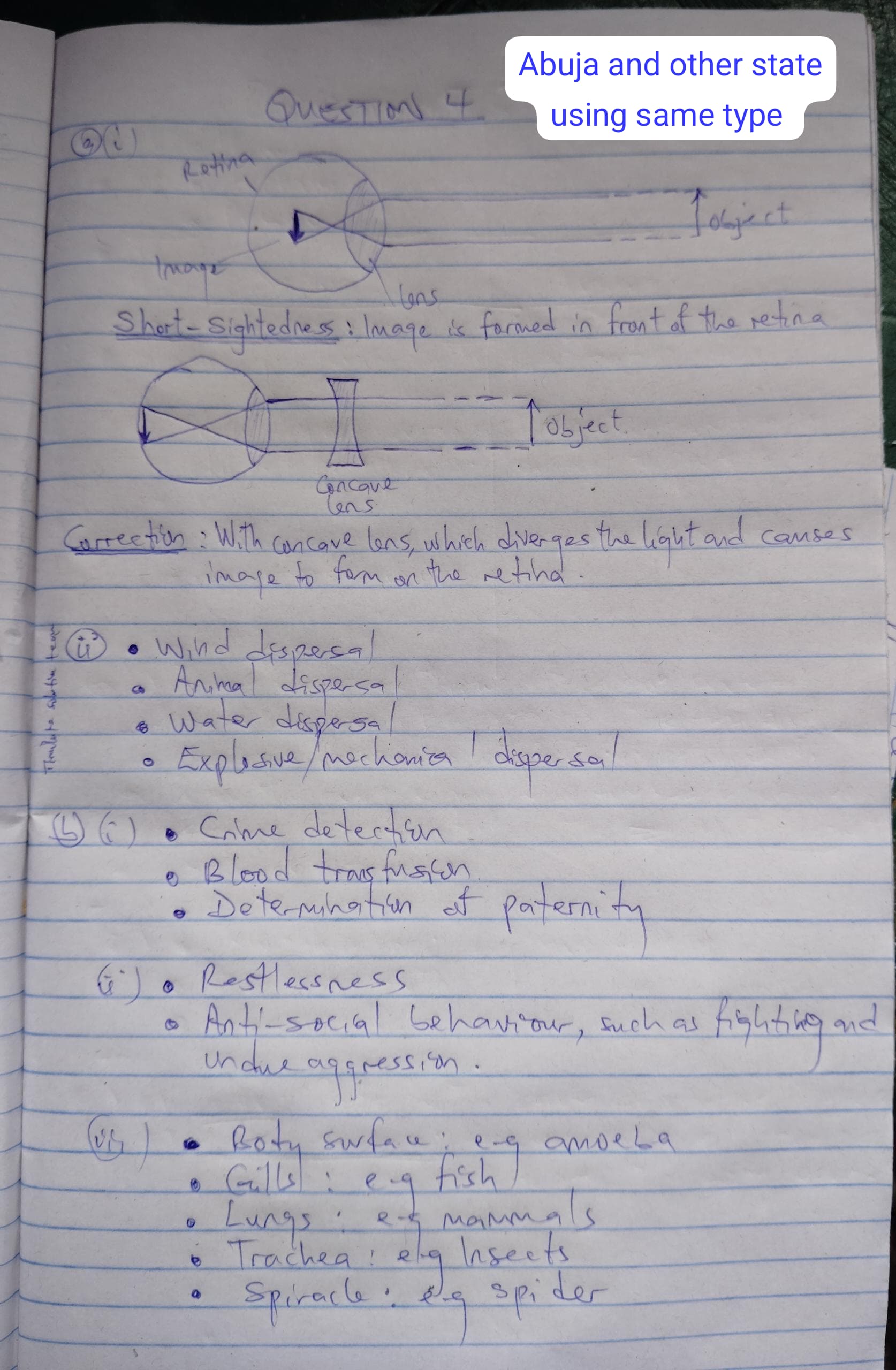
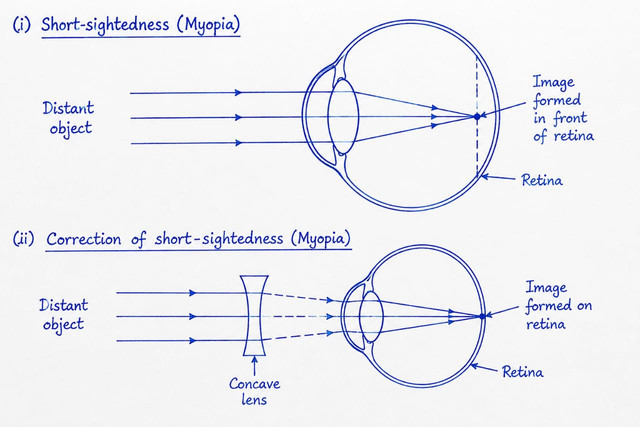
(i) Myopia (short-sightedness)
(ii) Hypermetropia (long-sightedness)
CROSS RIVER
(2a) Explain the following processes:
(i) Aestivation
(PICK ANY ONE)
Aestivation is a state of dormancy or inactivity entered into by some animals during the hot, dry season to survive unfavourable environmental conditions. During this period, the metabolic rate, respiration and other body activities are greatly reduced to conserve water and energy until favourable conditions return.
OR
Aestivation is the temporary resting or dormant state of some animals during periods of excessive heat and drought. The animal becomes inactive, reduces its metabolic activities and conserves moisture and energy until the rainy season or favourable conditions return.
(ii) Deamination
(PICK ANY ONE)
Deamination is the process by which the amino group (–NH₂) is removed from excess amino acids, mainly in the liver. The amino group is converted to ammonia, which is then changed to urea for excretion by the kidneys, while the remaining keto acid is used for energy or stored.
OR
Deamination is the removal of the amino group from amino acids during protein metabolism. It occurs mainly in the liver. The removed amino group forms ammonia, which is converted into urea and excreted, while the remaining carbon skeleton (keto acid) is used in respiration or converted into glucose or fat.
2(b)
(i) Describe the mechanism of feeding in Amoeba.
(PICK ANY ONE)
Amoeba feeds by holozoic nutrition through phagocytosis. When it comes in contact with a food particle, it extends pseudopodia around the food and engulfs it. The tips of the pseudopodia fuse to form a food vacuole. Digestive enzymes are secreted into the vacuole where the food is digested into soluble substances. The digested nutrients are absorbed into the cytoplasm and assimilated for growth, respiration and repair. Finally, the undigested food remains are egested through the cell membrane.
OR
Amoeba exhibits holozoic nutrition by phagocytosis. It moves towards the food and extends pseudopodia to surround and engulf it. The food is enclosed in a food vacuole formed by the fusion of the pseudopodia. Digestive enzymes are released into the vacuole to digest the food into simple soluble substances. The digested food is absorbed and assimilated into the cytoplasm for energy, growth and repair. The undigested food residue is finally removed through the cell membrane by egestion.
(2bii) Mention three components of blood.
(PICK ANY THREE)
(i) Plasma
(ii) Red blood cells (erythrocytes)
(iii) White blood cells (leucocytes)
(iv) Platelets (thrombocytes)
2(c)(ii) Enumerate two methods of water purification.
(PICK ANY TWO)
(i) Boiling: Water is boiled for about 10 minutes and allowed to cool. This kills most disease-causing microorganisms.
(ii) Filtration: Water is passed through a filter such as sand, gravel or filter cloth to remove suspended particles and some microorganisms.
(iii) Chlorination: Water is treated with chlorine or bleaching powder to kill harmful microorganisms.
(iv) Sedimentation and decantation: Water is allowed to stand so that heavier particles settle at the bottom. The clear water above is then carefully poured off (decanted) for use.
============================================================
(3ai)

(3aii)
(PICK ANY THREE)
(i) It has a large, thick centrum.
(ii) It has a short, broad and blunt neural spine.
(iii) It has long transverse processes.
(iv) It has a large vertebral canal.
(v) It has well developed articular processes for articulation with adjacent vertebrae.
(vi) It has no rib facets for articulation with ribs.
(3bi)
(i) Collenchyma
(ii) Sclerenchyma
(iii) Xylem
(3bii)
-Hemophilia:
(PICK ANY ONE)
Haemophilia is a hereditary blood disorder in which the blood fails to clot normally, causing excessive or prolonged bleeding even from minor injuries.
OR
Haemophilia is an inherited genetic disorder in which the blood lacks sufficient clotting factors, resulting in prolonged or excessive bleeding.
-Mutation:
(PICK ANY ONE)
Mutation is a sudden, permanent and heritable change in the genetic material (gene or chromosome) of an organism, which may result in a change in its characteristics.
OR
Mutation is a sudden change in the genes or chromosomes of an organism that can be inherited and may produce new characteristics or variations.
-Sex-linked character:
(PICK ANY ONE)
Sex-linked character is a characteristic controlled by a gene located on the sex chromosomes (usually the X chromosome) and inherited differently in males and females.
OR
Sex-linked character is a hereditary trait determined by genes carried on the sex chromosomes and transmitted from parents to their offspring according to sex.
(3ci)
(i) Subsistence farming
(ii) Commercial farming
(iii) Mixed farming
(3cii)
(PICK ANY TWO)
(i) Drying
(ii) Smoking
(iii) Salting
(iv) Refrigeration
(v) Freezing
(vi) Canning
ABIA, ADAMAWA STATE AND OTHER STATE DOING SAME PAPER TYPE
(1ai)
(i) Bush burning: Bush burning destroys vegetation cover and organic matter in the soil. It kills useful soil microorganisms and small animals and exposes the soil to erosion, thereby reducing soil fertility.
(ii) Overgrazing: Overgrazing removes the protective vegetation cover from the land. This exposes the soil to erosion and may lead to desertification and a reduction in soil fertility.
(iii) Fertilizer application: Fertilizer application increases soil fertility and improves crop yield. However, excessive application may pollute water bodies, alter soil pH, and destroy beneficial soil organisms.
(iv) Mulching: Mulching conserves soil moisture, reduces soil erosion, suppresses weed growth, and adds organic matter to the soil, thereby improving soil fertility.
(1bi)
A balanced diet is a diet that contains all the essential nutrients in the correct proportions required for normal growth, maintenance, and proper functioning of the body.
(1bii)
(i) Thick cuticle.
(ii) Sunken stomata.
(iii) Reduced leaves or leaves modified into spines.
(1ci)
The cell wall provides support, protection, and shape to the cell.
(1cii)
The mitochondrion is the site of aerobic respiration and energy production.
(1ciii)
The chloroplast carries out photosynthesis.
==================
(2ai)
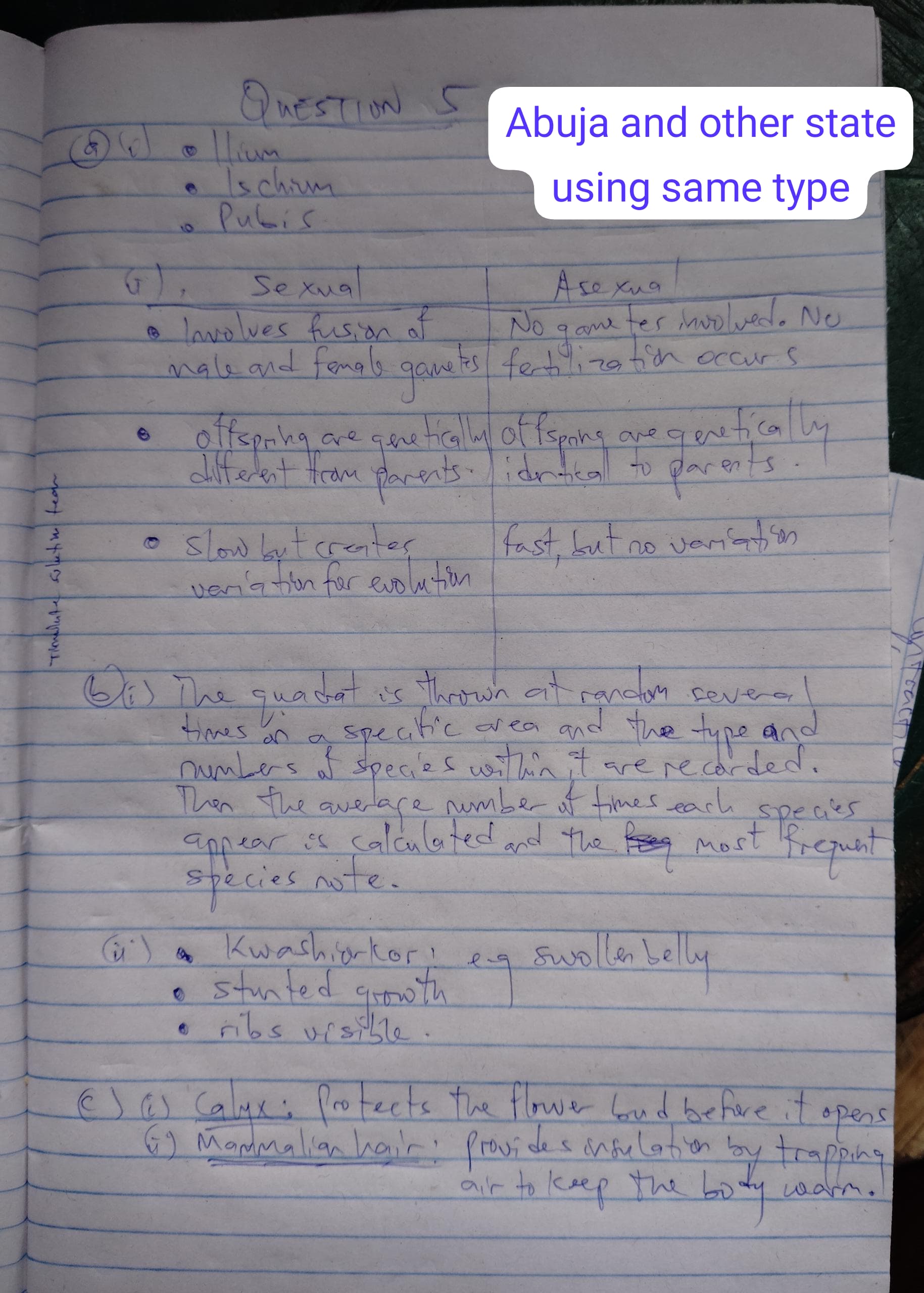
(i) Ilium.
(ii) Ischium.
(iii) Pubis.
(2aii)
[IN A TABULAR FORM]
=Sexual reproduction=
(i) Involves two parents.
Involves one parent.
(ii) Fusion of gametes occurs.
(iii) Offspring show variation.
=Asexual reproduction=
(i) Involves one parent.
(ii) Fusion of gametes does not occur.
(iii) Offspring are genetically identical to the parent.
(2bi)
A quadrat of known dimensions is selected and placed randomly within the study area. The organisms found inside the quadrat are identified and counted. The observations are recorded, and the quadrat is repeatedly placed at different locations in the habitat. The data obtained are then used to determine the population density, abundance, or frequency of the species.
(2bii)
(i) Stunted growth.
(ii) Swollen abdomen (pot belly).
(iii) Muscle wasting.
(2ci)
The calyx protects the flower when it is in the bud stage.
(2cii)
Mammalian hair provides insulation by reducing heat loss from the body.
==================
(3a)
Diagram
(3bi)
(i) Enzymes are protein in nature.
(ii) Enzymes are specific in their action.
(3bii)
=Respiration=
(i) Occurs in all living cells.
(ii) Releases energy.
(iii) Uses oxygen and releases carbon dioxide.
=Photosynthesis=
(i) Occurs only in green plants.
(ii) Stores energy.
(iii) Uses carbon dioxide and releases oxygen.
(3ci)
(i) The housefly possesses hairy legs and body that carry disease-causing organisms.
(ii) It feeds on refuse and faecal matter and contaminates food with pathogens.
(3cii)
(i) Sunlight provides energy for photosynthesis.
(ii) Sunlight promotes flowering and growth in plants.
==================
(4ai)
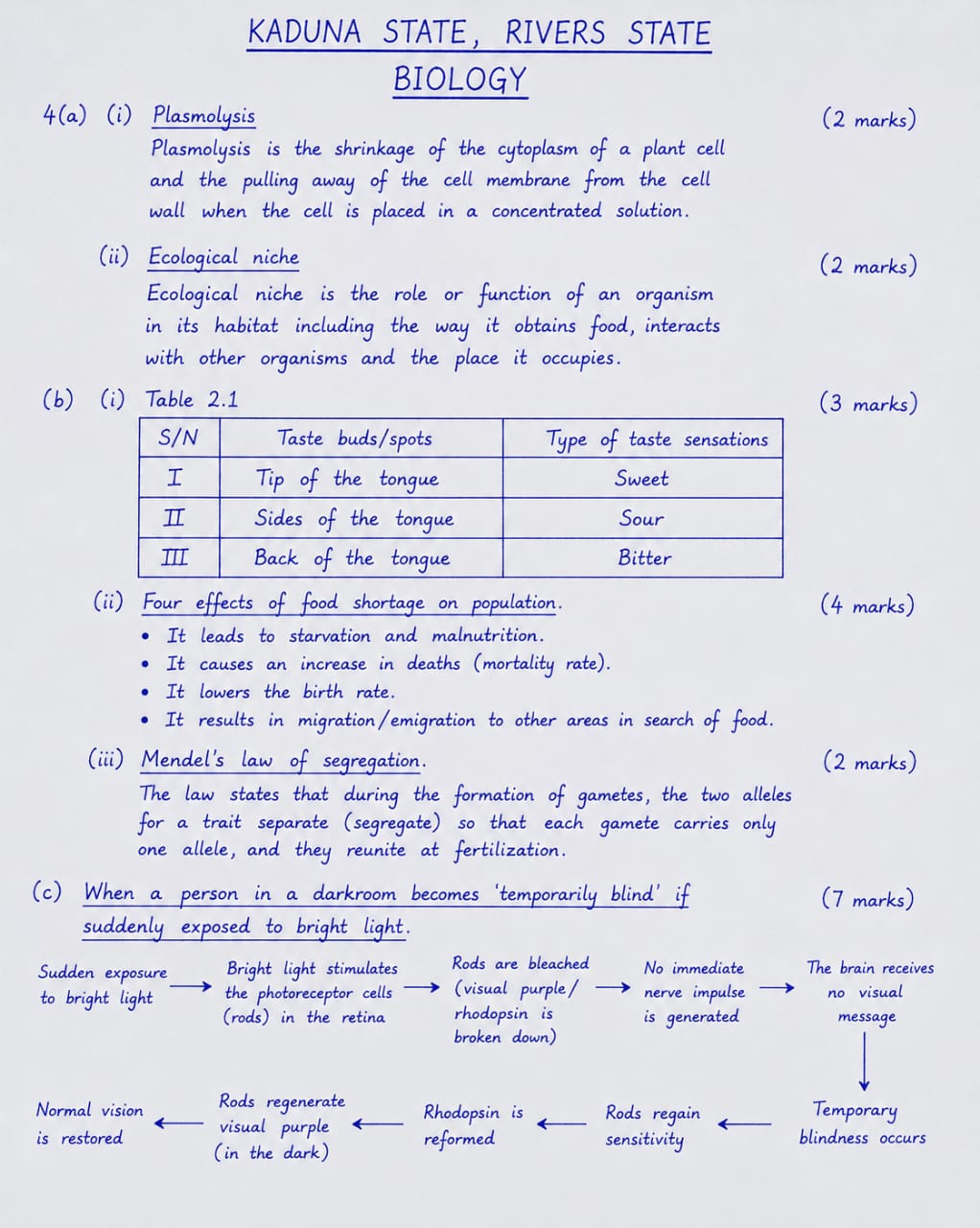
(i) Aestivation: Aestivation is a state of dormancy or inactivity assumed by certain organisms during hot and dry conditions to reduce water loss and survive unfavourable conditions.
(ii) Deamination: Deamination is the removal of the amino group from excess amino acids in the liver, resulting in the formation of ammonia, which is later converted to urea.
(4bi)
Amoeba feeds by holozoic nutrition. It extends its pseudopodia around the food particle and engulfs it to form a food vacuole. Digestive enzymes act on the food inside the vacuole. The digested food is absorbed into the cytoplasm, while the undigested food materials are egested through the cell membrane.
(4bii)
(i) Red blood cells.
(ii) White blood cells.
(iii) Blood platelets.
(4ci)
Phytoplankton--> Zooplankton-->Tilapia fish.
(4cii)
(i) Boiling.
(ii) Filtration.
==================
(5a)
Light rays from an object enter the eye through the cornea and pass through the aqueous humour and pupil. The iris regulates the amount of light entering the eye. The lens refracts and focuses the light rays onto the retina. The photoreceptor cells in the retina convert the light into nerve impulses. These impulses are transmitted through the optic nerve to the brain, where they are interpreted to produce vision.
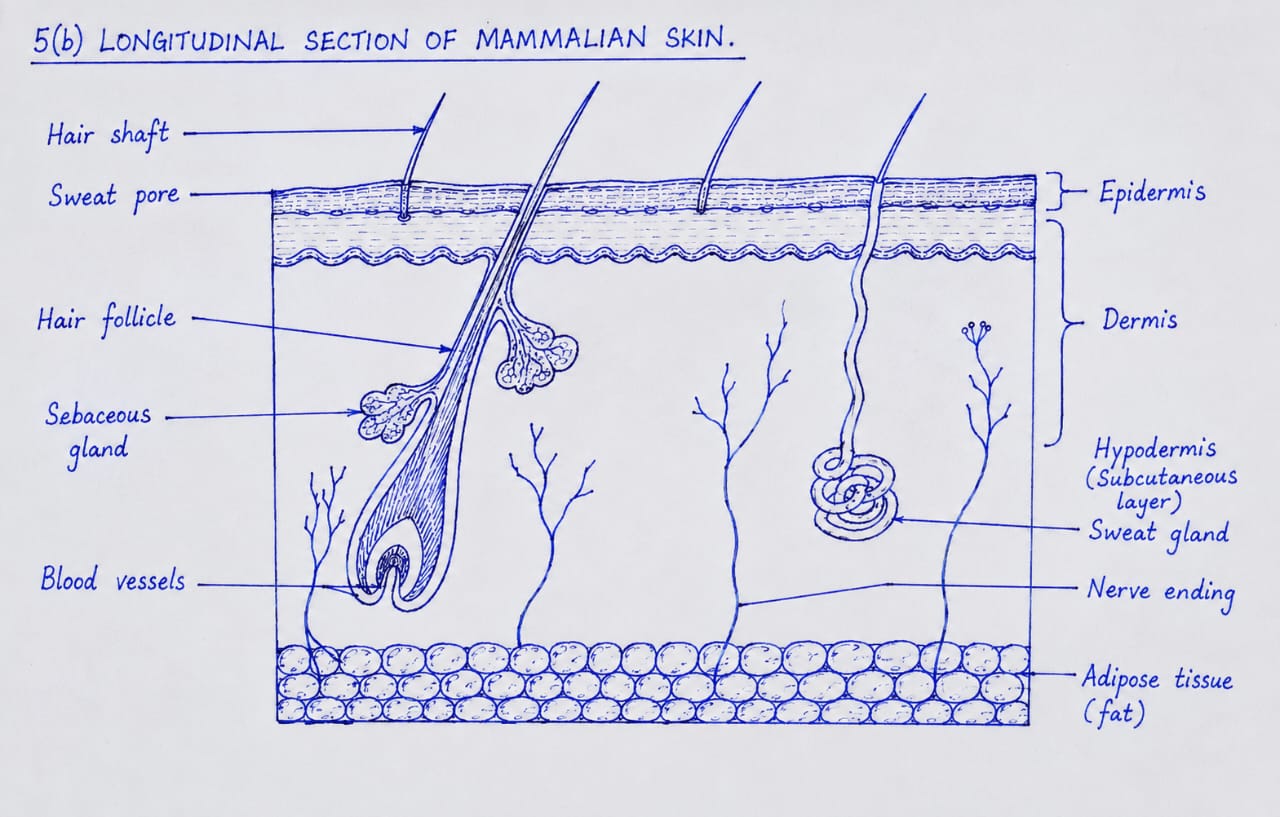
(5b)
Diagram of the longitudinal section of mammalian skin.
(5ci)
(i) It helps in the improvement of crops and livestock.
(ii) It assists in the diagnosis and treatment of hereditary diseases.
(iii) It aids the study of inheritance and variation.
(5cii)
(i) Fossil records.
(ii) Comparative anatomy.
(iii) Comparative embryology.
(iv) Vestigial organs.
IMO STATE ANSWERS*
ANSWER THREE QUESTIONS ONLY
(1ai)
(i) Contractile vacuole.
(ii) Flame cell (protonephridium).
(iii) Nephridium.
(iv) Malpighian tubule.
(v) Kidney.
(1aii)
=Contractile vacuole=
(i) Amoeba.
=Flame cell (Protonephridium)=
(i) Planarian.
=Nephridium=
(i) Earthworm.
=Malpighian tubule=
(i) Cockroach.
=Kidney=
(i) Human.
(1bi)
(i) Both are involved in eliminating metabolic wastes from the body.
(ii) Both regulate the body’s water and salt balance (osmoregulation).
(1bii)
=Earthworm=
(i) The excretory structures are nephridia.
(ii) Nephridia are distributed throughout several body segments.
(iii) Waste products are discharged through nephridiopores.
=Mammals=
(i) The kidneys serve as the excretory organs.
(ii) Mammals possess a single pair of kidneys.
(iii) Urine passes through the ureters to the bladder and leaves through the urethra.
(1c)
When stomata open, the guard cells accumulate potassium ions or sugars, reducing their water potential. Water enters the cells by osmosis, making them swollen (turgid). Because the outer walls are thinner than the inner walls, the guard cells bend outward, and the stomatal pore opens.
During stomatal closure, potassium ions or sugars leave the guard cells, causing water to move out by osmosis. The guard cells lose turgidity, become flaccid, and return to their original shape, resulting in the closing of the stomatal pore.
===========================
(2ai)
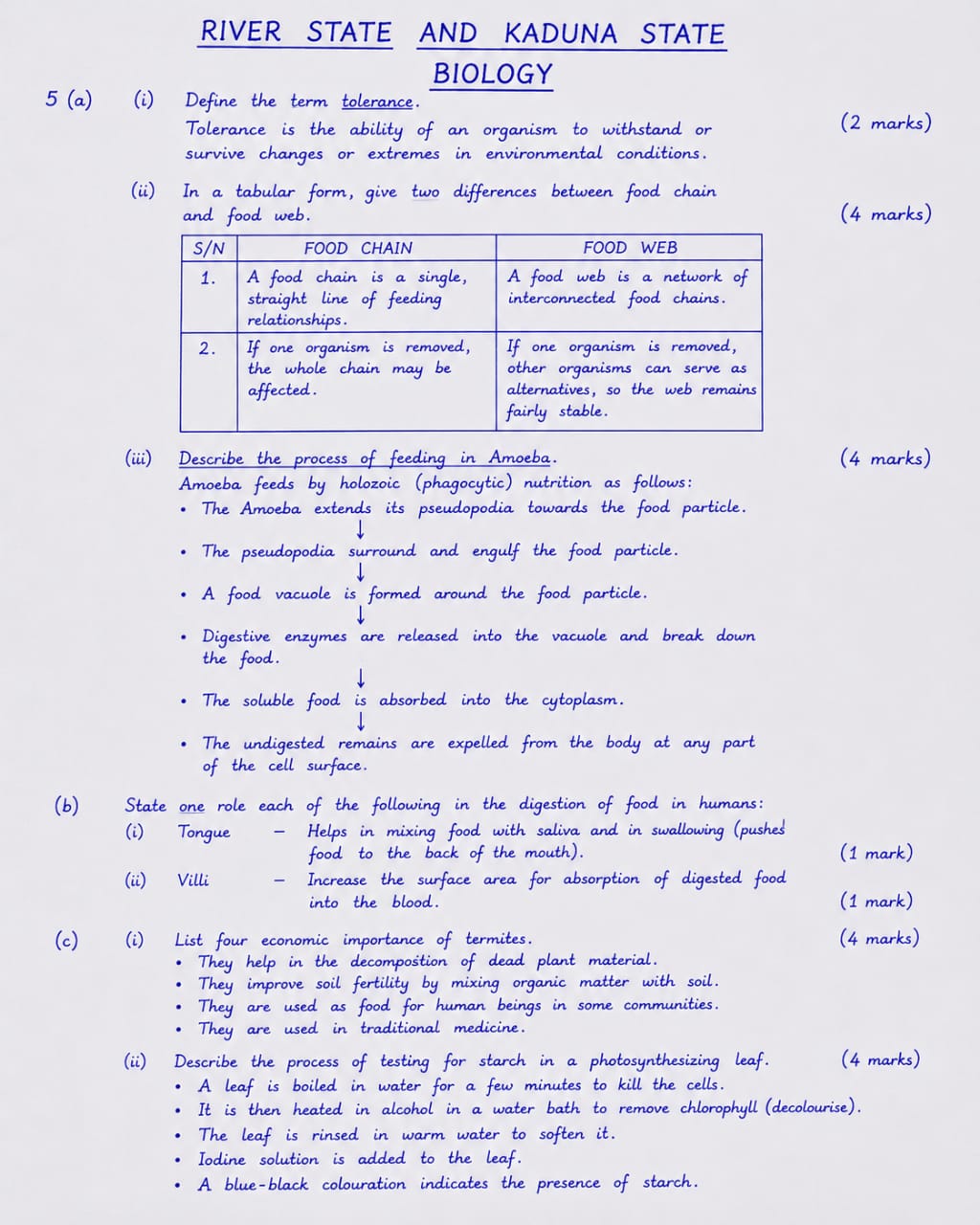
Tolerance is the capacity of an organism to survive changes in environmental conditions within a particular range without suffering harmful effects.
(2aii)
=Food Chain=
(i) It represents a straight-line feeding sequence.
(ii) Energy flows through only one route.
=Food Web=
(i) It is made up of several interconnected food chains.
(ii) Energy can move through multiple feeding pathways.
(2aiii)
Amoeba feeds by holozoic nutrition. It surrounds food with pseudopodia and engulfs it to form a food vacuole. Digestive enzymes break down the food, and the nutrients pass into the cytoplasm, while the undigested remains are expelled through the cell membrane.
(2bi)
The tongue mixes food thoroughly with saliva and assists in pushing it down the oesophagus during swallowing.
(2bii)
The villi take in the end products of digestion and transfer them into the blood circulation.
(2ci)
(i) Termites help break down dead plant materials.
(ii) Their burrowing improves soil fertility and aeration.
(iii) Some termite species serve as food for humans and other animals.
(iv) Their activities aid the formation of humus.
(2cii)
A fresh leaf is removed from the plant and boiled in water to destroy living cells and stop chemical reactions. It is then heated in alcohol using a water bath to remove the green pigment. After rinsing the leaf in warm water to soften it, iodine solution is applied. A blue-black colour confirms the presence of starch.
===========================
(3ai)
(i) Oxygen.
(ii) Carbon dioxide.
(iii) Digested nutrients.
(iv) Hormones.
(v) Urea.
(3aii)
(i) Littoral region.
(ii) Neritic region.
(iii) Oceanic region.
(3aiii)
(i) Secretion of bile.
(ii) Storage of glucose as glycogen.
(iii) Detoxification of poisonous substances.
(iv) Deamination of excess amino acids.
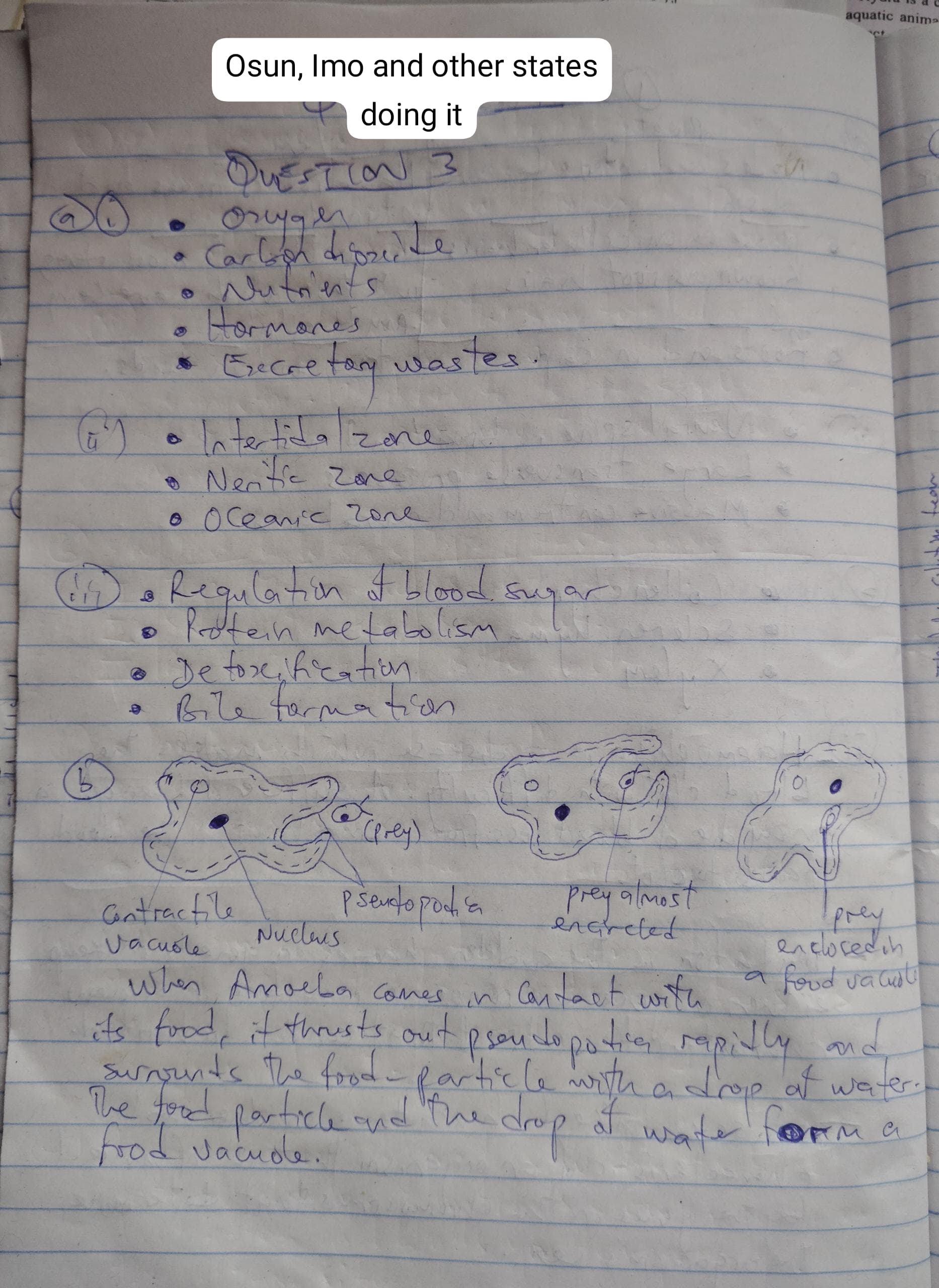
(3b)
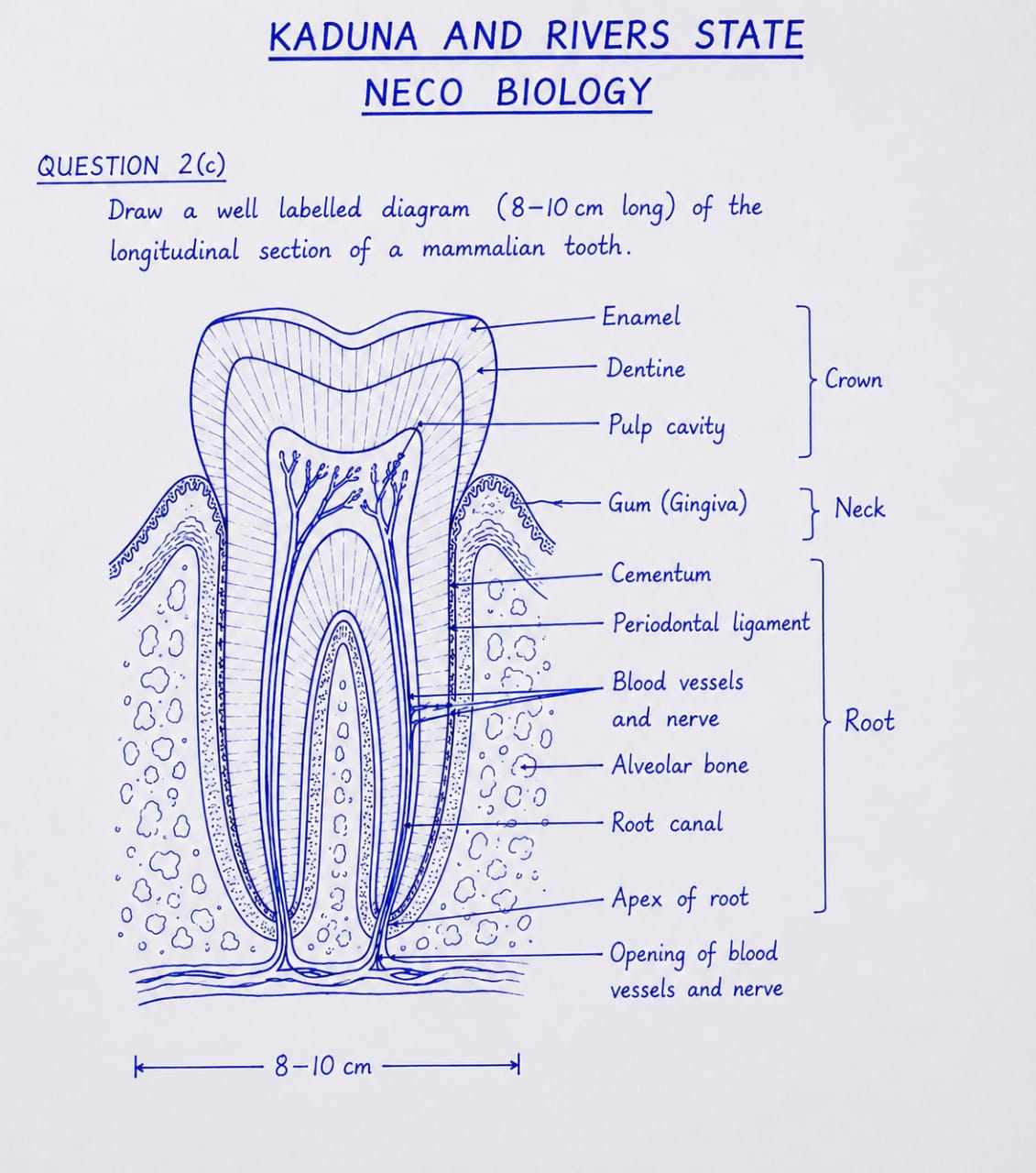
(Draw the diagram)
===========================
(4ai)
(i) Aestivation: Aestivation is a period of inactivity or dormancy adopted by certain organisms during hot, dry seasons to conserve water and survive unfavourable conditions.
(ii) Deamination: Deamination is the process by which the liver removes the amino group from excess amino acids, producing ammonia that is later changed into urea.
(4bi)
Amoeba carries out holozoic feeding by extending pseudopodia around food particles and enclosing them in a food vacuole. Enzymes digest the food, the dissolved nutrients are absorbed into the cytoplasm, and the undigested residue is eliminated through the cell membrane.
(4bii)
(i) Erythrocytes (red blood cells).
(ii) Leucocytes (white blood cells).
(iii) Platelets (thrombocytes).
(4ci)
Phytoplankton --> Zooplankton --> Tilapia.
(4cii)
(i) Boiling.
(ii) Filtering.
===========================
(5ai)
Tolerance refers to an organism’s ability to endure fluctuations in environmental conditions within certain limits without being harmed.
(5aii)
(i) Oxygen.
(ii) Carbon dioxide.
(iii) Digested food nutrients.
(iv) Hormones.
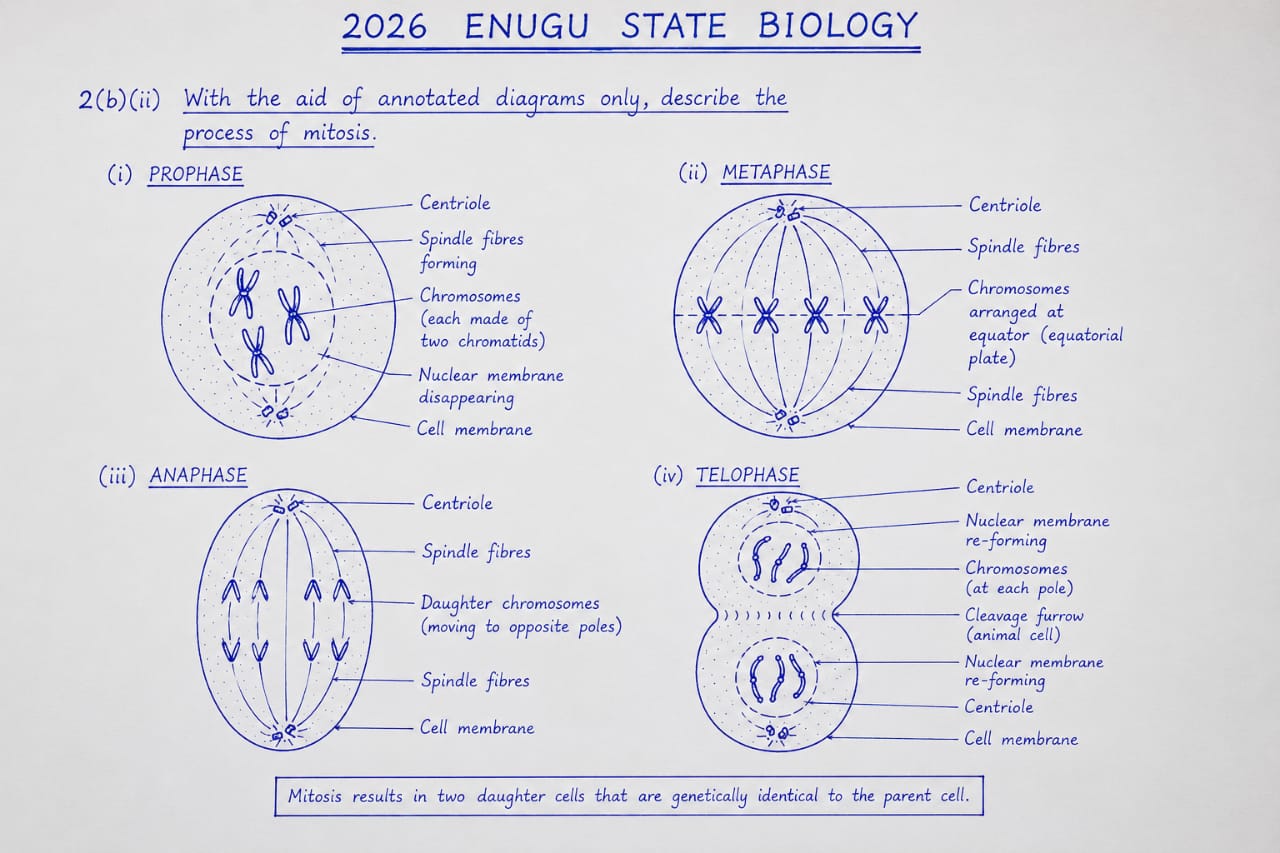
(5b)
(i) Prophase.
(ii) Metaphase.
(iii) Anaphase.
(iv) Telophase.
(5c)
(i) Termites live together in organized colonies, providing mutual protection and cooperation.
(ii) They show division of labour, with workers, soldiers, kings, and queens carrying out different duties.
(iii) They build mounds and underground tunnels that shield the colony from predators and harsh environmental conditions.
(iv) They feed one another through trophallaxis, ensuring every member receives nourishment.
(v) Soldier termites protect the colony by using powerful jaws or releasing defensive chemical substances.
===========================
ENUGU STATE
EDO STATE
DELTA STATE
PLATEAU STATE
AND OTHER STATE DOING SAME
(2ai)
(i) Egg
(ii) Larva
(iii) Pupa
(iv) Adult (Imago)
(2aii)
(i) Presence of a thick waxy cuticle on the leaves and stems.
(ii) Sunken stomata which reduce the rate of transpiration.
(iii) Leaves reduced to spines or scales, thereby reducing the surface area for water loss.
(iv) Fleshy (succulent) stems or leaves for storing water.
(v) Presence of few stomata, mainly on the lower epidermis of the leaf.
(vi) Presence of leaf hairs (hairy leaves) which trap moist air around the leaf surface and reduce transpiration.
(2bi)
(PICK ANY THREE)
(i) They are tall trees that form a dense forest canopy, which shades the forest floor.
(ii) They possess broad, evergreen leaves that enable them to carry out photosynthesis throughout the year.
(iii) They have buttress roots that provide firm support in the shallow rainforest soil.
(iv) They possess drip-tip leaves that allow excess rainwater to flow off quickly, preventing fungal growth.
(v) Epiphytes and climbing plants (lianas) are common because they grow on trees to obtain adequate sunlight.
————————————————————————————————————
(4ai)
(PICK ANY THREE)
(i) Enzymes are proteins.
(ii) Enzymes are biological catalysts.
(iii) Enzymes are specific in their action.
(iv) Enzymes are not used up during chemical reactions.
(v) Enzymes are effective in small quantities.
(vi) Enzymes are affected by temperature.
(vii) Enzymes are affected by pH.
(viii) Enzymes speed up chemical reactions.
(4aii)
-Pupil:
(PICK ANY ONE)
The pupil regulates the amount of light entering the eye.
OR
The pupil allows light to pass into the eye.
-Conjunctiva:
(PICK ANY ONE)
The conjunctiva protects the front of the eye from dust and microorganisms.
OR
The conjunctiva secretes mucus which keeps the eye moist and lubricated.
-Cornea:
(PICK ANY ONE)
The cornea refracts light entering the eye to help focus images on the retina.
OR
The cornea protects the front part of the eye from injury and dust.
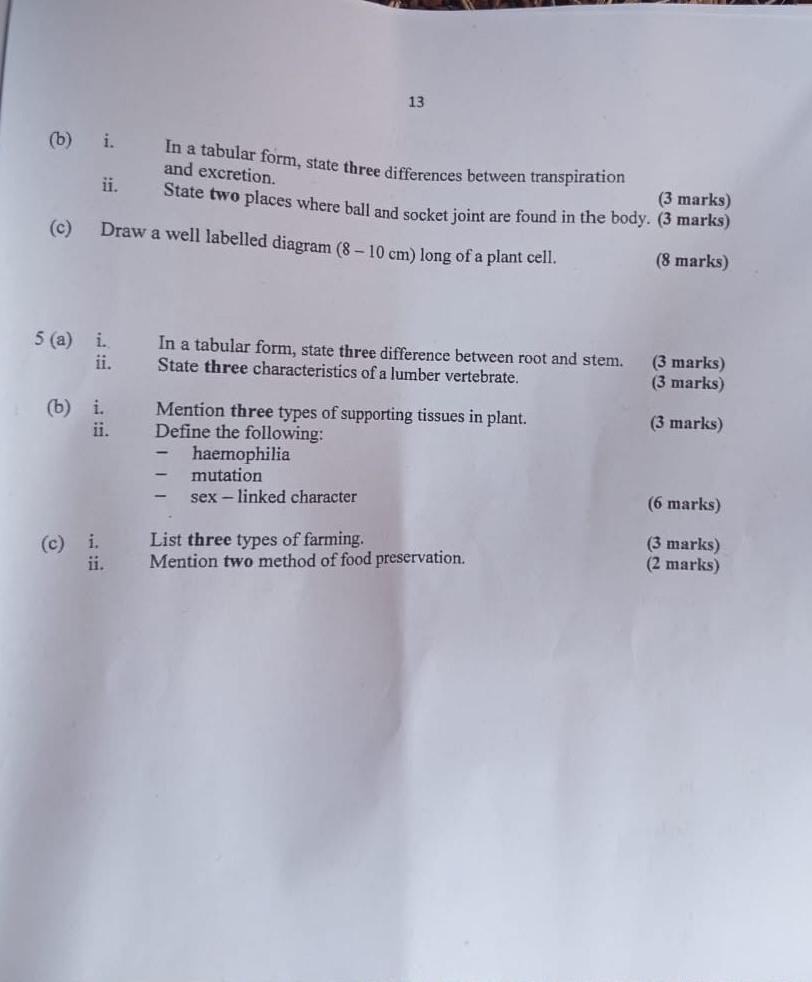
(4bi)

(4bii)
(i) Shoulder joint.
(ii) Hip joint.
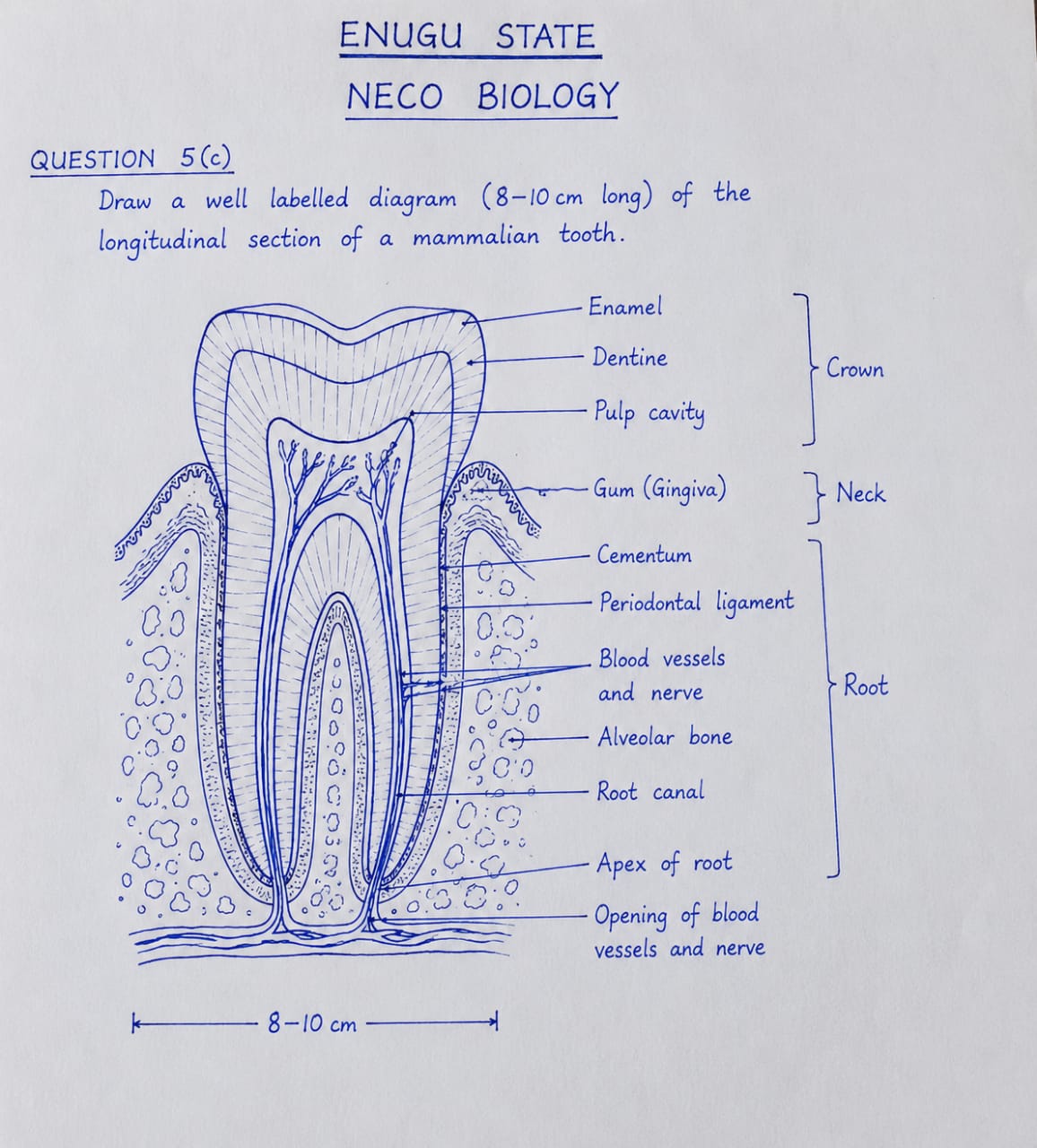
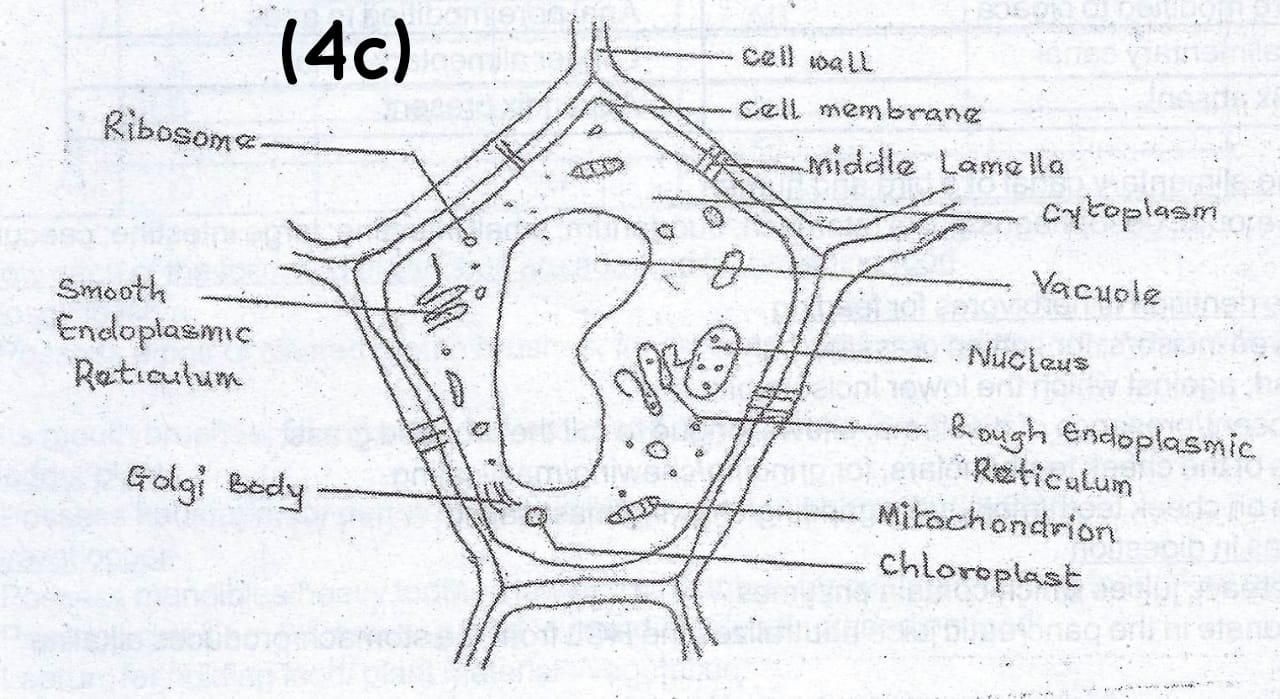
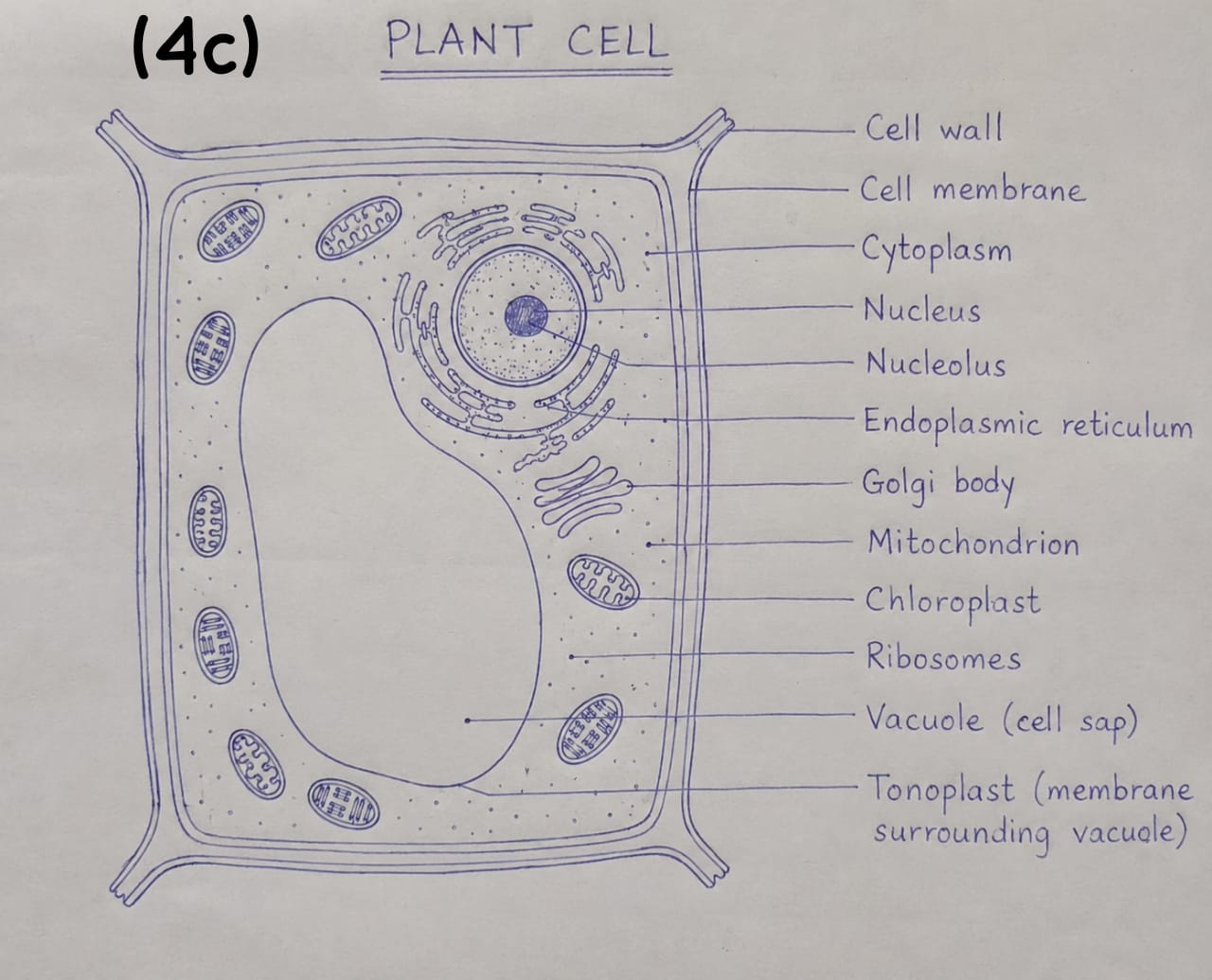
(4c)

OR

ENUGU STATE
(1ai)
Nutrition is the process by which living organisms obtain, digest, absorb and utilize food nutrients for growth, energy production, repair of worn-out tissues and maintenance of body functions.
(1aii)
(PICK ANY FOUR)
(i) Building and repairing body tissues.
(ii) Promoting growth and development.
(iii) Forming enzymes.
(iv) Producing hormones.
(v) Forming antibodies for body defence.
(vi) Transporting oxygen and other substances.
(vii) Supplying energy when necessary.
(viii) Maintaining fluid and acid-base balance.
(1aiii)
(i) They are white blood cells.
(ii) They can change their shape.
(iii) They move by amoeboid movement.
(iv) They engulf and digest pathogens by phagocytosis.
(v) They contain many lysosomes.
(vi) They can move out of blood vessels into body tissues.
(vii) They destroy germs and other foreign particles.
(viii) They remove dead cells and tissue debris.
(1bi)
=stoma=
(PICK ANY ONE)
(i) Allows carbon dioxide to enter the leaf.
(ii) Allows oxygen to leave the leaf.
(iii) Permits transpiration.
(iv) Regulates water loss.
(v) Facilitates gaseous exchange.
(vi) Maintains the plant’s water balance.
(1bii)
=synovial fluid=
(PICK ANY ONE)
(i) Lubricates the joints.
(ii) Reduces friction between bones.
(iii) Absorbs shock during movement.
(iv) Nourishes the articular cartilage.
(v) Removes waste products from cartilage.
(vi) Allows smooth movement of joints.
(1biii)
=Tendon=
(PICK ANY ONE)
(i) Attaches muscles to bones.
(ii) Transmits muscular force to bones.
(iii) Enables body movement.
(iv) Stabilizes joints.
(v) Maintains posture.
(vi) Prevents excessive stretching of muscles.
(1biv)
=Root hair=
(PICK ANY ONE)
(i) Absorbs water from the soil.
(ii) Absorbs mineral salts.
(iii) Increases the surface area for absorption.
(iv) Anchors the plant firmly in the soil.
(v) Transfers absorbed water into the root.
(vi) Improves nutrient uptake.
(1c)
ENUGU STATE
(2ai)
(i) Egg
(ii) Larva
(iii) Pupa
(iv) Adult (Imago)
(2aii)
(i) Presence of a thick waxy cuticle on the leaves and stems.
(ii) Sunken stomata which reduce the rate of transpiration.
(iii) Leaves reduced to spines or scales, thereby reducing the surface area for water loss.
(iv) Fleshy (succulent) stems or leaves for storing water.
(v) Presence of few stomata, mainly on the lower epidermis of the leaf.
(vi) Presence of leaf hairs (hairy leaves) which trap moist air around the leaf surface and reduce transpiration.
(2bi)
(PICK ANY THREE)
(i) They are tall trees that form a dense forest canopy, which shades the forest floor.
(ii) They possess broad, evergreen leaves that enable them to carry out photosynthesis throughout the year.
(iii) They have buttress roots that provide firm support in the shallow rainforest soil.
(iv) They possess drip-tip leaves that allow excess rainwater to flow off quickly, preventing fungal growth.
(v) Epiphytes and climbing plants (lianas) are common because they grow on trees to obtain adequate sunlight.
(5a)
The process of seed and fruit formation in plants. After pollination, a compatible pollen grain lands on the stigma and germinates to produce a pollen tube. The pollen tube grows down through the style into the ovary and enters the ovule through the micropyle. The male gametes are carried through the pollen tube into the embryo sac. One male gamete fuses with the egg cell to form a zygote, while the other fuses with the two polar nuclei to form the endosperm. This process is known as double fertilization.
The zygote develops into the embryo, while the endosperm serves as stored food for the developing embryo. The integuments of the ovule become the seed coat (testa), and the entire ovule develops into a seed. At the same time, the ovary enlarges and develops into the fruit, while the ovary wall becomes the pericarp. Other floral parts such as the petals, sepals, stamens and style usually wither and fall off, leaving the mature fruit containing one or more seeds.
(5bi)
(PICK ANY FOUR)
(i) Produces bile which helps in the emulsification of fats.
(ii) Stores excess glucose as glycogen and converts glycogen back to glucose when required.
(iii) Detoxifies harmful substances such as drugs, alcohol and poisons.
(iv) Deaminates excess amino acids and converts ammonia into urea.
(v) Stores vitamins such as A, D, E, K and B₁₂.
(vi) Stores iron and other mineral salts.
(vii) Breaks down worn-out red blood cells and recycles their components.
(viii) Synthesizes plasma proteins such as fibrinogen and prothrombin needed for blood clotting.
(5bii)
(i) Myopia (short-sightedness)
(ii) Hypermetropia (long-sightedness)
NECO NIGER, NASARAWA AND ZAMFARA STATE ANSWERS
ANSWER ANY THREE QUESTIONS
(1ai)
(i) Flowers are generally large and easily noticed.
(ii) They have brightly coloured petals that attract pollinators.
(iii) Nectar is produced by the flowers.
(iv) They emit pleasant scents to attract insects.
(v) Their pollen grains are heavy, rough-textured, sticky, and relatively large.
(1aii)
[IN TABULAR FORM]
=Arteries=
(i) Transport blood away from the heart.
(ii) Have thick, muscular, and elastic walls.
=VEINS=
(i) Transport blood back to the heart.
(ii) Have thinner walls and contain valves.
(1bi)
DIAGRAM
(1bii)
(i) Water is absorbed into root hairs through osmosis.
(ii) Mineral ions enter the roots by active uptake.
(iii) Water and dissolved minerals pass through the cortex to the xylem vessels.
(iv) The upward movement of water occurs through transpiration pull, capillary action, and root pressure.
===========================
(2ai)
(i) Egg stage.
(ii) Larval stage.
(iii) Pupal stage.
(iv) Adult stage (Imago).
(2aii)
(i) Presence of a thick waxy cuticle.
(ii) Leaves are reduced to spines or scales.
(iii) Stomata are deeply sunken.
(iv) Stomata are few in number.
(v) Stems are fleshy and store water.
(vi) Possess a well-developed root system.
(2bi)
(i) Trees are tall and remain green throughout the year.
(ii) Plants have broad leaves with drip tips for shedding excess water.
(iii) Vegetation is thick and arranged in distinct layers.
(2bii)
DIAGRAM
===========================
(3ai)
(i) Oxygen gas.
(ii) Carbon dioxide gas.
(iii) Nutrients from digested food.
(iv) Hormonal substances.
(v) Urea.
(3aii)
(i) Littoral region.
(ii) Neritic region.
(iii) Oceanic region.
(3aiii)
(i) Secretion of bile.
(ii) Storage of glycogen reserves.
(iii) Removal of toxic substances from the body.
(iv) Breakdown of excess amino acids through deamination.
(3b)
DIAGRAM
===========================
(4ai)
A hormone is a chemical messenger secreted in small amounts by endocrine glands and carried through the bloodstream to specific target organs where it performs particular functions.
(4aii)
Gibberellin:
(i) Encourages elongation of stems.
(ii) Stimulates the breaking of seed dormancy.
Ethylene:
(i) Enhances fruit ripening.
(ii) Promotes the shedding of leaves and fruits.
(4aiii)
(i) Incisors.
(ii) Canine teeth.
(iii) Premolars.
(iv) Molars.
(4bi)
A true fruit develops entirely from the fertilized ovary of a flower without involvement of other floral parts.
(4bii)
DIAGRAM
===========================
(5ai)
DIAGRAM
(5aii)
(i) Dispersal by wind.
(ii) Dispersal by water.
(iii) Dispersal by animals.
(iv) Explosive seed dispersal.
(5bi)
(i) Determination of individual identity.
(ii) Improvement of plants and animals through breeding.
(iii) Grouping and classification of living organisms.
(5bii)
(i) Transmission of diseases.
(ii) Greater competition for available food and living space.
(5biii)
(i) Gills.
(ii) Lungs.
(iii) Tracheal system.
(iv) Skin surface.
(v) Book lungs.
===========================
BAYELSA AND OTHER STATES DOING THE SAME PAPER TYPE ANSWERS
ANSWER THREE QUESTIONS ONLY
(1ai)
Tolerance is the ability of an organism to withstand or survive changes in environmental conditions within certain limits.
(1aii)
(i) Oxygen
(ii) Carbon dioxide
(iii) Digested food (nutrients)
(iv) Hormones
(1b)
(i) Prophase
(ii) Metaphase
(iii) Anaphase
(iv) Telophase
(1c)
(i) Termites live in colonies with division of labour, where workers, soldiers, and reproductives perform different functions for the survival of the colony.
(ii) They build large mounds and underground tunnels, which protect them from predators and harsh weather conditions.
(iii) They communicate by releasing chemical substances (pheromones) to coordinate feeding, defence, and other colony activities.
(iv) Worker termites feed and groom other members of the colony, including the queen, king, and young ones, ensuring their survival.
(v) Soldier termites defend the colony with their strong jaws or chemical secretions, protecting it from invading predators such as ants.
===========================
(2ai)
(i) Kidney
(ii) Lungs
(iii) Skin
(iv) Nephridia
(v) Malpighian tubules
(2bii)
(i) Kidney - Human (mammals)
(ii) Lungs - Human (mammals)
(iii) Skin - Human (mammals)
(iv) Nephridia - Earthworm
(v) Malpighian tubules - Cockroach
(2bi)
(i) Both remove metabolic waste products from the body.
(ii) Both help to regulate the body’s water and salt balance (osmoregulation).
(2bii)
(i) Earthworms possess numerous nephridia as excretory organs, while mammals possess a pair of kidneys.
(ii) The nephridia of earthworms open to the exterior through nephridiopores, while the kidneys of mammals discharge urine through the ureters into the urinary bladder before it is expelled through the urethra.
(iii) Earthworm nephridia are simple tubular structures found in almost every body segment, while mammalian kidneys are highly specialized, compact organs made up of millions of nephrons.
(2c)
(i) During the day, guard cells absorb potassium ions and sugars, causing water to enter the cells by osmosis.
(ii) As water enters, the guard cells become turgid and curve outward because their inner walls are thicker than the outer walls.
(iii) This outward bending creates an opening between the guard cells known as the stomatal pore, allowing gaseous exchange and transpiration.
(iv) At night or during water shortage, potassium ions and sugars move out of the guard cells, causing water to leave by osmosis.
(v) The guard cells become flaccid, straighten, and the stomatal pore closes, reducing water loss from the plant.
===========================
(3ai)
=Protein=
(i) Carbon (C)
(ii) Nitrogen (N)
=Carbohydrate=
(i) Carbon (C)
(ii) Hydrogen (H)
(3aii)
(Draw the diagram)
(3aiii)
(i) Birth rate
(ii) Death rate
(3bi)
Swarming is the migration or movement of a large number of organisms from one place to another as a group, usually for breeding, feeding, or establishing a new colony.
(3bii)
An epidemic is the rapid outbreak and spread of a disease that affects many people in a particular community or region within a short period.
(3ci)
Parthenocarpy is the development of fruits without fertilization, resulting in seedless fruits.
(3cii)
(i) Condom
(ii) Oral contraceptive pills
===========================
(5ai)
=ROOT=
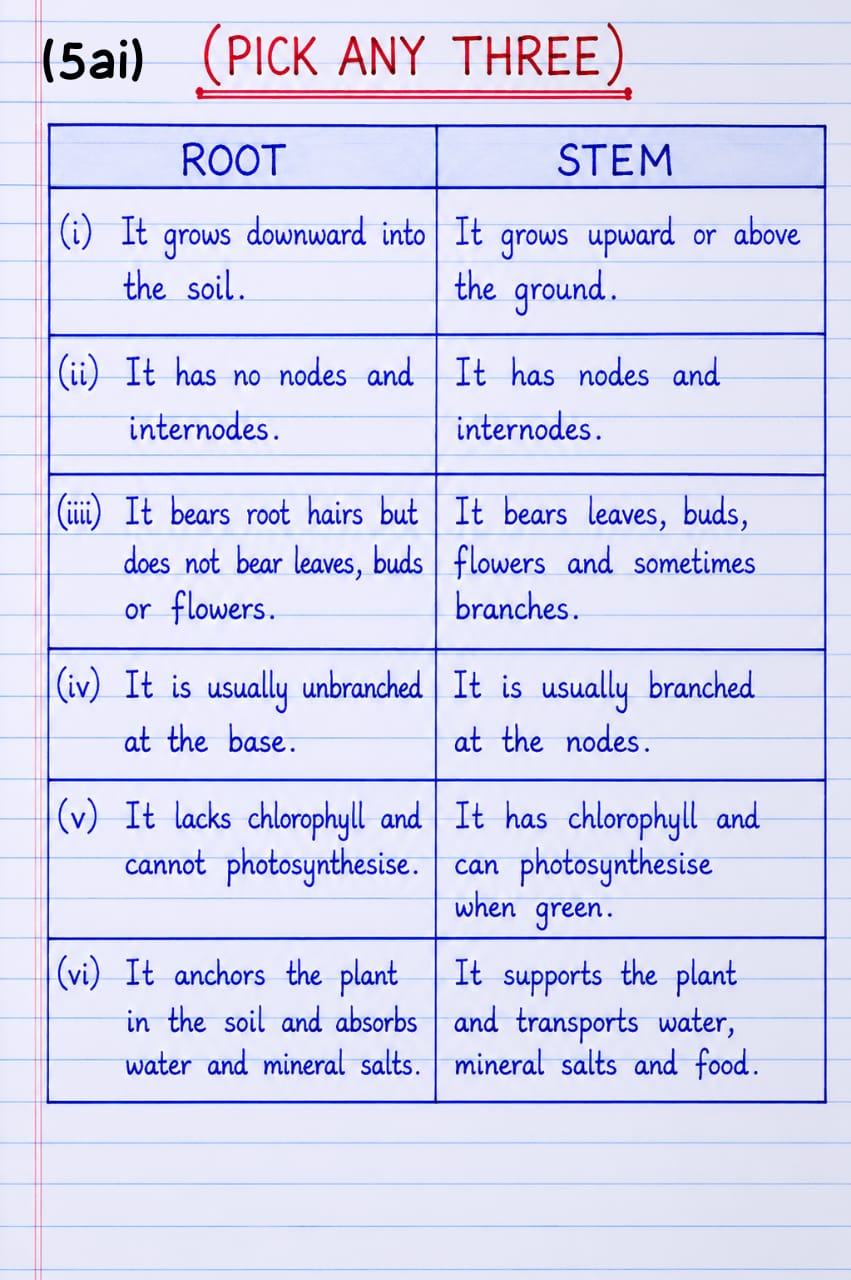
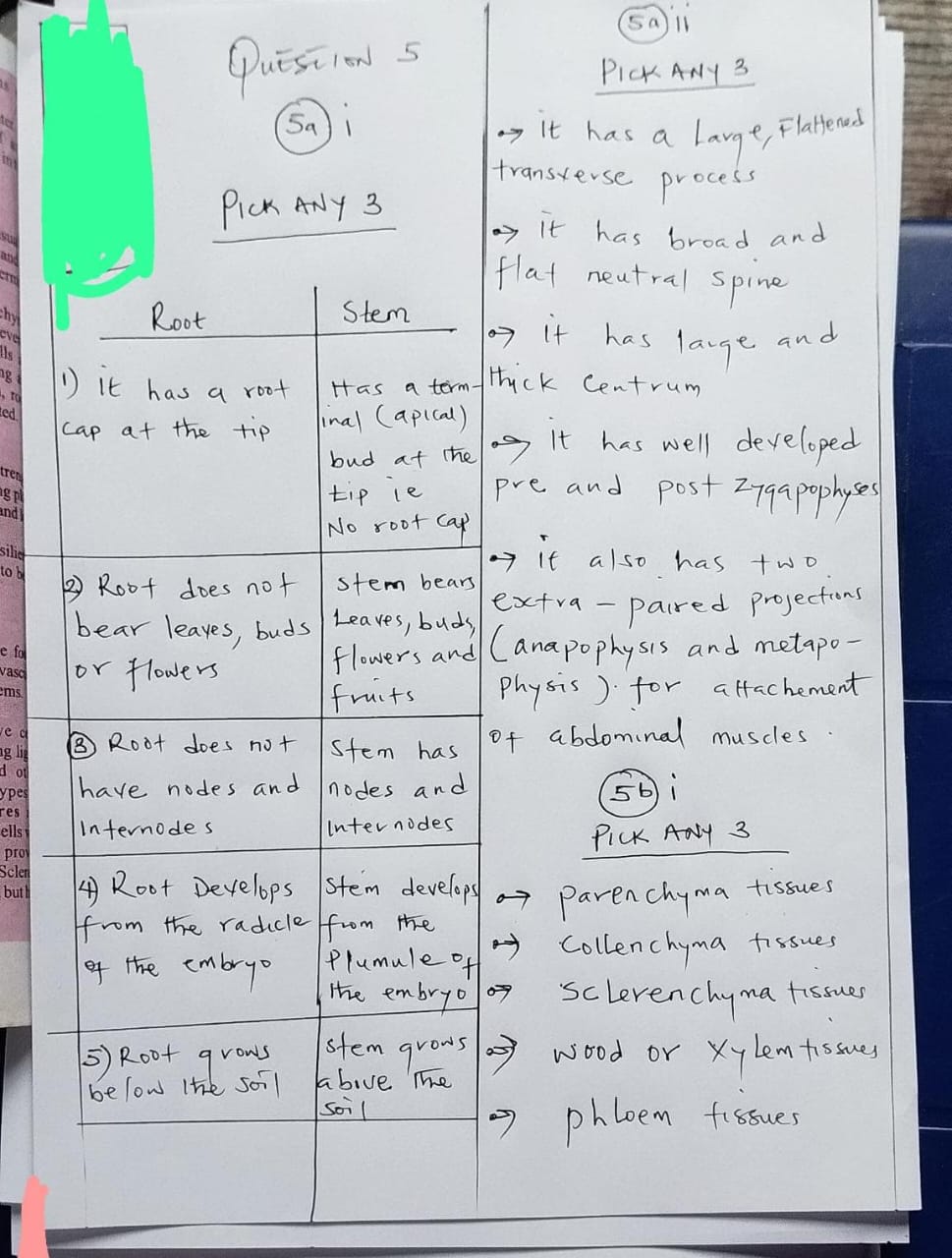
(i) Roots usually grow below the ground, while stems usually grow above the ground.
(ii) Roots do not possess nodes and internodes, while stems possess distinct nodes and internodes.
(iii) Roots absorb water and mineral salts from the soil while stems support the plant and transport water, minerals, and manufactured food.
=STEM=
(i) Stems usually grow above the ground while roots usually grow below the ground.
(ii) Stems possess nodes and internodes, while roots do not possess nodes and internodes.
(iii) Stems support the plant and transport water, minerals, and manufactured food while roots absorb water and mineral salts from the soil.
(5aii)
(i) Lumbar vertebrae are large and strong to support the weight of the body.
(ii) They have broad and thick centra.
(iii) They possess short, broad spinous processes for the attachment of strong back muscles.
(5bi)
(i) Parenchyma
(ii) Collenchyma
(iii) Sclerenchyma
(5bii)
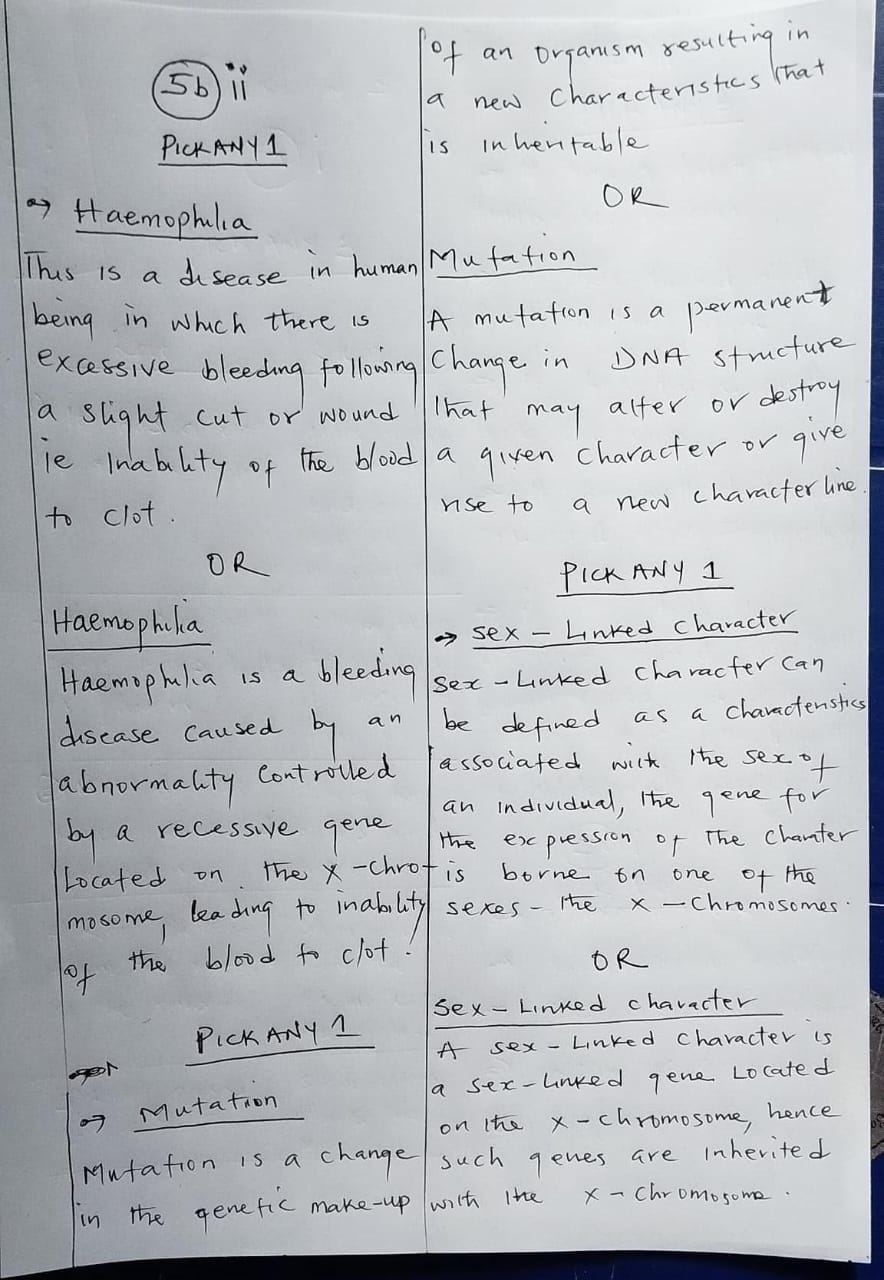
Haemophilia: Haemophilia is an inherited blood disorder in which the blood fails to clot normally, causing excessive bleeding.
Mutation: Mutation is a sudden, permanent change in the genetic material (DNA) or genes of an organism.
Sex-linked character: A sex-linked character is a trait controlled by genes located on the sex chromosomes, especially the X chromosome.
(5ci)
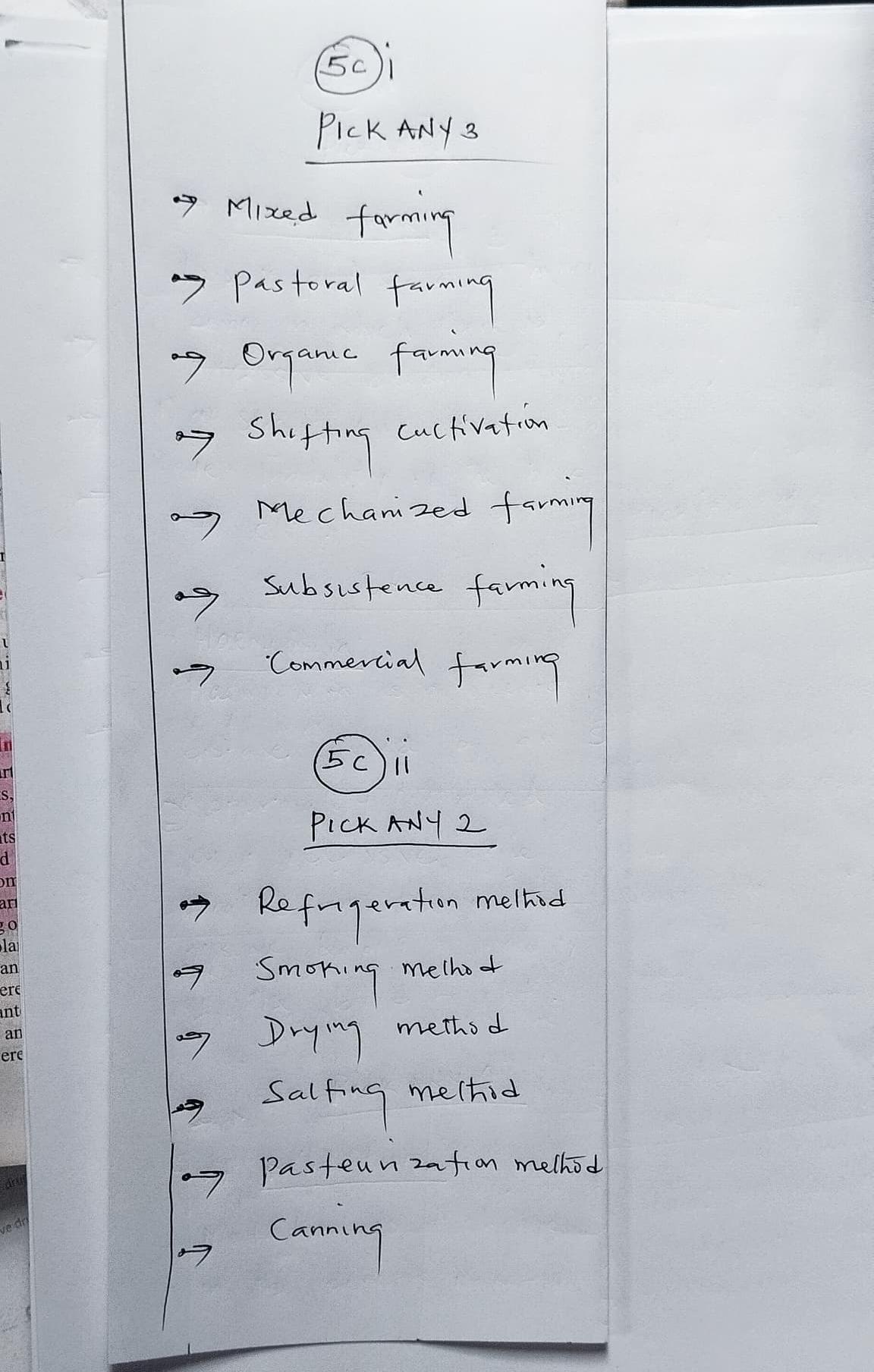
(i) Arable farming
(ii) Pastoral farming
(iii) Mixed farming
(5cii)
(i) Drying
(ii) Smoking
===========================
BIOLOGY
(1a)
(i) Define the term nutrition.
Nutrition is the process by which living organisms obtain, digest, absorb and utilize food nutrients for energy, growth, repair and maintenance of the body.
(ii) Mention four functions of proteins to the body.
(i) Proteins build and repair worn-out body tissues.
(ii) They are needed for growth and development of the body.
(iii) They are used in the formation of enzymes, hormones and antibodies.
(iv) They can serve as a source of energy when carbohydrates and fats are insufficient
(iii) State two characteristics of halophytes.
(i) They are plants adapted to grow in saline (salty) environments.
(ii) They possess succulent leaves or stems for storing water and reducing the effect of salt.
(1b)
State one function each of the following:
(i) Stoma:
Allows gaseous exchange and regulates transpiration in plants.
(ii) Synovial fluid:
Lubricates the joints to reduce friction during movement.
(iii) Tendon:
Connects muscles to bones.
(iv) Root hair:
Absorbs water and dissolved mineral salts from the soil.
(1c)
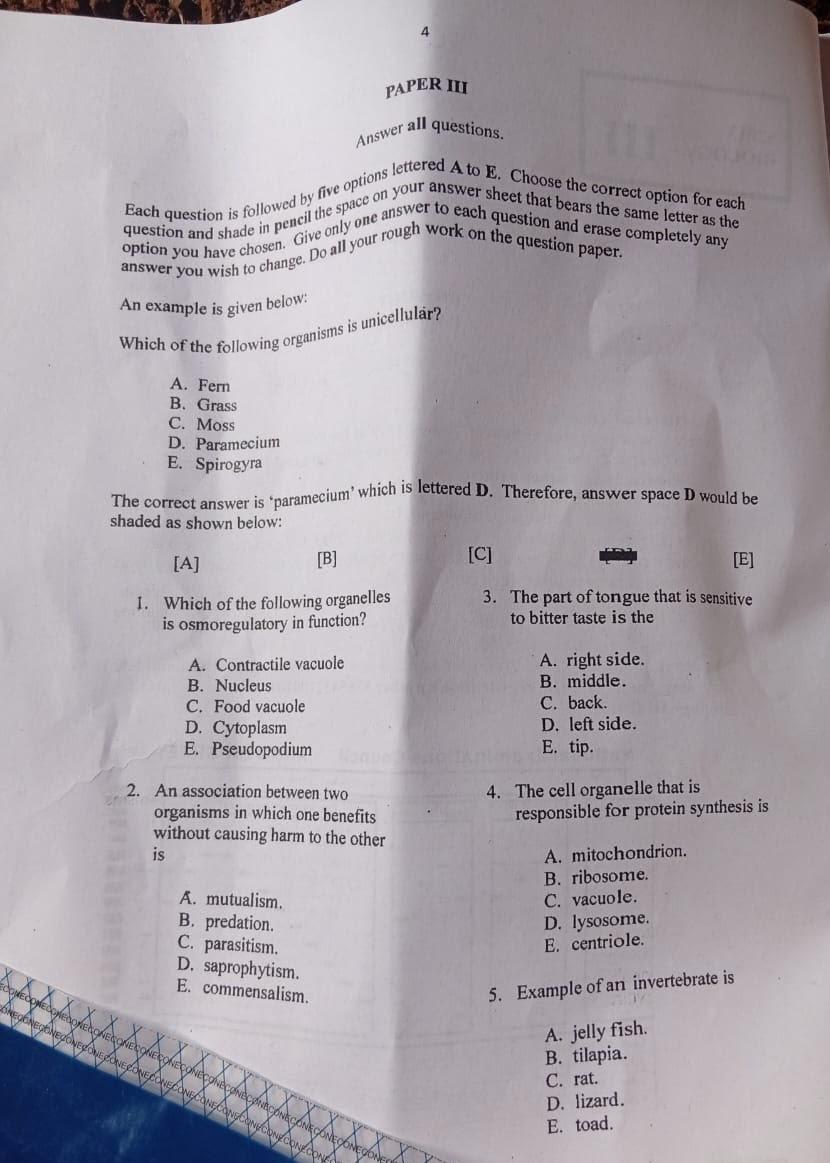
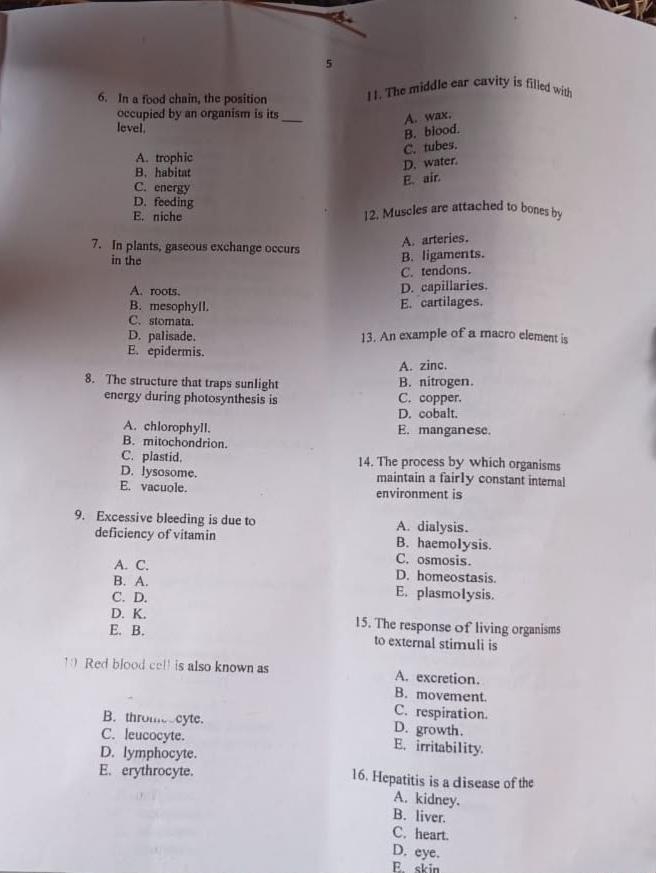
BIOLOGY OBJ:
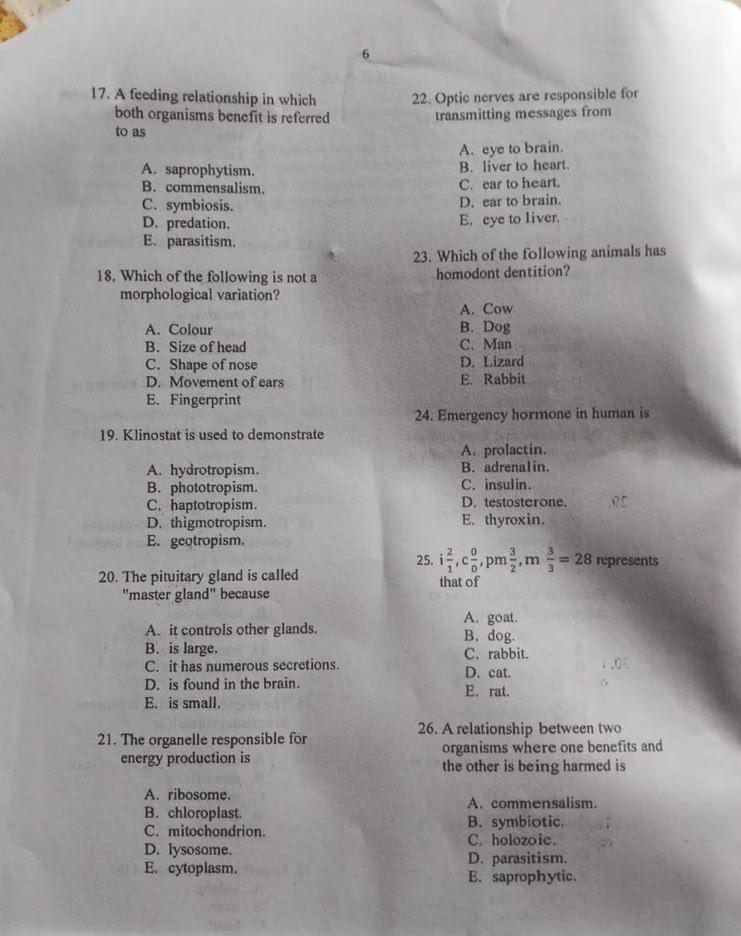
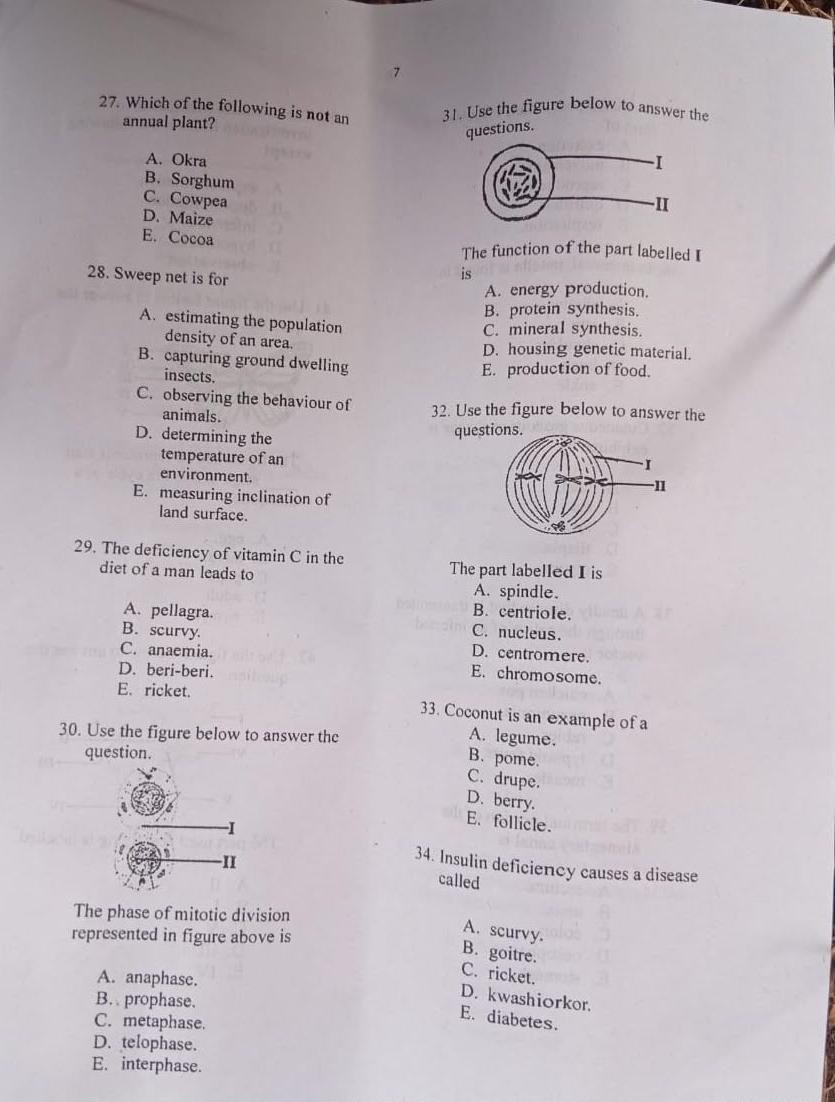
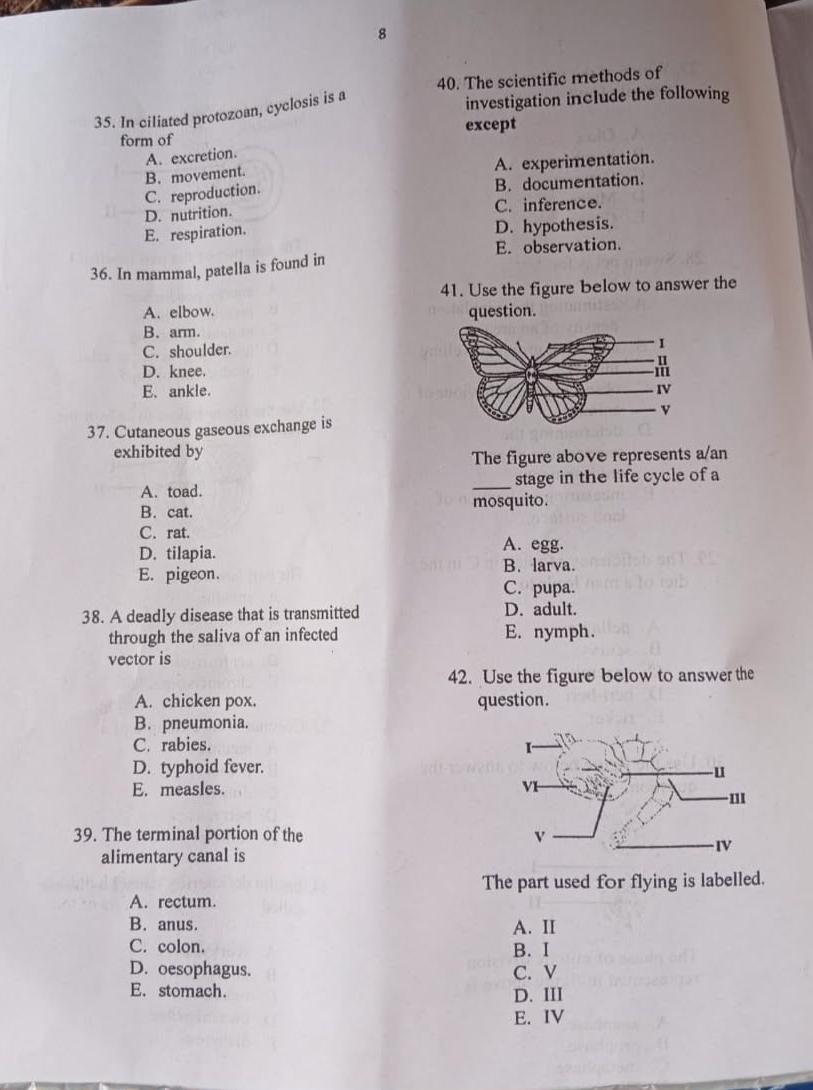
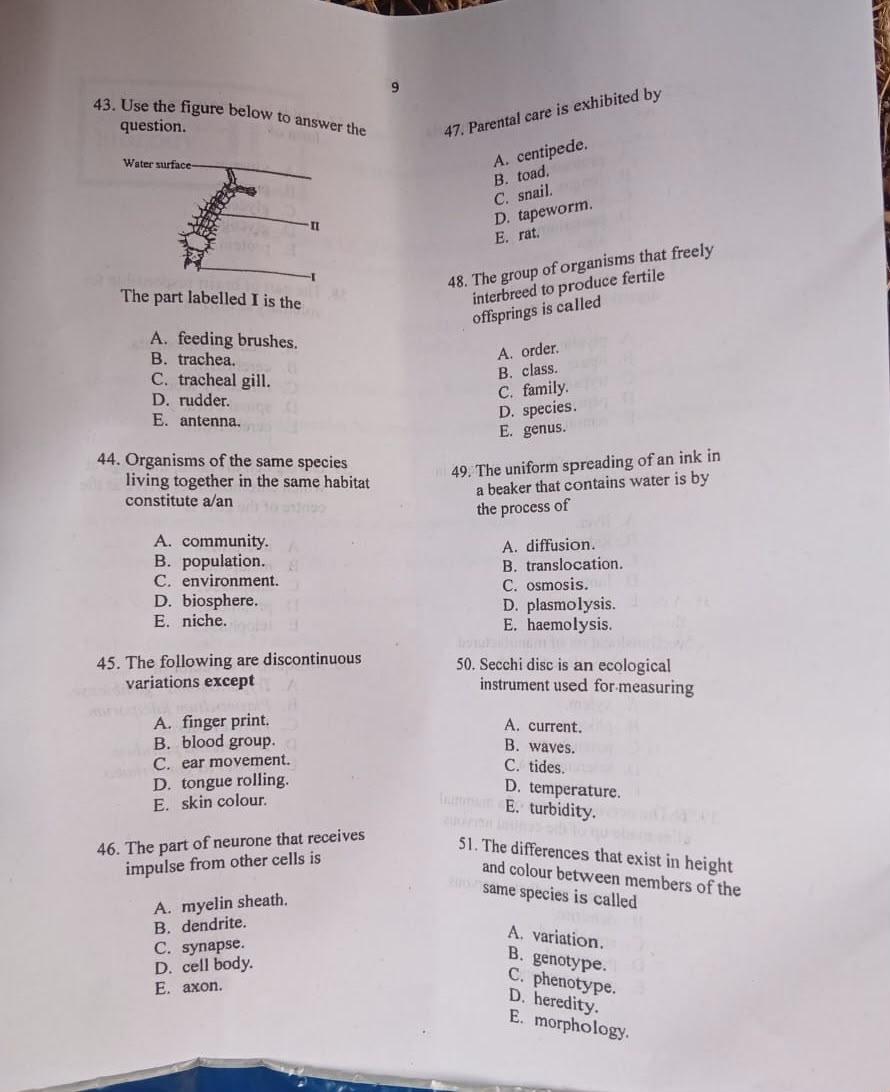
1-10: AECBAACADE
11-20: ECBDEBCDEA
21-30: CADBCDEBBD
31-40: DACEBDACBB
41-50: DAABEBEDAE
51-60: AAAEBDCBBB
(WITH NUMBERING)
1.A 2.E 3.C 4.B 5.A 6.A 7.C 8.A 9.D 10.E
11.E 12.C 13.B 14.D 15.E 16.B 17.C 18.D 19.E 20.A
21.C 22.A 23.D 24.B 25.C 26.D 27.E 28.B 29.B 30.D
31.D 32.A 33.C 34.E 35.B 36.D 37.A 38.C 39.B 40.B
41.D 42.A 43.A 44.B 45.E 46.B 47.E 48.D 49.A 50.E
51.A 52.A 53.A 54.E 55.B 56.D 57.C 58.B 59.B 60.B
⭐ PLEASE NOTE: ALWAYS FOLLOW EXAM INSTRUCTIONS
We often provide answers to all questions, including different versions and alternatives. This does not mean you should write everything.
Simply read the instructions given, select the required questions, and choose the version you prefer.
The extra answers are provided to help make students’ work different and avoid everyone writing the same thing.
Always follow the instructions given for each paper.
[VERSION II]
(1ai)
(PICK ANY ONE)
Tolerance is the ability of an organism to withstand or survive changes in environmental conditions within certain limits without being harmed.
OR
Tolerance is the range of environmental conditions within which an organism can survive, grow, and reproduce without being adversely affected.
(1aii)
(PICK ANY FOUR)
(i) Oxygen
(ii) Carbon dioxide
(iii) Digested food nutrients
(iv) Hormones
(v) Urea
(vi) Mineral salts.
(1b)
(i) Prophase
(ii) Metaphase
(iii) Anaphase
(iv) Telophase
(1c)
(PICK ANY FIVE)
(i) Division of labour: Termites live in organized colonies where each caste performs a specific role. The queen lays eggs, workers gather food and care for the young, while soldiers defend the colony. This cooperation ensures efficient use of resources, increases survival, and allows the colony to function successfully.
(ii) Nest building: Termites construct large mounds and underground nests using soil, saliva, and faeces. These nests provide protection from predators, rain, and extreme temperatures. The mound also helps regulate humidity and ventilation, creating a favourable environment for the colony throughout the year.
(iii) Nocturnal foraging: Termites usually search for food at night when temperatures are lower and predators are less active. This behaviour reduces water loss from their bodies and lowers the risk of being attacked. It enables them to gather enough food while remaining relatively safe.
(iv) Tunnel construction during feeding: Termites build covered mud tunnels from their nests to food sources. These tunnels protect them from sunlight, drying out, and predators such as ants and birds. They can move safely between the nest and feeding sites without being easily detected.
(v) Colony defence: Soldier termites guard the colony against invading predators. They use powerful jaws or release defensive chemicals to repel attackers. Their protective behaviour keeps the queen, workers, and developing young safe, ensuring the continued growth and survival of the entire colony.
(vi) Care of eggs and young: Worker termites constantly feed, clean, and protect the eggs, larvae, and queen. They move the young to suitable locations within the nest when necessary. This parental care increases the chances of successful development and helps maintain a healthy colony population.
(vii) Communication by pheromones: Termites communicate through chemical substances called pheromones. These signals help colony members locate food, warn of danger, identify nest mates, and coordinate activities. Effective communication promotes cooperation, reduces confusion, and improves the colony’s ability to survive environmental challenges.
(viii) Mutual feeding: Termites feed one another by exchanging partially digested food through mouth-to-mouth or anus-to-mouth feeding. This behaviour distributes nutrients and beneficial microorganisms needed for cellulose digestion. It ensures that all members, especially the young and queen, receive adequate nourishment.
(2ai)
(PICK ANY FIVE)
(i) Kidney
(ii) Lungs
(iii) Skin
(iv) Liver
(v) Nephridia
(vi) Malpighian tubules
(vii) Contractile vacuole
(viii) Flame cells
(2aii)
(PICK ANY FIVE)
(i) Kidney – Human being
(ii) Lungs – Human being
(iii) Skin – Human being
(iv) Liver – Human being
(v) Nephridia – Earthworm
(vi) Malpighian tubules – Grasshopper
(vii) Contractile vacuole – Amoeba
(viii) Flame cells - Tapeworm
(2bi)
(PICK ANY TWO)
(i) Both remove metabolic waste products from the body.
(ii) Both regulate water balance.
(iii) Both help maintain salt (ion) balance.
(iv) Both excrete nitrogenous waste products.
(2bii)
(PICK ANY THREE)
(i) Earthworm has nephridia while mammals have kidneys.
(ii) Nephridia are found in almost every body segment while kidneys are only one pair.
(iii) Earthworm excretes wastes through nephridiopores while mammals excrete through the ureters, urinary bladder and urethra.
(iv) Earthworm mainly excretes ammonia while mammals mainly excrete urea.
(v) The excretory system of earthworm is simple while that of mammals is more complex.
(2c)
(PICK ANY ONE)
Stomata open when the guard cells absorb water by osmosis and become turgid. This causes the guard cells to curve outward and the stomatal pore opens. Potassium ions accumulate in the guard cells, lowering their water potential and drawing in more water.
When water leaves the guard cells by osmosis, they become flaccid. The guard cells straighten and the stomatal pore closes. This usually occurs at night or during water shortage, reducing water loss.
OR
The opening and closing of stomata depend on the turgidity of the guard cells. In the presence of light, guard cells accumulate potassium ions, absorb water and become turgid, causing the stomatal pore to open. In darkness or during water stress, potassium ions move out of the guard cells, water leaves by osmosis, the guard cells become flaccid and the stomatal pore closes.
(3ai)
-Protein:
(PICK ANY TWO)
(i) Carbon
(ii) Hydrogen
(iii) Oxygen
(iv) Nitrogen
-Carbohydrate:
(PICK ANY TWO)
(i) Carbon
(ii) Hydrogen
(iii) Oxygen
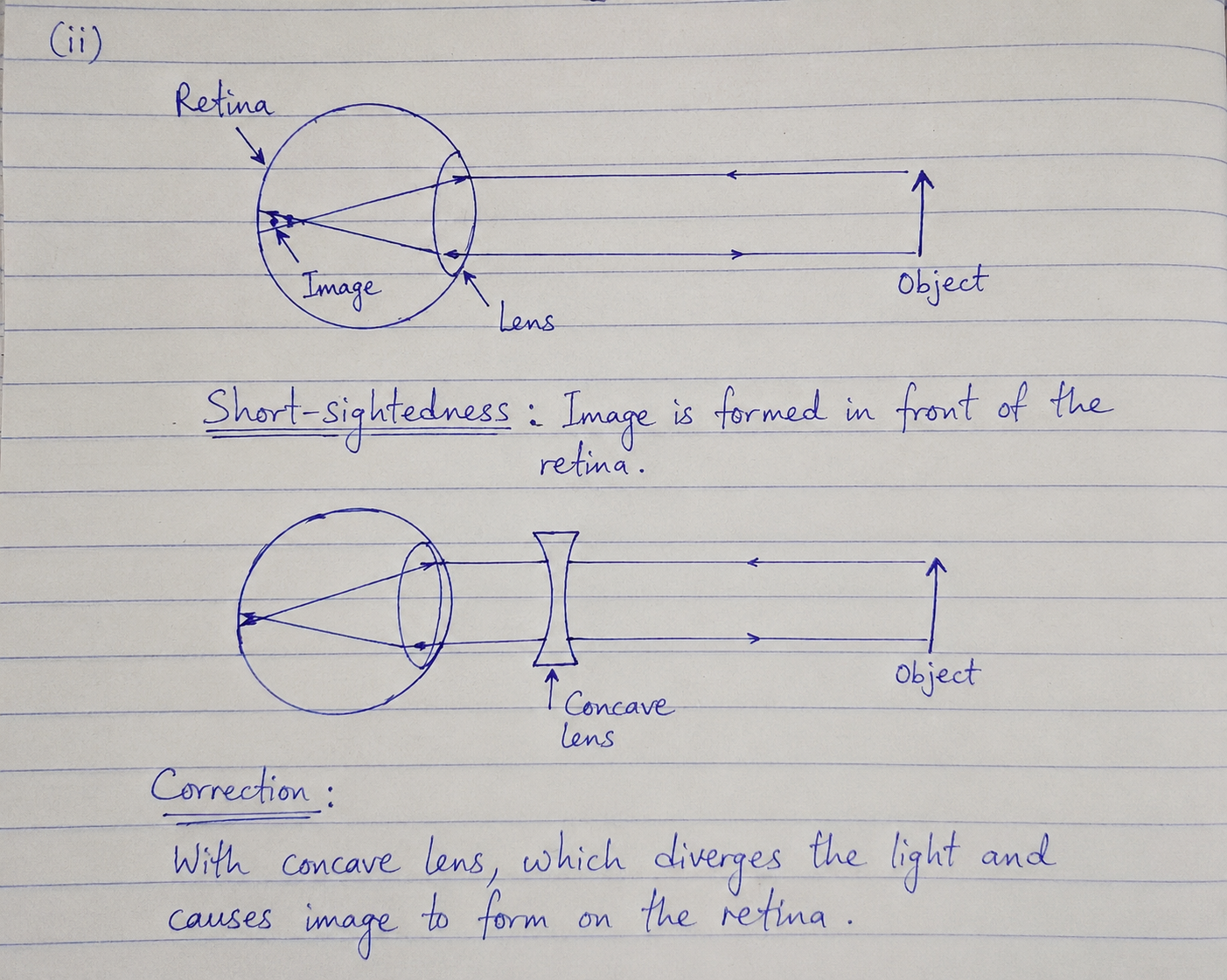
(3aii)
(3aiii)
(PICK ANY TWO)
(i) Birth rate
(ii) Death rate
(iii) Immigration
(iv) Emigration
(v) Availability of food
(vi) Predation
(vii) Disease and parasites
(viii) Competition
(3bi)
(PICK ANY ONE)
Swarming is the gathering or movement of a large number of organisms of the same species together in one place, usually for breeding, feeding, migration, or protection.
OR
Swarming is the temporary congregation of a large number of organisms of the same species in one area for a specific purpose, such as breeding or migration.
(3bii)
(PICK ANY ONE)
Epidemic is the rapid spread of a disease that affects a large number of people in a particular community or region within a short period of time.
OR
Epidemic is the outbreak of an infectious disease that spreads rapidly and affects many people in a particular area at the same time.
(3ci)
(PICK ANY ONE)
Parthenocarpy is the development of a fruit from the ovary without fertilization of the ovules, resulting in a seedless fruit.
OR
Parthenocarpy is the process by which fruits develop from the ovary without pollination and fertilization, producing fruits that are usually seedless.
(3cii)
(PICK ANY TWO)
(i) Abstinence
(ii) Use of condom
(iii) Oral contraceptive pills
(iv) Intrauterine device
(v) Vasectomy
(4ai)
(PICK ANY THREE)
(i) Enzymes are proteins.
(ii) Enzymes are biological catalysts.
(iii) Enzymes are specific in their action.
(iv) Enzymes are not used up during chemical reactions.
(v) Enzymes are effective in small quantities.
(vi) Enzymes are affected by temperature.
(vii) Enzymes are affected by pH.
(viii) Enzymes speed up chemical reactions.
(4aii)
-Pupil:
(PICK ANY ONE)
The pupil regulates the amount of light entering the eye.
OR
The pupil allows light to pass into the eye.
-Conjunctiva:
(PICK ANY ONE)
The conjunctiva protects the front of the eye from dust and microorganisms.
OR
The conjunctiva secretes mucus which keeps the eye moist and lubricated.
-Cornea:
(PICK ANY ONE)
The cornea refracts light entering the eye to help focus images on the retina.
OR
The cornea protects the front part of the eye from injury and dust.
(4bi)
(4bii)
(i) Shoulder joint.
(ii) Hip joint.
(4c)
 OR
OR
(5ai)
(5aii)
(PICK ANY THREE)
(i) It has a large, thick centrum.
(ii) It has a short, broad and blunt neural spine.
(iii) It has long transverse processes.
(iv) It has a large vertebral canal.
(v) It has well developed articular processes for articulation with adjacent vertebrae.
(vi) It has no rib facets for articulation with ribs.
(5bi)
(i) Collenchyma
(ii) Sclerenchyma
(iii) Xylem
(5bii)
-Hemophilia:
(PICK ANY ONE)
Haemophilia is a hereditary blood disorder in which the blood fails to clot normally, causing excessive or prolonged bleeding even from minor injuries.
OR
Haemophilia is an inherited genetic disorder in which the blood lacks sufficient clotting factors, resulting in prolonged or excessive bleeding.
-Mutation:
(PICK ANY ONE)
Mutation is a sudden, permanent and heritable change in the genetic material (gene or chromosome) of an organism, which may result in a change in its characteristics.
OR
Mutation is a sudden change in the genes or chromosomes of an organism that can be inherited and may produce new characteristics or variations.
-Sex-linked character:
(PICK ANY ONE)
Sex-linked character is a characteristic controlled by a gene located on the sex chromosomes (usually the X chromosome) and inherited differently in males and females.
OR
Sex-linked character is a hereditary trait determined by genes carried on the sex chromosomes and transmitted from parents to their offspring according to sex.
(5ci)
(i) Subsistence farming
(ii) Commercial farming
(iii) Mixed farming
(5cii)
(PICK ANY TWO)
(i) Drying
(ii) Smoking
(iii) Salting
(iv) Refrigeration
(v) Freezing
(vi) Canning
[VERSION I]
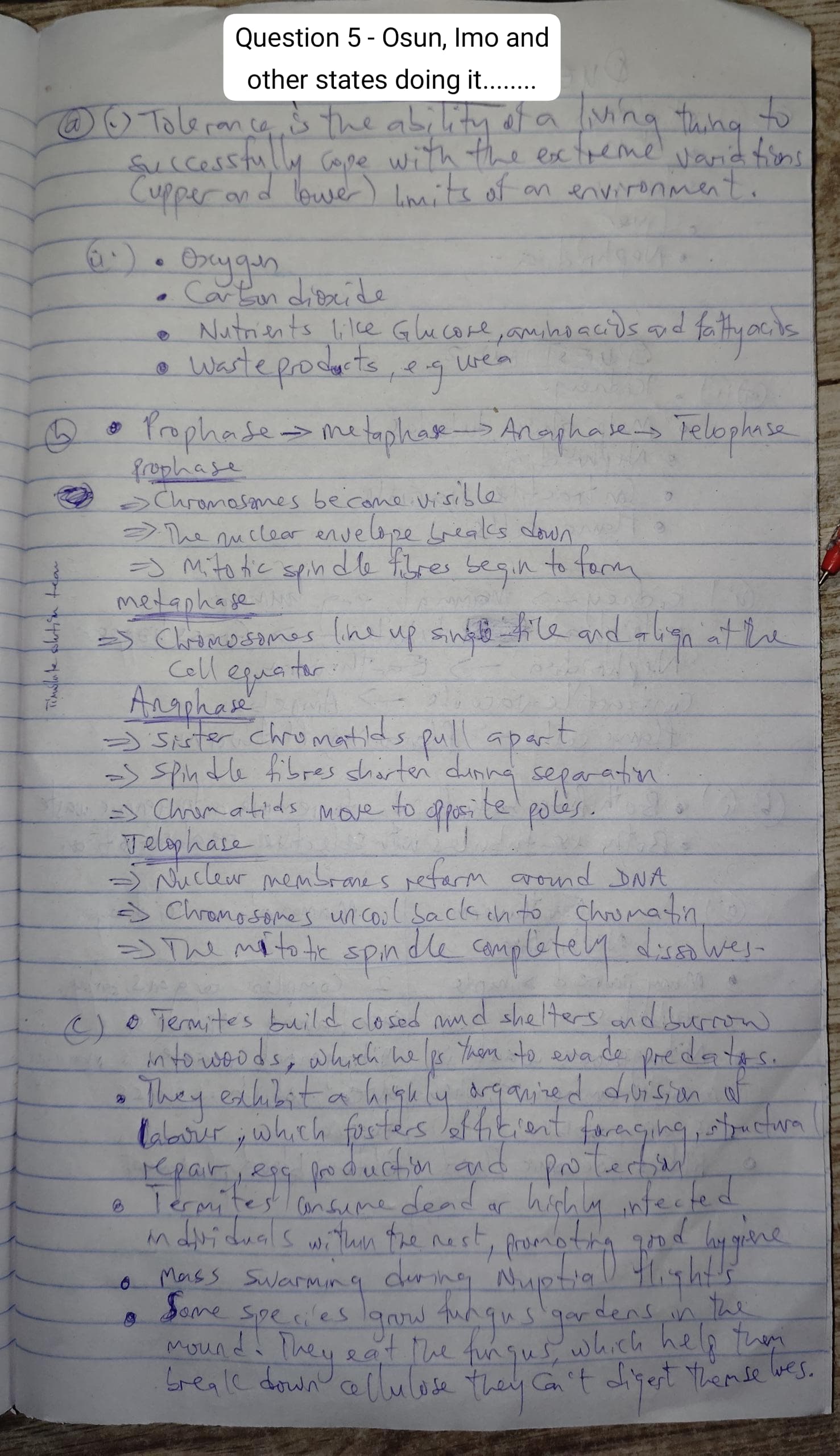
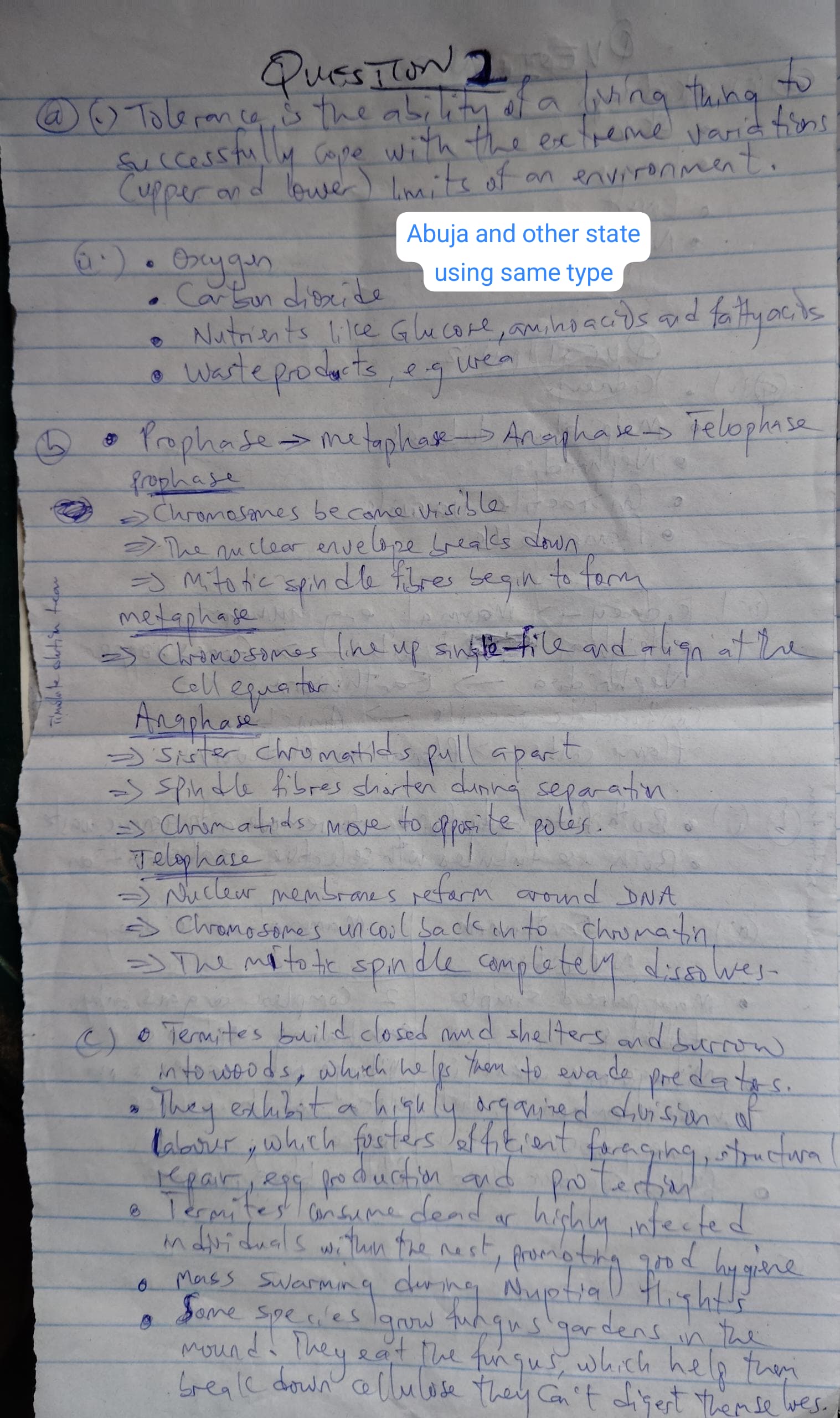
(1ai)
Tolerance is the ability of a living thing to successfully cope with the extreme variations (upper and lower) limits of an environment.
(1aii)
(i) Oxygen
(ii) Carbon dioxide
(iii) Nutrients like glucose, amino acids and fatty acids
(iv) Waste products, e.g. urea
(1b)
Prophase → Metaphase → Anaphase → Telophase
Prophase:
(i) Chromosomes become visible.
(ii) The nuclear envelope breaks down.
(iii) Mitotic spindle fibres begin to form.
Metaphase:
(i) Chromosomes line up single file and align at the cell equator.
Anaphase:
(i) Sister chromatids pull apart.
(ii) Spindle fibres shorten during separation.
(iii) Chromatids move to opposite poles.
Telophase:
(i) Nuclear membranes reform around DNA.
(ii) Chromosomes uncoil back into chromatin.
(iii) The mitotic spindle completely dissolves.
(1c)
(i) Termites build closed mud shelters and burrow into wood, which helps them to evade predators.
(ii) They exhibit a highly organized division of labour, which fosters efficient foraging, structural repair, egg production and protection.
(iii) Termites consume dead or highly infected individuals within the nest, promoting good hygiene.
(iv) Mass swarming during nuptial flights.
(v) Some species grow fungus gardens in the mound. They eat the fungus, which helps them break down cellulose they can’t digest themselves.
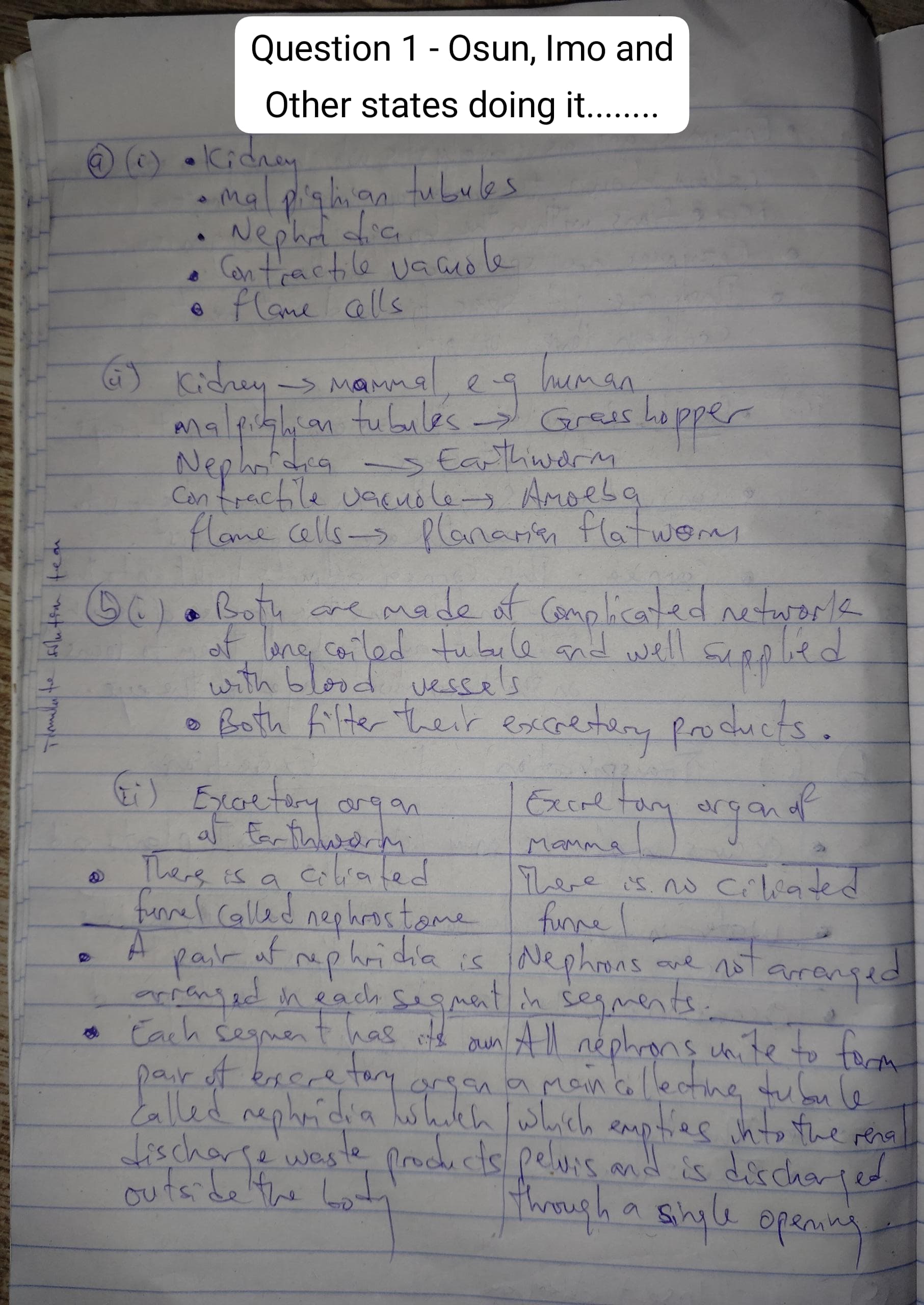
(2ai)
(i) Kidney
(ii) Malpighian tubules
(iii) Nephridia
(iv) Contractile vacuole
(v) Flame cells
(2aii)
(i) Kidney → Mammal (e.g. human)
(ii) Malpighian tubules → Grasshopper
(iii) Nephridia → Earthworm
(iv) Contractile vacuole → Amoeba
(v) Flame cells → Planarian flatworm
(2bi)
(i) Both are made of complicated networks of uncoiled tubules and are well supplied with blood vessels.
(ii) Both filter their excretory products.
(2bii)
[TABULATE]
Excretory organ of Earthworm:
(i) There is a ciliated funnel called nephrostome.
(ii) A pair of nephridia is arranged in each segment.
(iii) Each segment has its own pair of excretory organs called nephridia which discharge waste products outside the body.
Excretory organ of Mammal:
(i) There is no ciliated funnel.
(ii) Nephrons are not arranged in segments.
(iii) All nephrons unite to form a main collecting tubule which empties into the renal pelvis and is discharged through a single opening.
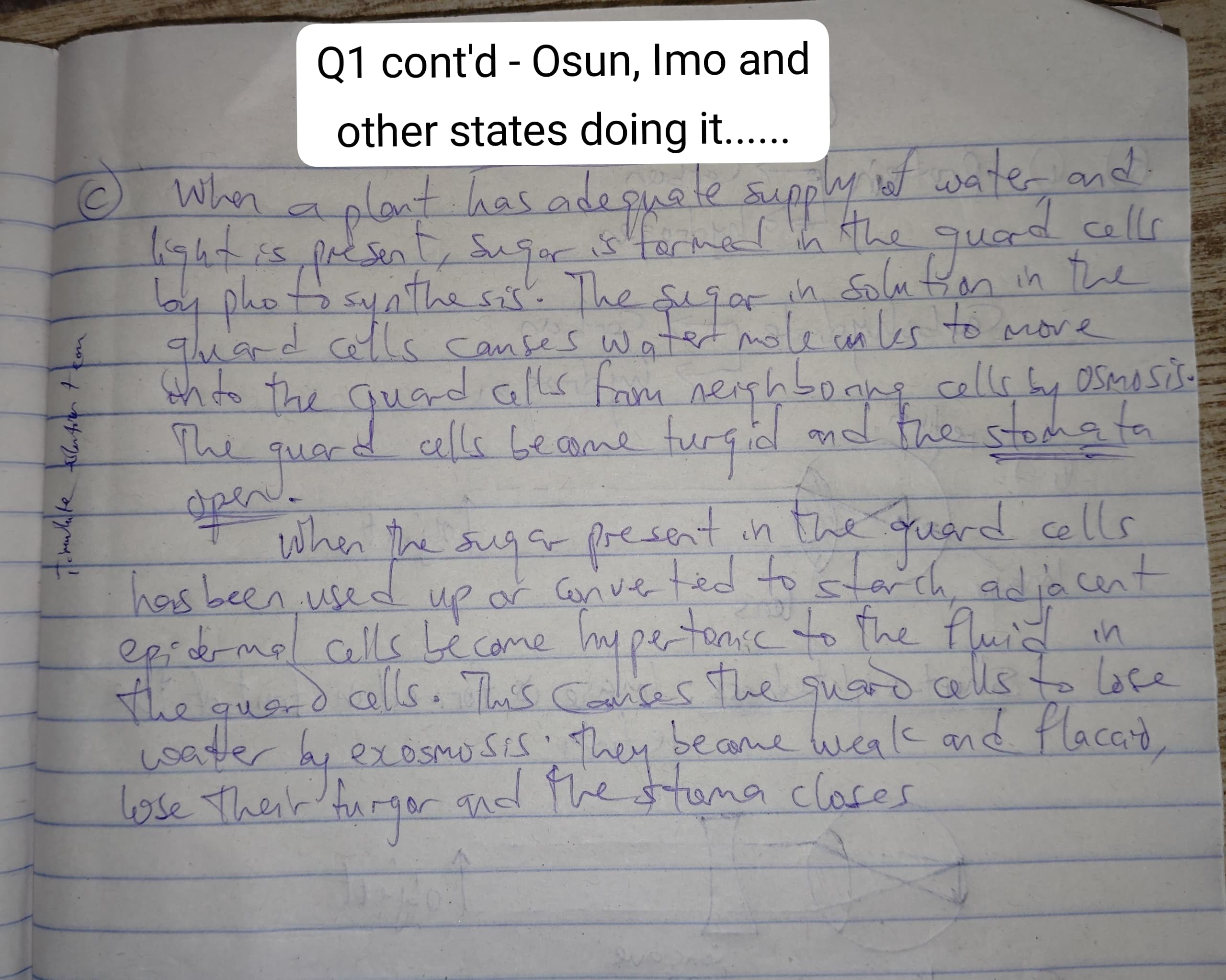
(2c)
When a plant has an adequate supply of water and light is present, sugar is formed in the guard cells by photosynthesis. The sugar in solution in the guard cells causes water molecules to move into the guard cells from neighbouring cells by osmosis. The guard cells become turgid and the stomata open.
When the sugar present in the guard cells has been used up or converted to starch, adjacent epidermal cells become hypertonic to the fluid in the guard cells. This causes the guard cells to lose water by exosmosis. They become weak and flaccid, lose their turgor, and the stomata close.
(3ai)
Protein:
(i) Carbon
(ii) Hydrogen
Carbohydrate:
(i) Carbon
(ii) Hydrogen
(3aii)
(3aiii)
(i) Birth and death rates.
(ii) Immigration and emigration.
(3bi)
Swarming means a large group of animals of the same species gathering and moving together in a coordinated way, usually for reproduction, migration or defence.
(3bii)
Epidemic is the sudden increase in the number of cases of a disease in a specific population, area, or region, above what is normally expected.
(3ci)
Parthenocarpy is the development of fruit from the ovary without fertilization of the ovule/egg cell.
(3cii)
(i) Barriers (use of sheath or condom).
(ii) Use of intra-uterine device (IUD).
(4ai)
(i) Enzymes act as catalysts which help to speed up or slow down the rate of most chemical reactions within the body of the organism.
(ii) Enzymes are specific in action.
(iii) They are pH specific and act best at certain levels of pH.
(4aii)
(i) Pupil: Regulates the amount of light rays entering the eye.
(ii) Conjunctiva: Secretes mucus and tears to keep the eye surface moist.
(iii) Cornea: The cornea admits light into the eye and begins the process of bending the light rays to bring them to focus on the innermost layer of the eye.
(4bi)
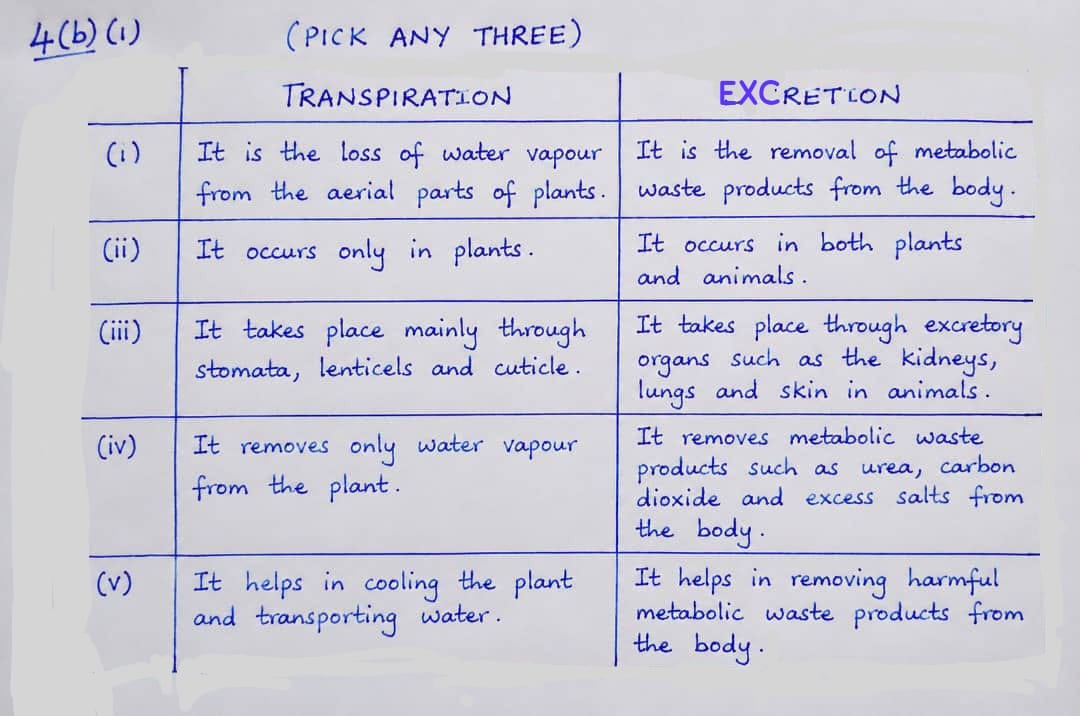
[TABULATE]
Transpiration:
(i) Occurs in plants only.
(ii) Water in the form of vapour is lost.
(iii) Occurs only in the day.
Excretion:
(i) Occurs in both plants and animals.
(ii) Water, urea, CO₂, salts and dyes are lost.
(iii) Occurs both day and night.
(4bii)
(i) The hip.
(ii) The shoulder.
(4c)
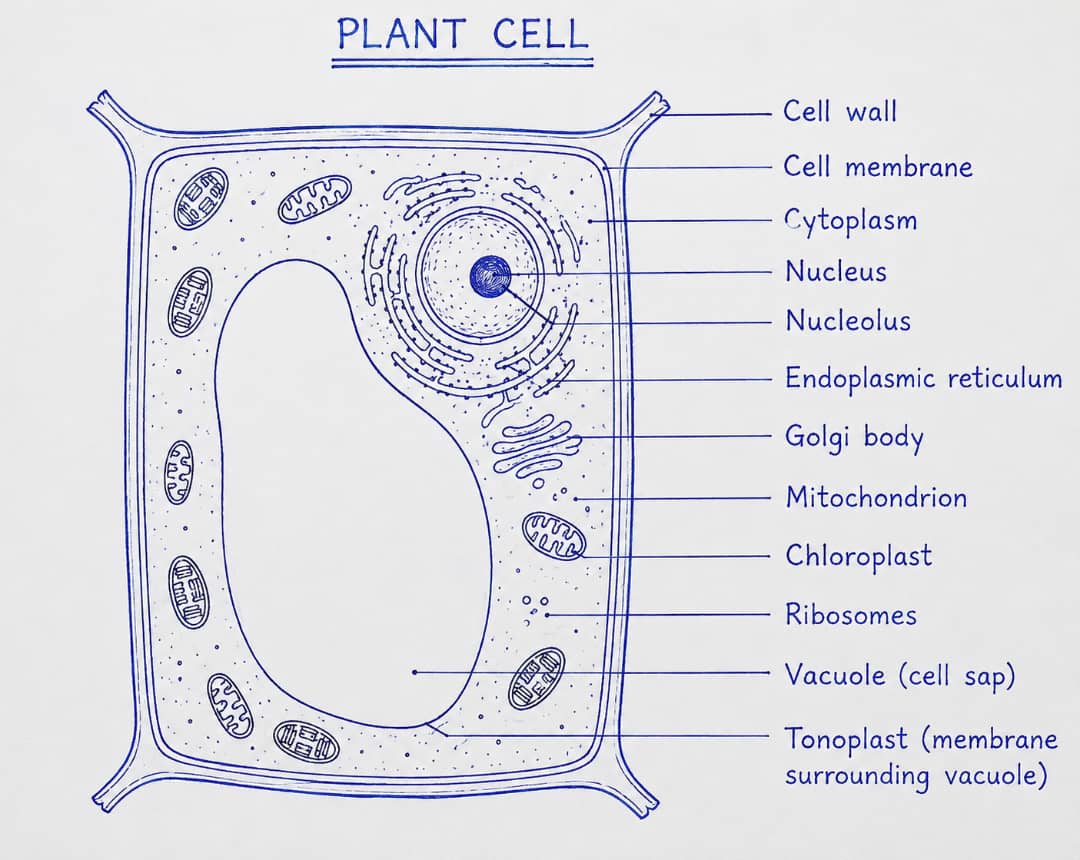
(5)
Answers Loading...