Friday, 19th June 2026
Commerce 2 (Essay) — 9:30am – 11:30am
Commerce 1 (Objective) — 11:30am – 12:20pm
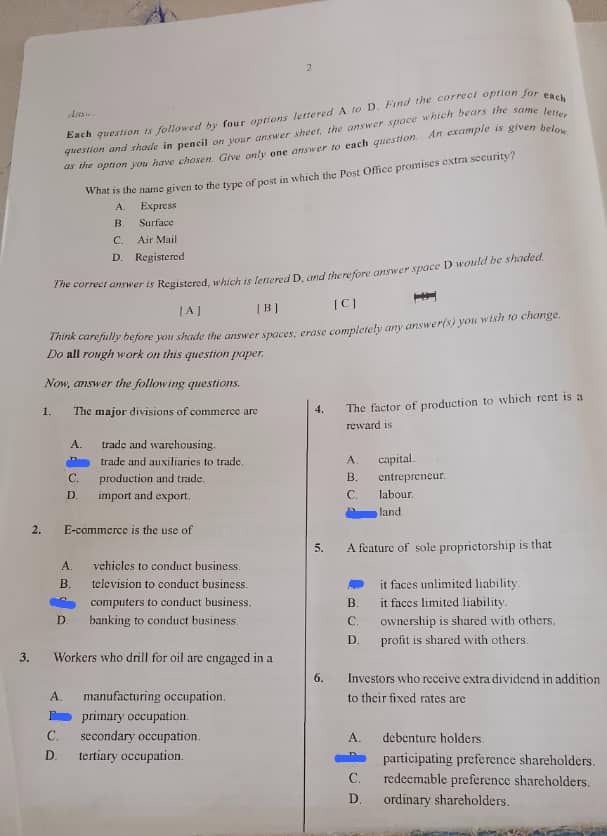
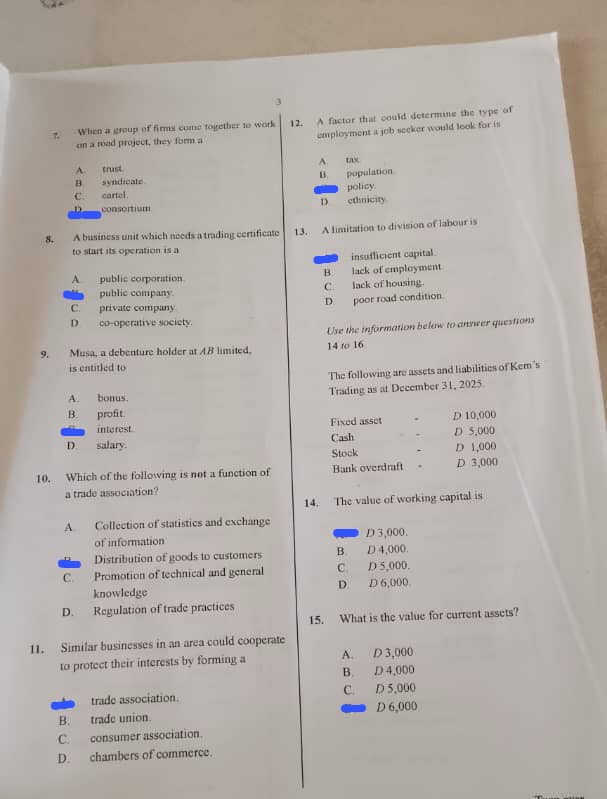
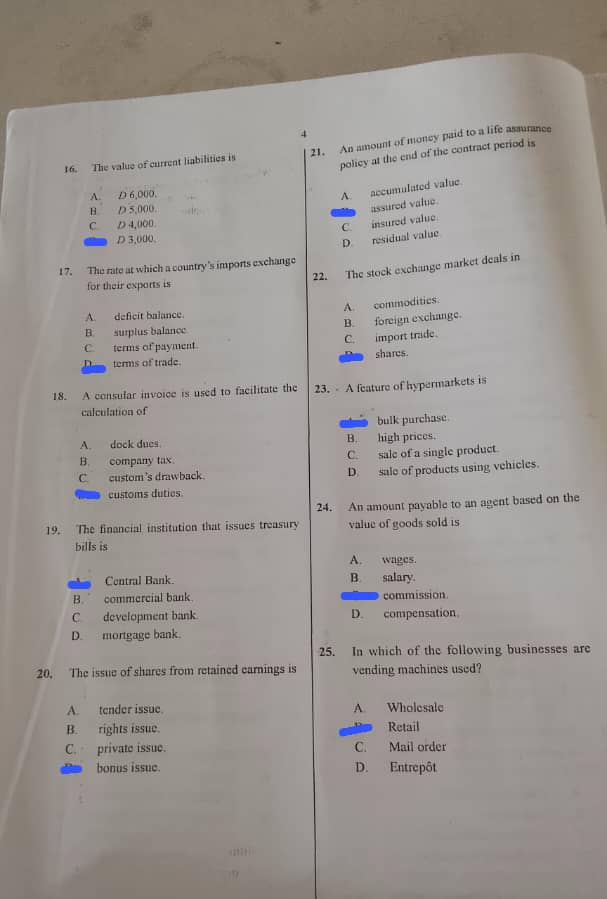
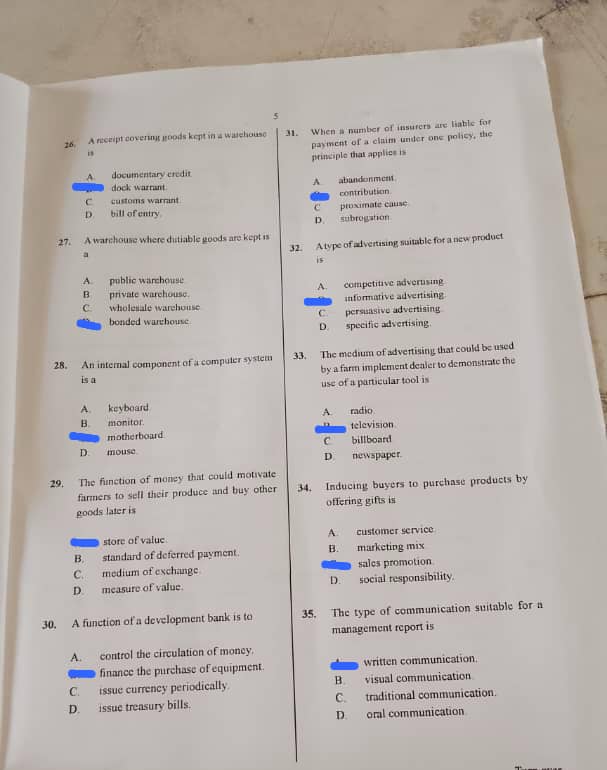
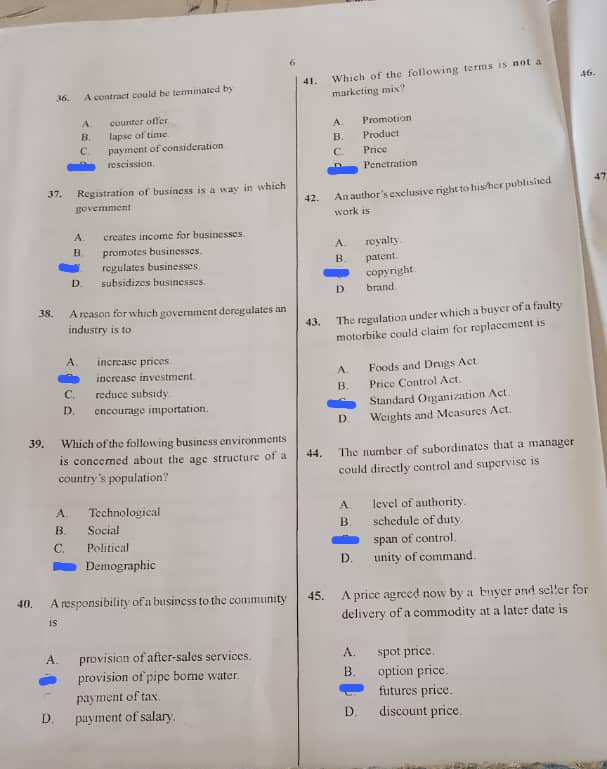
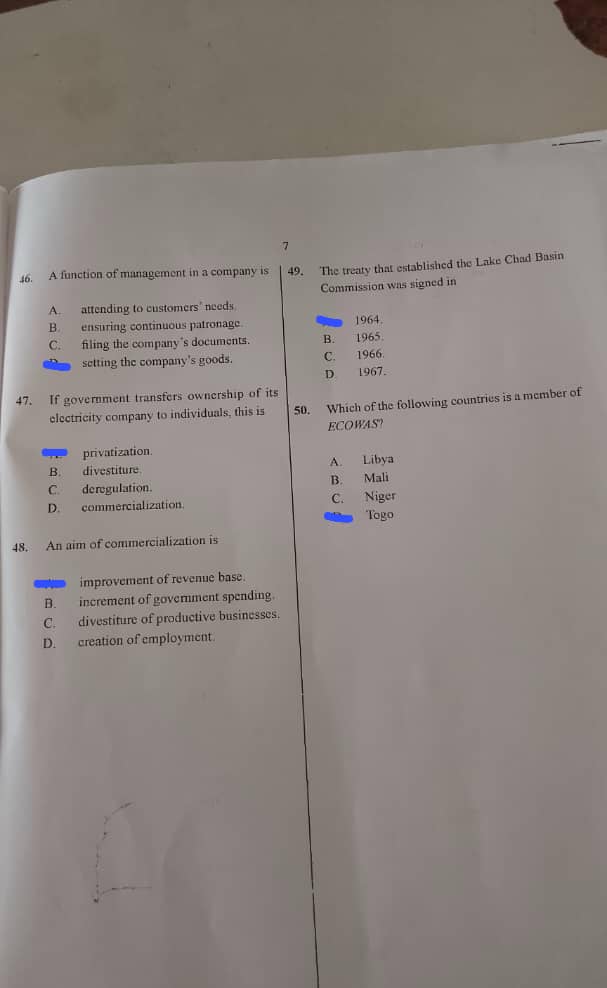
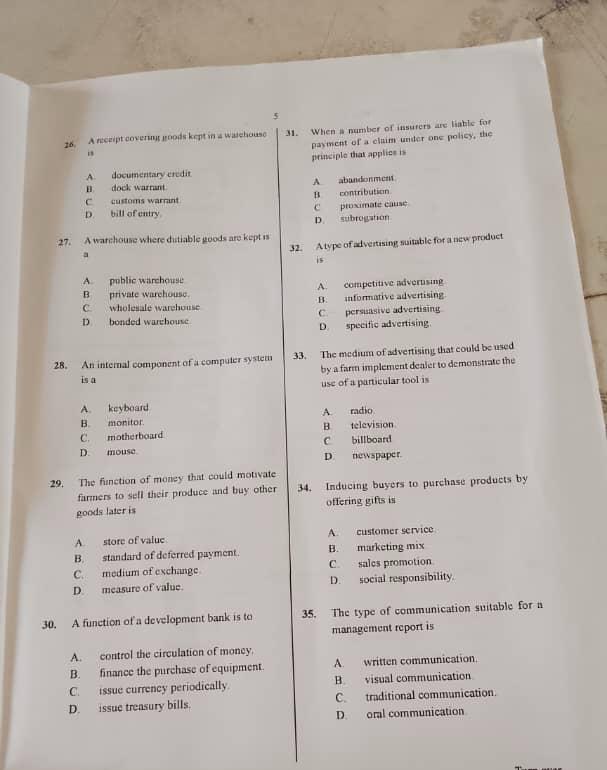
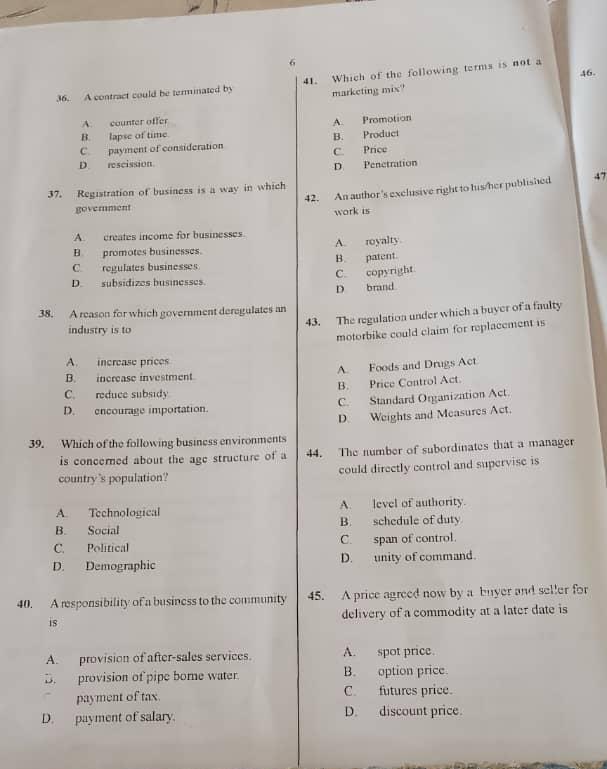
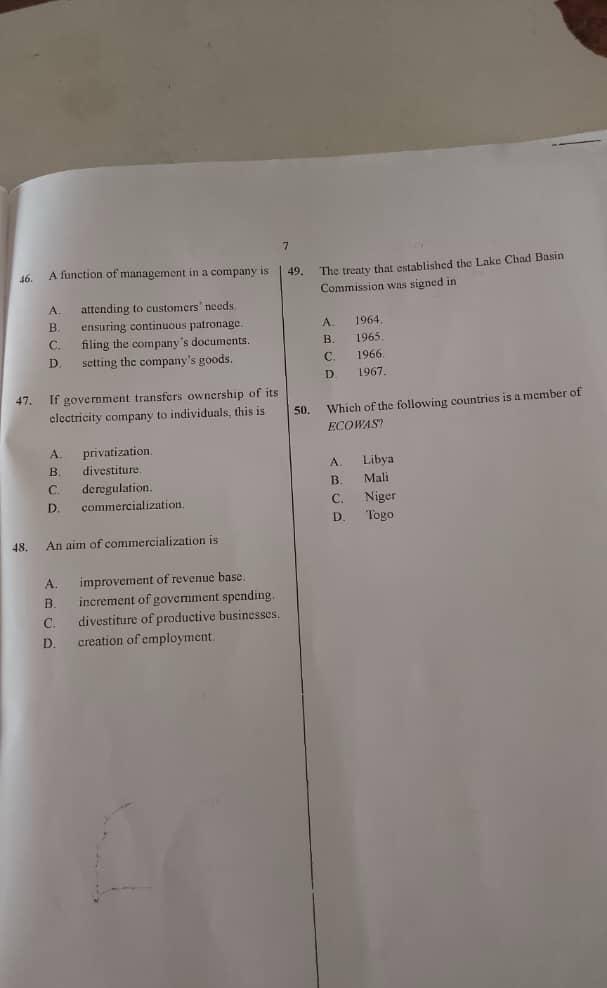
COMMERCE OBJ:
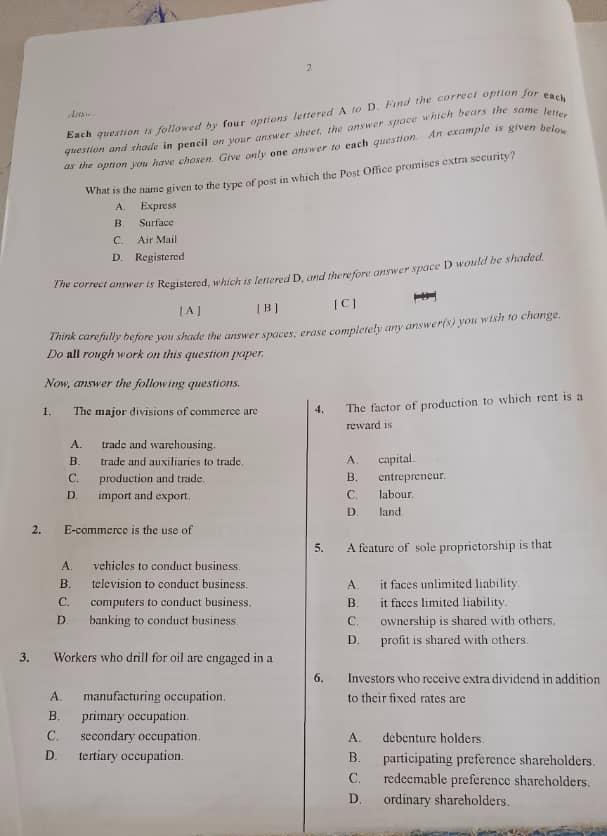
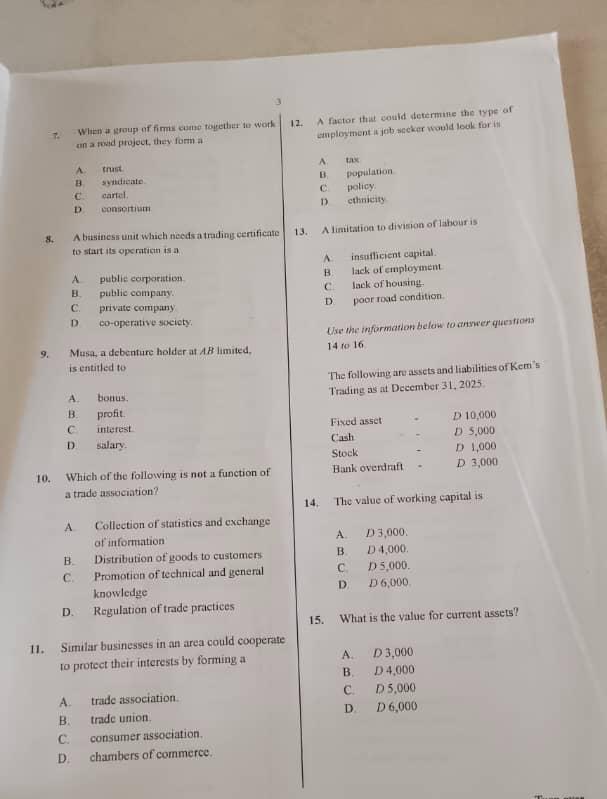
1-10: BCBDABDBCB
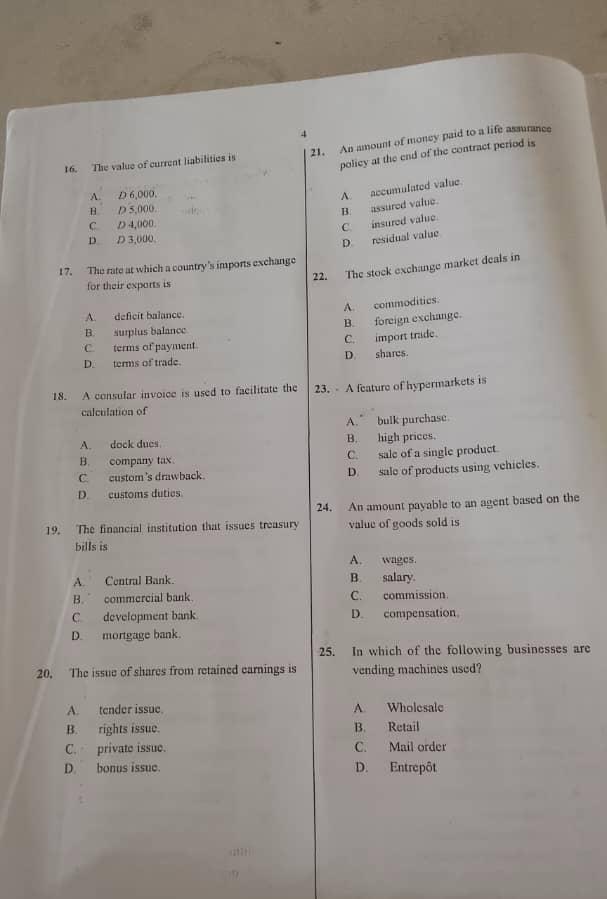
11-20: ACAADDDDAD
21-30: BDACBBDCAB
31-40: BBBCADCBDB
41-50: DCCCCDAAAD
⭐ PLEASE NOTE: ALWAYS FOLLOW EXAM INSTRUCTIONS
We often provide answers to all questions, including different versions and alternatives. This does not mean you should write everything.
Simply read the instructions given, select the required questions, and choose the version you prefer.
The extra answers are provided to help make students’ work different and avoid everyone writing the same thing.
Always follow the instructions given for each paper.
[VERSION I]
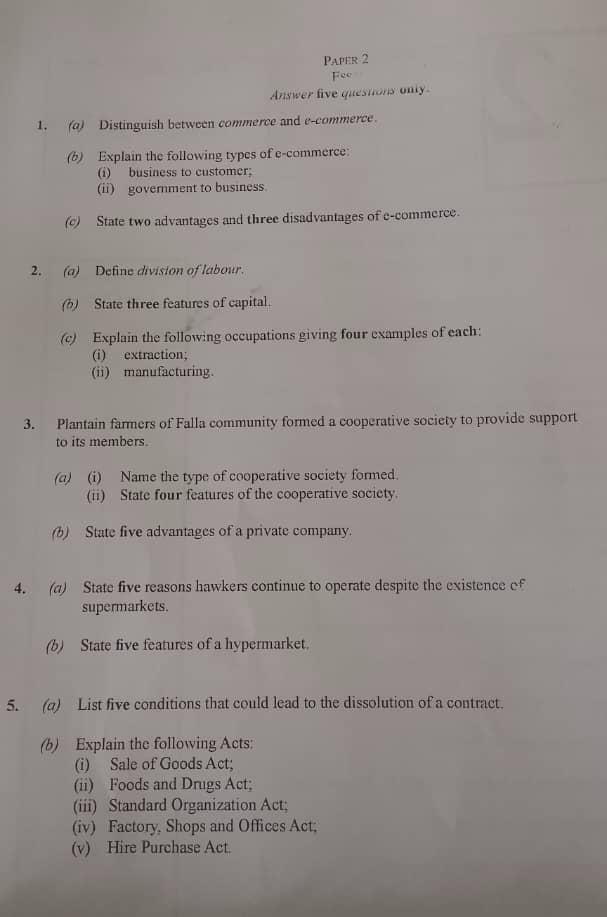
(1a)
(i) Commerce refers to the buying and selling of goods and services through traditional means, while e-commerce involves buying and selling through electronic platforms such as the internet.
(ii)Commerce is carried out physically in shops, markets, and offices, while e-commerce is carried out online using computers, smartphones, and the internet.
(iii)Commerce requires buyers and sellers to meet physically or through agents, while e-commerce does not require physical contact between parties.
(iv)In commerce, payment is usually made in cash or cheque, while in e-commerce payment is done electronically using bank transfer, debit/credit cards, or mobile payment systems.
(v) Commerce is generally slower due to physical processes, while e-commerce is faster because transactions are completed instantly online.
(1bi)
Business to Customer: This refers to transactions where businesses sell goods and services directly to individual consumers through online platforms. Examples include online shopping websites where customers order products and have them delivered. It is the most common form of e-commerce.
(1bii)
Government to Business: This is a type of e-commerce where the government provides goods, services, or information to businesses electronically. It includes activities such as tax payment, business registration, licensing, and government procurement done online. It helps reduce paperwork and improves efficiency.
(1c)
Advantages of E commerce
(PICK ANY TWO)
(i) Convenience: E-commerce provides great convenience because it allows customers to buy goods and services at any time of the day without going to a physical shop. Buyers can simply use their phone or computer from home, school, or office to place orders. This saves time, energy, and transportation costs.
(ii) Global market access: E-commerce removes geographical barriers by allowing businesses to sell products to customers in different parts of the world. A small business in Nigeria, for example, can sell products to customers in Europe or Asia through online platforms, thereby increasing sales opportunities.
(iii) Speed of transactions: Transactions in e-commerce are carried out very quickly. Orders can be placed within minutes, payments are processed instantly through electronic means, and confirmation is received immediately. This makes buying and selling faster compared to traditional commerce.
(iv) Lower operating cost: E-commerce reduces the cost of running a business because there is no need for physical shops, large sales staff, or high rent expenses. Many online businesses operate from small offices or even homes, helping them save money and increase profit.
(v) Wider product variety: Customers have access to a large variety of goods and services from different sellers on a single platform. This allows buyers to choose from many brands, designs, and prices, increasing satisfaction and better decision-making.
(vi) Easy price comparison: E-commerce platforms allow customers to easily compare prices of similar products from different sellers. This helps buyers choose the best quality product at the most affordable price, promoting fair competition among sellers.
Disadvantages of E-commerce
(PICK ANY THREE)
(i) Lack of physical inspection:One major disadvantage is that customers cannot physically touch, test, or inspect goods before purchasing. This may lead to receiving products that do not meet expectations in terms of quality, size, or appearance.
(ii) Risk of fraud and scams: E-commerce is sometimes affected by fraudulent sellers and fake websites. Customers may pay for goods that are never delivered, leading to financial loss and lack of trust in online transactions.
(iii) Delivery delays: Goods purchased online are not received immediately. They may take days or weeks to arrive due to transportation issues, distance, or logistics problems, which can be inconvenient for urgent needs.
(iv) Dependence on internet and technology: E-commerce cannot function without internet access, electricity, or electronic devices. In areas with poor network or power supply, online business activities become difficult or impossible.
(v) Security risks: There is a risk of hackers stealing personal information, bank details, or payment data during online transactions. This exposes customers and businesses to financial fraud and identity theft.
(vi) Technical failures: E-commerce platforms may experience system breakdowns, website crashes, or network failures. When this happens, transactions may be interrupted or lost, causing inconvenience to users.
(vii) Lack of personal interaction: Unlike traditional commerce, there is no face-to-face communication between buyers and sellers. This reduces personal relationship, trust, and the opportunity for immediate negotiation or clarification.
[VERSION II]
(1a)
(PICK ANY ONE)
Commerce is the process of buying and selling goods and services and all activities that aid trade, such as transportation, banking, insurance and advertising. While E-commerce is the buying and selling of goods and services through electronic networks, especially the internet.
OR
Commerce refers to the branch of business that deals with the distribution and exchange of goods and services from producers to consumers through trade and aids to trade. While E-commerce is a system of conducting commercial transactions electronically using computers, mobile phones and other digital devices without physical contact between buyers and sellers.
(1bi)
(PICK ANY ONE)
Business to Customer (B2C) is a type of e-commerce in which a business sells goods and services directly to individual consumers through the internet. In this arrangement, customers visit online stores, place orders, make payments electronically and receive the products or services from the business.
OR
Business to Customer (B2C) refers to electronic commercial transactions between a business organization and the final users of its products. It enables consumers to buy goods and services online without visiting a physical store, making transactions faster and more convenient.
(1bii)
(PICK ANY ONE)
Government to Business (G2B) is a type of e-commerce that involves the use of electronic platforms for interactions between government agencies and business organizations. Through this system, businesses can access government services, submit applications and make payments online.
OR
Government to Business (G2B) refers to online transactions and communication between government institutions and private businesses. It allows companies to carry out activities such as tax payments, business registration, licence applications and other official transactions electronically.
(1c)
Advantages of E-commerce
(PICK ANY TWO)
(i) It enables businesses to operate twenty-four hours a day: E-commerce allows businesses to remain open all the time without closing hours. Customers can place orders at any time of the day or night, even when the business owner is asleep or unavailable.
(ii) It gives access to a wider market across different locations: E-commerce removes geographical barriers by allowing businesses to reach customers in different towns, states, and even countries. A seller in one location can easily sell products to buyers in distant places, increasing market size and profit potential.
(iii) It reduces the cost of maintaining physical shops: Businesses that operate online do not need large physical shops, expensive rent, or many shop attendants. This helps to reduce operational costs significantly, making the business more profitable.
(iv) It allows faster buying and selling transactions: Transactions in e-commerce are completed quickly because orders are placed and processed electronically. Payments and confirmations are done instantly, saving time compared to traditional buying and selling methods.
(v) It improves communication between buyers and sellers: E-commerce platforms provide tools such as chat, email, and notifications that allow buyers and sellers to communicate quickly. This helps to answer questions, confirm orders, and resolve issues easily.
(vi) It provides convenience to customers: Customers can shop from anywhere using their phones or computers without going to physical stores. This saves time, reduces stress, and makes shopping more comfortable and flexible.
Disadvantages of E-commerce
(PICK ANY THREE)
(i) Risk of fraud and cybercrime: E-commerce is exposed to fraud where fake sellers or websites may deceive customers into paying for goods that are not delivered. Cybercriminals may also hack accounts and steal money.
(ii) Dependence on internet and electricity supply: E-commerce cannot function without internet connection and electricity. In areas with poor network or power supply, online transactions become difficult or impossible.
(iii) Customers cannot physically inspect goods before purchase: Buyers are unable to touch, test, or examine products before buying them. This may result in receiving goods that are different from expectations in terms of quality or size.
(iv) Delivery delays may occur: After purchasing goods online, customers may have to wait for delivery. Sometimes transportation issues or distance can cause delays, which is inconvenient for urgent needs.
(v) Technical failures can disrupt transactions: System breakdowns, website crashes, or network problems can interrupt buying and selling activities. This may lead to loss of orders or incomplete transactions.
(vi) Personal information may be exposed to hackers: During online transactions, sensitive information such as bank details and passwords may be stolen by hackers if proper security measures are not in place.
(vii) High cost of setting up and maintaining online platforms: Although e-commerce reduces physical shop costs, setting up websites, payment systems, and cybersecurity measures can be expensive for businesses.
(viii) Lack of personal contact between buyers and sellers: There is no face-to-face interaction in e-commerce, which may reduce trust and make it difficult to build strong customer relationships.
(ix) Possibility of receiving damaged or wrong products: Sometimes customers receive goods that are different from what they ordered or items that are damaged during transportation.
(x) Difficulty in resolving complaints in some cases: When problems occur, it may take time to contact customer service and resolve issues, especially when dealing with distant or foreign sellers.
[VERSION I]
(2a)
(PICK ANY ONE)
Division of labour is the breaking down of a production process into different stages, where each worker is assigned a specific task to perform repeatedly in order to increase efficiency and output. This helps to improve workers’ skill and speed in production.
OR
Division of labour is a system of production in which the production of a good or service is separated into small parts, and each part is handled by different workers or groups of workers to improve speed, skill, and productivity. It also reduces wastage of time and increases overall output.
(2b)
(PICK ANY THREE)
(i) Capital is man-made: Capital consists of goods such as machines, tools, buildings, and equipment which are created by human effort. It is not a natural gift like land, but something produced to assist further production.
(ii) It is used for production: Capital is not meant for direct consumption. Instead, it is used in producing other goods and services, for example, machines used in factories help to produce finished goods.
(iii) It is durable: Capital goods are generally long-lasting and can be used repeatedly in the production process over a period of time before they wear out or become obsolete.
(iv) It earns income: Capital is capable of generating income for its owner. When used in production or investment, it yields profit or interest depending on how it is applied.
(v) It is mobile: Capital can be moved from one place or industry to another. For example, machines and money can be transferred easily to where they are most needed for production.
(vi) It depreciates in value: Capital goods gradually lose value due to wear and tear from continuous use or due to technological changes that make them outdated.
(2ci)
Extraction: Extraction is an occupation in the primary stage of production that involves obtaining natural resources directly from the earth, sea, rivers, or forests for human use or further processing. It deals mainly with raw materials that are not yet manufactured and are found in their natural state.
Examples of extraction include:
(i) Mining of minerals such as gold and coal.
(ii) Fishing in rivers, lakes, and oceans.
(iii) Forestry (cutting down of timber from forests).
(iv) Quarrying of stones, sand, and gravel.
(2cii)
Manufacturing: Manufacturing is an occupation in the secondary stage of production that involves the conversion of raw materials into finished or semi-finished goods through industrial processes. It takes place mainly in factories where raw materials are transformed into products that are more useful and valuable to consumers.
Examples of manufacturing include:
(i) Production of textiles and clothing in factories.
(ii) Processing of food and beverages such as bread and drinks.
(iii) Refining of crude oil into petrol, diesel, and kerosene.
(iv) Production of electronics such as phones and televisions.
————————————————————————————————————
[VERSION II]
(2a)
(PICK ANY ONE)
Division of labour is the process of breaking down a production activity into different tasks and assigning each task to different workers according to their skills and abilities, so that each worker specializes in a particular aspect of the work.
OR
Division of labour is the specialization of workers in different tasks or stages of production, where each worker performs a specific part of the work to increase efficiency and productivity.
(2b)
(PICK ANY THREE)
(i) Capital is a man-made factor of production:
Capital is not a natural resource like land. It is created by human effort. Items such as machines, factories, tools, and equipment are produced by man to assist in production activities.
(ii) It is used to produce other goods and services: Capital is not meant for direct consumption but is used to produce other goods and services. For example, a sewing machine is used to produce clothes, and a tractor is used to improve agricultural output.
(iii) It is subject to depreciation through wear and tear: Capital goods lose value over time due to continuous use. Machines and equipment gradually wear out or become outdated, reducing their efficiency and value in production.
(iv) It can be increased through savings and investment: The quantity of capital in an economy can grow when individuals and businesses save part of their income and invest it in productive assets such as machines, tools, and buildings.
(v) It is mobile and can be transferred from one place or use to another: Capital can be easily moved and used in different locations or industries. For example, machines can be transferred from one factory to another where they are needed more.
(vi) It is productive because it helps in generating income and wealth: Capital contributes directly to production, making work easier and increasing output. This leads to higher income and profit for individuals, firms, and the economy as a whole.
(2ci)
(PICK ANY ONE)
Extraction occupation refers to economic activities concerned with obtaining natural resources directly from the earth, sea, or forest for human use and industrial production.
OR
Extraction occupation involves the removal of natural resources from the earth, water, or forest for use by man and industries.
Examples:
(PICK ANY FOUR)
(i) Mining of gold, coal, tin and limestone.
(ii) Crude oil exploration and drilling.
(iii) Fishing.
(iv) Lumbering (Cutting of timber).
(v) Quarrying (granite, sand, gravel, stone)
(v) Salt mining/extraction
(2cii)
(PICK ANY ONE)
Manufacturing occupation refers to economic activities that involve processing or transforming raw materials into finished goods or products that can be used by consumers or other industries.
OR
Manufacturing occupation involves the conversion of raw materials into finished or semi-finished goods through industrial processes.
Examples:
(PICK ANY FOUR)
(i) Production of cement from limestone.
(ii) Manufacturing of textiles from cotton.
(iii) Production of vehicles in automobile factories.
(iv) Processing of cocoa into chocolate.
(v) Producing paper from wood pulp.
(vi) Making shoes from leather.
(3ai)
The type of cooperative society formed by the plantain farmers of Falla community is an Agricultural Cooperative Society (Farmers' Cooperative Society).
(3aii)
(PICK ANY FOUR)
(i) Voluntary Membership: Membership is open to all eligible persons who are willing to join and accept the rules and regulations of the society. No individual is forced to become a member, and members are free to withdraw according to the society's regulations.
(ii) Democratic Control: The society is managed according to democratic principles where each member has one vote irrespective of the amount of capital contributed. Important decisions are made collectively by members during meetings.
(iii) Common Interest: Members unite to pursue shared economic and social objectives. The society is established to promote the welfare of members through mutual assistance and cooperation.
(iv) Limited Return on Capital: Members receive only a limited interest on the capital they contribute. The major aim of the society is service to members rather than profit maximization.
(v) Distribution of Surplus: Any surplus or profit made by the cooperative is distributed among members according to the volume of their transactions or participation in the activities of the society.
(vi) Legal Recognition: The cooperative society is usually registered under the relevant cooperative laws, giving it legal status and enabling it to operate officially.
(vii) Self-help and Mutual Assistance: Members contribute resources and work together to solve common problems and improve their economic conditions.
(viii) Open Membership: Membership is generally open to all persons who share the objectives of the society and are willing to comply with its rules and regulations.
(3b)
(PICK ANY FIVE)
(i) Limited Liability: The liability of shareholders is limited to the amount they have invested in the company. Their personal properties cannot be used to settle the debts of the business beyond their investment.
(ii) Separate Legal Entity: A private company has a legal existence distinct from its owners. It can own assets, enter into contracts, borrow money, and sue or be sued in its own name.
(iii) Continuity of Existence: The company enjoys perpetual succession, meaning that it continues to exist despite the death, retirement, insolvency, or withdrawal of any shareholder.
(iv) Ability to Raise Capital: A private company can obtain capital from shareholders and may attract additional investment to finance expansion and business growth.
(v) Efficient Management: The company can appoint qualified professionals and experts to manage its affairs, resulting in improved efficiency and better decision-making.
(vi) Greater Stability: Because ownership can be transferred and the company has perpetual succession, it enjoys more stability than sole proprietorships and partnerships.
(vii) Business Expansion Opportunities: The availability of capital and professional management enables the company to expand its operations more easily and enter new markets.
(viii) Enhanced Business Reputation: A private company often enjoys greater public confidence and credibility because it is registered and operates under legal regulations.
[VERSION II]
(3a)
The type of cooperative society formed is a Producers Cooperative Society (Agricultural Cooperative Society).
(3b)
(PICK ANY FIVE)
(i) Voluntary membership: Membership of a producers cooperative society is voluntary. This means that farmers are not forced to join; they decide on their own to become members in order to enjoy the benefits of working together. Similarly, any member who is no longer interested can leave the society according to its rules and regulations.
(ii) Democratic control (one man, one vote): The society is controlled democratically by its members. Every member has equal voting power regardless of the amount of money or resources contributed. This ensures fairness in decision-making and prevents domination by a few wealthy members.
(iii) Pooling of resources: Members contribute different resources such as money, land, labour, tools, or equipment into a common pool. These pooled resources are then used to carry out large-scale production activities which individual farmers may not be able to do alone.
(iv) Joint production activities: Members work together in producing agricultural goods such as plantain, maize, or vegetables. They may share farmland and use collective labour and modern farming techniques, which helps to increase efficiency and improve total output.
(v) Service motive (not profit maximization): The main aim of the producers cooperative society is to assist members in improving production and increasing their income rather than making huge profits. Any benefit gained is meant to improve members’ welfare and productivity.
(vi) Provision of farm inputs and services: The cooperative helps members to access essential farm inputs such as fertilizers, seedlings, pesticides, and farming equipment at cheaper prices. It may also provide services such as storage, transportation, and marketing assistance.
(vii) Distribution of surplus: At the end of production and sales, any surplus (profit) made is shared among members. Distribution is usually based on the level of contribution, labour input, or participation of each member in the cooperative activities.
(viii) Legal status (separate legal entity): Once registered, the cooperative society becomes a legal entity. This means it can own property, enter into contracts, borrow money, and sue or be sued in its own name, separate from its individual members.
(3c)
(PICK ANY FIVE)
(i) Separate legal entity: A private company is legally separate from its owners. This means the company can own property, borrow money, sign contracts, and sue or be sued in its own name without involving the personal identity of the owners.
(ii) Limited liability: Shareholders are only responsible for the amount of money they invested in the company. If the company suffers losses or debts, their personal assets such as houses and cars cannot be used to pay the debts.
(iii) Continuity of existence: A private company continues to operate even if a shareholder dies, retires, or leaves the business. The company is not affected because ownership can be transferred without closing the business.
(iv) Efficient management: Private companies are usually managed by trained and experienced directors. This leads to better planning, improved decision-making, and more efficient use of resources, which increases productivity.
(v) Ease of raising capital:
A private company can raise funds through shareholders’ contributions, reinvested profits, and loans from banks or financial institutions. This helps the business to expand and grow easily.
(vi) Restriction on share transfer: Shares in a private company are not freely sold to the public. This ensures that control of the company remains within a small group of trusted owners, preventing external interference.
(vii) Risk sharing:The risks of running the business are shared among all shareholders. This reduces the financial burden on any single owner and encourages investment.
(4a)
(PICK ANY FIVE)
(i) Low Capital Requirement: Hawking requires very little capital to start compared to supermarkets. A hawker can begin business with a small amount of money and a few goods, making it an attractive option for individuals who cannot afford large business investments.
(ii) Convenience to Customers: Hawkers move from place to place, bringing goods directly to consumers. This saves customers time and transport costs since they can purchase needed items at their homes, workplaces, bus stations, or along the streets.
(iii) Employment Opportunity: Hawking provides a source of income and employment for many people, especially the unemployed and school leavers. It enables them to earn a living without waiting for scarce formal jobs in government or private organizations.
(iv) Flexible Business Operation: Hawkers can easily change their locations and business hours according to customer demand. This flexibility allows them to reach more customers and maximize sales, unlike supermarkets which operate from fixed locations.
(v) Ability to Sell in Remote Areas: Hawkers can reach villages, streets, and communities where supermarkets are unavailable. By taking goods directly to such areas, they satisfy consumer needs and create a ready market for their products.
(vi) Lower Operating Costs: Hawkers do not spend much on rent, electricity, security, and staff salaries. Their low operating expenses enable them to continue in business and sometimes sell goods at competitive prices.
(vii) Quick Sales and Cash Transactions: Most hawkers conduct business on a cash-and-carry basis, reducing the risk of bad debts. Immediate payment allows them to quickly recover their capital and restock goods for continuous business operations.
(viii) Availability of Ready Market: Many consumers prefer buying from hawkers because of convenience and accessibility. The constant demand for everyday items such as fruits, snacks, and household products encourages hawkers to remain in business.
(4b)
(PICK ANY FIVE)
(i) Large Size and Spacious Premises: A hypermarket occupies a very large area and contains numerous departments under one roof. The spacious environment allows customers to move freely while shopping for a wide variety of products and services.
(ii) Wide Variety of Goods: Hypermarkets stock different categories of goods such as food items, clothing, electronics, furniture, and household products. Customers can conveniently purchase many items in one location instead of visiting several separate shops.
(iii) Self-Service System: Customers select goods by themselves from shelves and display stands without assistance from sales attendants. This system makes shopping faster, encourages independent purchasing decisions, and reduces the cost of employing many workers.
(iv) Fixed and Clearly Marked Prices: Goods in a hypermarket usually carry price tags showing their selling prices. Customers know the cost of products before purchase, eliminating bargaining and making transactions more transparent and convenient.
(v) Modern Shopping Facilities: Hypermarkets are equipped with facilities such as shopping trolleys, baskets, computerized checkout systems, air conditioning, and parking spaces. These facilities improve customer comfort and make shopping more efficient and enjoyable.
(vi) Bulk Purchasing and Sales: Hypermarkets buy goods in large quantities directly from manufacturers and wholesalers. This enables them to enjoy discounts, maintain adequate stock levels, and often sell products at relatively lower prices to consumers.
(vii) Centralized Management: The various departments of a hypermarket are controlled by a central management team. This ensures proper coordination of activities, efficient decision-making, effective supervision, and smooth operation of the entire business.
(viii) One-Stop Shopping Centre: Customers can obtain most of their needs in a single shopping trip. The availability of numerous products and services under one roof saves time, transport costs, and effort for shoppers.
(ix) Ample Parking Space: Hypermarkets usually provide large parking areas for customers. This makes it convenient for shoppers who come with vehicles and encourages more people to patronize the store, especially during peak shopping periods.
(x) Use of Advanced Technology: Hypermarkets make extensive use of technology in stock control, sales recording, payment processing, and customer service. This improves efficiency, reduces errors, and enhances the overall shopping experience for customers.
(5a)
(PICK ANY FIVE)
(i) Performance of the contract by all the parties involved.
(ii) Mutual agreement of the parties to terminate the contract.
(iii) Breach of contract by one of the parties.
(iv) Expiration of the period specified in the contract.
(v) Impossibility of performance due to unforeseen circumstances.
(vi) Death of a party where personal services are involved.
(vii) Bankruptcy or insolvency of a party.
(viii) Operation of law, such as a court order declaring the contract void.
(ix) Frustration of the contract due to changes in circumstances.
(x) Rescission of the contract by either or both parties.
(5bi)
(PICK ANY ONE)
The Sale of Goods Act is a law that governs contracts involving the buying and selling of goods. It defines the rights and obligations of buyers and sellers, specifies the conditions under which ownership of goods can be transferred and provides remedies where either party fails to fulfil the terms of the contract.
OR
The Sale of Goods Act regulates commercial transactions relating to goods. It protects both buyers and sellers by ensuring that goods supplied correspond with their description, are of satisfactory quality and are fit for the purpose for which they are purchased.
(5bii)
(PICK ANY ONE)
The Foods and Drugs Act is a law enacted to control the manufacture, processing, packaging, storage and sale of food, drugs and related products. Its main purpose is to protect consumers from harmful, contaminated, adulterated or fake products that may endanger health.
OR
The Foods and Drugs Act establishes standards for food and pharmaceutical products and prohibits the production or sale of products that are unsafe for human consumption. It helps to safeguard public health and consumer welfare.
(5biii)
(PICK ANY ONE)
The Standard Organization Act establishes an authority responsible for formulating and enforcing standards for goods, services and industrial processes. The Act ensures that products produced locally or imported meet acceptable quality and safety requirements.
OR
The Standard Organization Act is designed to promote quality assurance and consumer protection by setting standards for products and services. It helps to prevent the circulation of substandard goods and encourages uniformity in production.
(5biv)
(PICK ANY ONE)
The Factory, Shops and Offices Act regulates working conditions in factories, shops and offices. It provides for the health, safety and welfare of workers by prescribing standards relating to ventilation, sanitation, lighting, working hours and accident prevention.
OR
The Factory, Shops and Offices Act is intended to protect employees from unsafe and unhealthy working conditions. It requires employers to maintain safe workplaces and provide adequate facilities necessary for the well-being of workers.
(5bv)
(PICK ANY ONE)
The Hire Purchase Act regulates transactions in which a person obtains goods by paying for them in instalments over an agreed period. The hirer is allowed to use the goods immediately, but ownership remains with the seller until the final payment is made.
OR
The Hire Purchase Act protects both the owner and the hirer in instalment purchase agreements. It states the rights and obligations of each party, the procedure for payment and the conditions under which goods may be repossessed if the hirer defaults in payment.
(6a)
(PICK ANY ONE)
Business management is the process of planning, organizing, directing, coordinating, and controlling the resources and activities of a business in order to achieve its objectives efficiently and effectively.
OR
Business management is the process of organizing and controlling the affairs of a business to ensure the achievement of its goals and objectives.
(6bi)
(PICK ANY ONE)
Economic environment refers to the economic conditions and factors that influence the operations and performance of a business within a country or region.
OR
Economic environment is the set of economic factors and conditions that affect the establishment, operation, and growth of a business in an economy.
(6bii)
(PICK ANY ONE)
Social environment refers to the social and cultural factors within a society that affect the activities and decisions of a business.
OR
Social environment is the collection of social values, cultural practices, beliefs, attitudes, and way of life of people that influence business activities and consumer behaviour.
(6c)
(PICK ANY FOUR)
(i) Human Resources: Human resources are the people who work in a business and contribute their skills, knowledge, and labour to achieve the objectives of the organization. They include managers, supervisors, and other employees.
(ii) Financial Resources: Financial resources refer to the funds available to a business for its operations and expansion. They may come from owners’ capital, loans, retained profits, or other sources of finance.
(iii) Material Resources: Material resources are the physical items used in the production of goods and services. They include raw materials, machinery, equipment, tools, and buildings.
(iv) Information Resources: Information resources consist of data and knowledge used for planning, decision-making, and controlling business activities. They include business records, market reports, customer information, and financial statements.
(v) Time Resources: Time resources refer to the period available for carrying out business activities and achieving organizational goals. Proper management of time helps to improve efficiency and productivity.
(vi) Natural Resources: Natural resources are gifts of nature used by businesses in production. They include land, water, minerals, forests, and other natural endowments.
(7a)
Deregulation
(7b)
(PICK ANY FOUR)
(i) Poor management practices which may result in wrong decisions, lack of supervision and inefficient use of resources.
(ii) Corruption and misappropriation of funds by officials, leading to financial losses and poor service delivery.
(iii) Overstaffing, where the company employs more workers than necessary, thereby increasing operating costs and reducing productivity.
(iv) Poor maintenance of vehicles and equipment, resulting in frequent breakdowns and disruption of services.
(v) Political interference in the operations of the company, preventing management from making sound business decisions.
(vi) Inadequate funding for the replacement of old vehicles and the acquisition of modern equipment.
(vii) Low staff motivation due to poor remuneration and lack of incentives, leading to low productivity.
(viii) Bureaucratic delays in decision-making, causing inefficiency and slow response to operational challenges.
(ix) Lack of competition, which may encourage complacency and poor performance.
(x) Poor planning and weak financial control systems within the organization.
(7c)
Advantages of deregulation:
(PICK ANY TWO)
(i) Improves efficiency: Deregulation encourages organizations to operate more efficiently since they can no longer rely on government subventions and must strive to remain profitable.
(ii) Promotes competition: Businesses compete with one another to attract customers, resulting in improved services and better quality products.
(iii) Encourages investment: Private individuals and corporate organizations are more willing to invest in industries where government restrictions are minimal.
(iv) Reduces government expenditure: The government spends less money on subsidies and financial support for inefficient public enterprises.
(v) Enhances innovation: Firms are encouraged to develop new ideas, technologies, and methods of operation in order to remain competitive.
(vi) Increases productivity: Workers and management become more committed to achieving organizational goals because profitability becomes a major objective.
Disadvantages of deregulation:
(PICK ANY THREE)
(i) Possibility of higher prices: Companies may increase the prices of goods and services when government controls are removed, making them less affordable to consumers.
(ii) Risk of monopoly: Large firms may dominate the market and force smaller competitors out of business, thereby reducing competition.
(iii) Job losses: Some workers may lose their jobs when organizations restructure their operations to cut costs and improve efficiency.
(iv) Exploitation of consumers: Businesses may take advantage of consumers by charging excessive prices or providing poor-quality services where competition is weak.
(v) Unequal distribution of wealth: Deregulation may benefit large investors and business owners more than ordinary citizens, thereby widening income inequality.
(vi) Reduced government control: The government may find it difficult to regulate the activities of firms, leading to abuses and practices that may not be in the public interest.
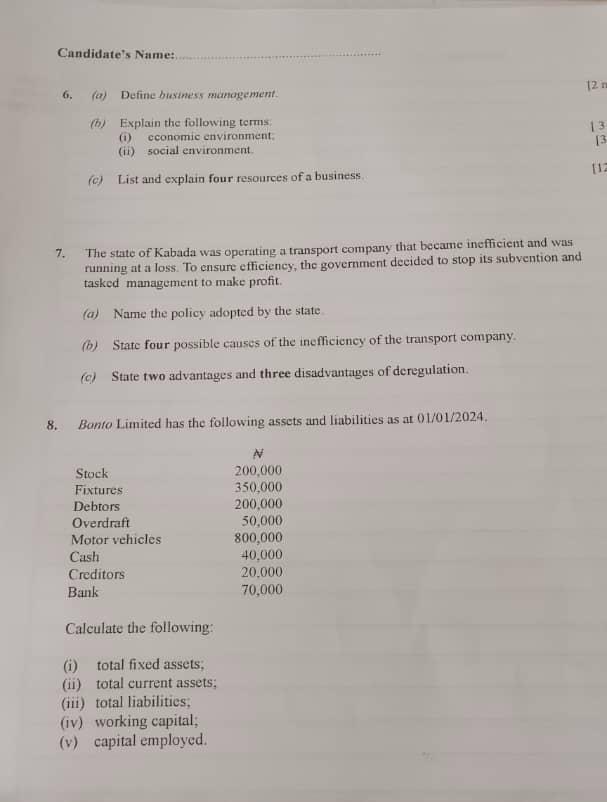
(8)
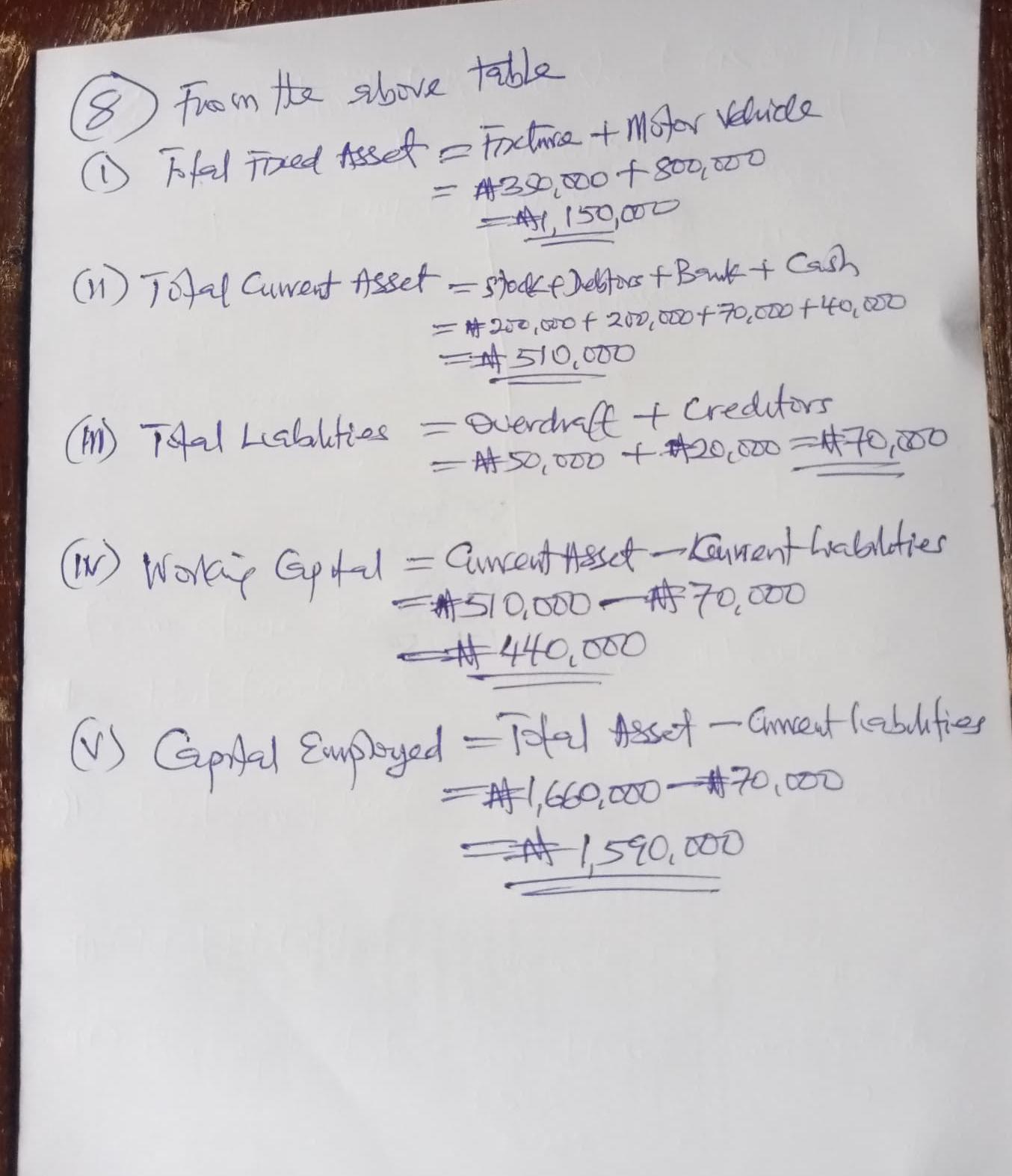
(8) From the above table
(i) Total Fixed Asset = Fixture + Motor Vehicle
= ₦350,000 + ₦800,000
= ₦1,150,000
(ii) Total Current Asset = Stock + Debtors + Bank + Cash
= ₦200,000 + ₦200,000 + ₦70,000 + ₦40,000
= ₦510,000
(iii) Total Liabilities = Overdraft + Creditors
= ₦50,000 + ₦20,000
= ₦70,000
(iv) Working Capital = Current Asset − Current Liabilities
= ₦510,000 − ₦70,000
= ₦440,000
(v) Capital Employed = Total Asset − Current Liabilities
= ₦1,660,000 − ₦70,000
= ₦1,590,000
►COMPLETED!!!.
OBJECTIVES
ESSAY