waec 2026 biology practical answers, waec biology practical 2026 questions and answers, 2026 waec biology practical specimens analysis, real waec biology practical questions 2026, waec biology practical expo 2026 today, 2026 waec biology practical runz, verified waec biology practical past questions, free waec biology practical answers 2026, waec biology practical marking guide 2026, biology food tests waec practical answers, biological drawings guidelines waec biology 2026, adaptive features of biology specimens waec, free waec biology practical answers whatsapp link, waec 2026 biology practical questions pdf, how to get a1 in waec biology practical 2026, test for starch in a leaf waec practical, differences between biology specimens waec questions, waec biology practical yellow paper 2026, waec biology practical theory questions and answers, noniexpo waec biology practical 2026 answers
2026 WAEC BIOLOGY PRACTICAL ANSWERS
For FREE ANSWERS, Join NoniExpo on WhatsApp CHANNEL
Free Midnight Answers ( WAEC, NECO, NABTEB, IJAM..... Never miss an update. Get our latest posts, features, and trends sent straight to your phone!
FOLLOW THE PROCEDURES BELOW TO ENJOY BEST FAST ANSWER DELIVERY
👇👇👇👇👇👇
====================
BIOLOGY PRACTICAL SUBSCRIPTION
- Password/Link Answers (Pay early & Get Early Answers) = ₦1500 MTN CARD
SEND MTN-CARD + SUBJECT TO 09033919669
NOTE; YOU WILL RECEIVE YOUR ANSWERS IMMEDIATELY YOUR PAYMENT IS CONFIRMED
CLICK HERE TO CHAT WITH US DIRECTLY ON WHATSAPP
CHECK OUT OUR PREVIOUS BIOLOGY PRACTICAL - NECO 2025
Friday 27th June, 2025
Biology (Practical) — 10:00 am – 12:00 noon
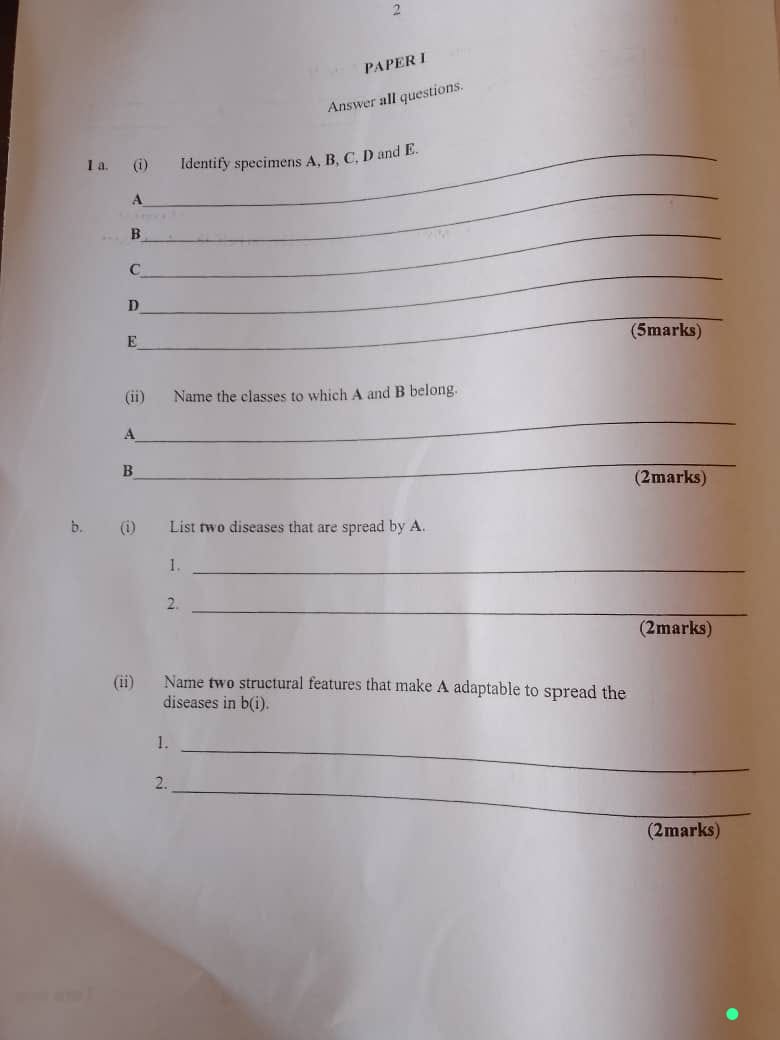
(1ai)
A – Housefly
B – Spider
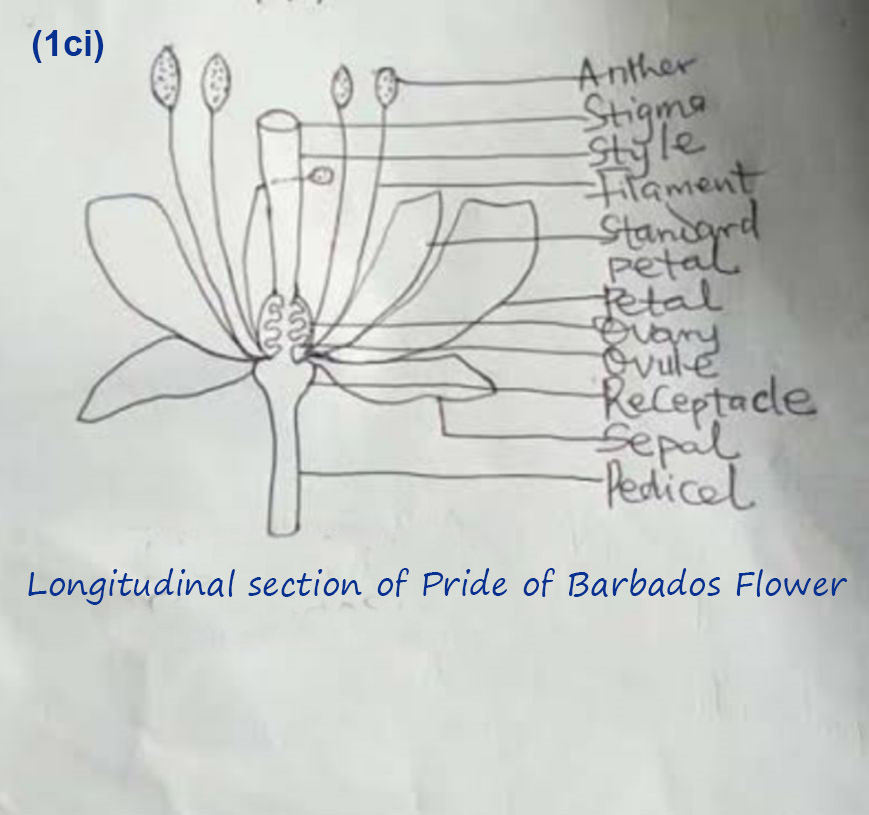
C – Pride of Barbados Flower
D – Bean seed
E – Butterfly
(1aii)
A – Insecta
B – Arachnida
(1bi)
(PICK ANY TWO)
(i) Typhoid fever
(ii) Cholera
(iii) Salmonellosis
(iv) Dysentery
(1bii)
(PICK ANY TWO)
(i) Sticky hairy legs for picking up germs from dirty surfaces
(ii) Sponging mouthparts for feeding on contaminated substances
(iii) Compound eyes for detecting dirty surfaces and locating food sources quickly
(iv) Ability to vomit digestive enzymes on food, which helps transfer pathogens
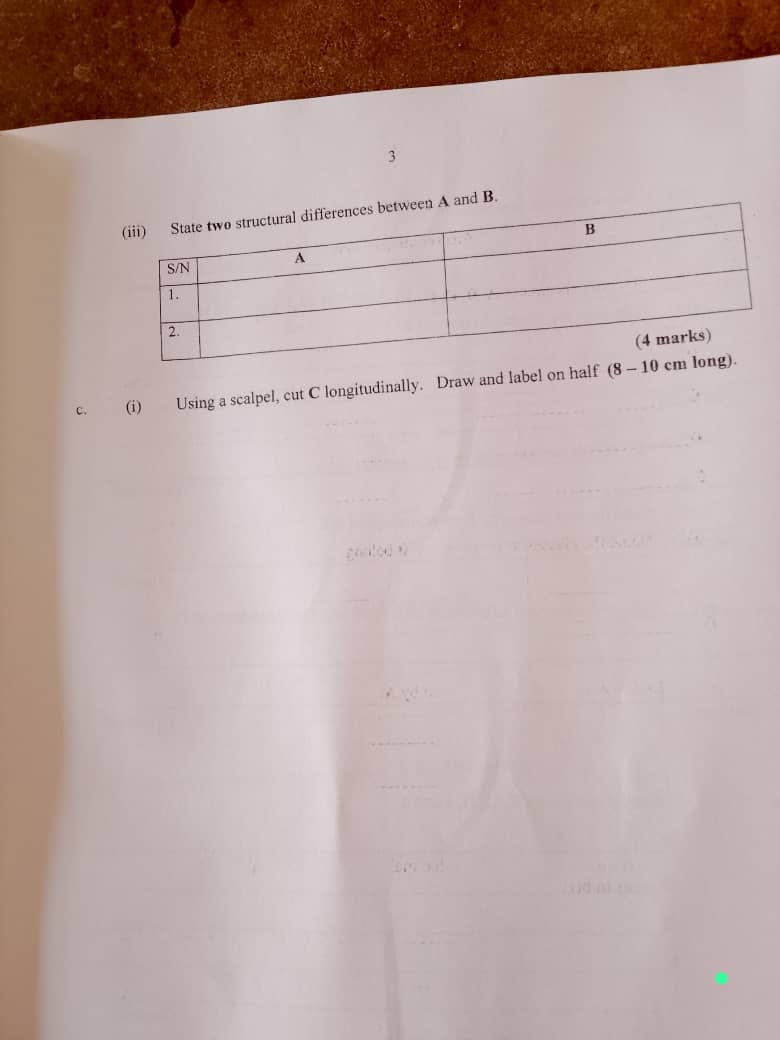
(1biii)
(PICK ANY TWO)
(i) The housefly has one pair of wings while the spider has no wings.
(ii) The housefly has three pairs of legs (six legs) while the spider has four pairs of legs (eight legs).
(iii) The housefly has a pair of compound eyes while the spider has multiple simple eyes.
(iv) The housefly has segmented antennae on its head while the spider has no antennae.
(1ci)
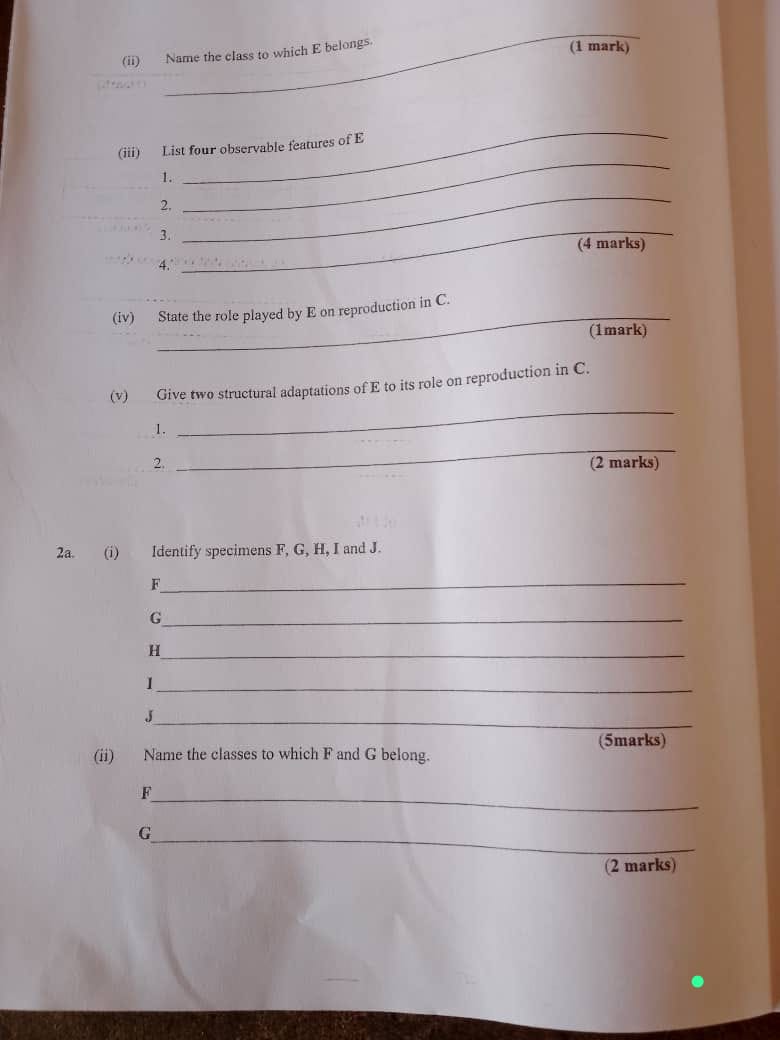
(1cii)
Insecta
(1ciii)
(PICK ANY FOUR)
(i) Two pairs of broad, brightly colored wings
(ii) Slender, segmented antennae
(iii) Three pairs of jointed legs (six legs)
(iv) Long coiled proboscis for sucking nectar
(v) Small head with compound eyes
(vi) Segmented body divided into head, thorax, and abdomen
(1civ)
(PICK ANY ONE)
E helps in the pollination of C by transferring pollen from the anther to the stigma of the flower while feeding on nectar.
OR
E plays a role in the pollination of C by carrying pollen grains from the anther to the stigma as it feeds on the flower’s nectar.
(1cv)
(PICK ANY TWO)
(i) Long coiled proboscis for reaching nectar deep inside the flower, promoting contact with pollen.
(ii) Hairy or feathery body which helps in trapping and transferring pollen grains between flowers.
(iii) Slender legs for perching gently on flowers without damaging the reproductive parts.
(iv) Brightly colored wings which attract the butterfly to flowers that rely on visual pollinators.
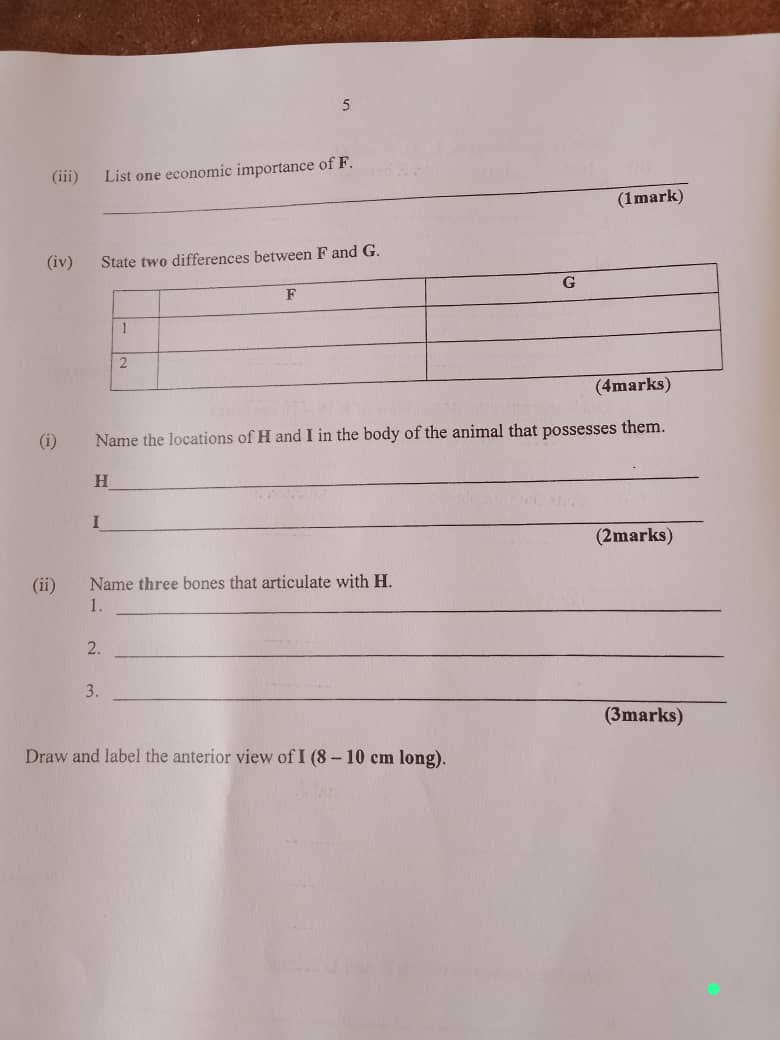
(2ai)
F - Crayfish
G - Grasshopper
H - Humerus of a rabbit
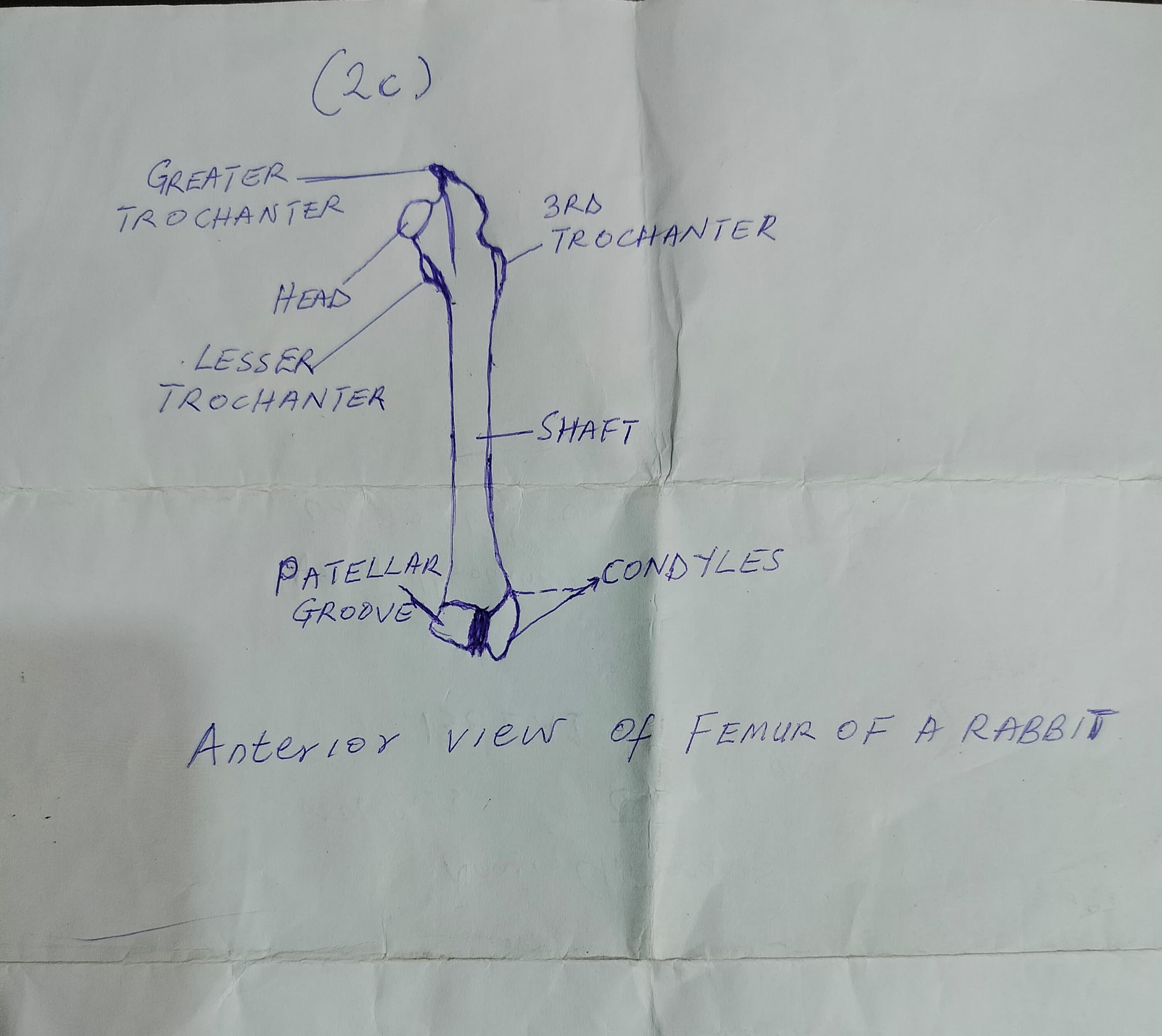
I - Femur of a rabbit
J - Orange fruit
(2aii)
F - Malacostraca
G - Insecta
(2aiii)
(PICK ANY ONE)
(i) It serve as a source of protein-rich food for humans.
(ii) It provides income for fishermen and traders.
(iii) It support the aquaculture and seafood export industry.
(iv) They are used in scientific research and education.
(v) It is used in animal feed production
(2aiv)
(PICK ANY TWO)
F: Lives in water
G: Lives on land.
F: Breathes through gills
G: Breathes through spiracles and tracheae.
F: Has two pairs of antennae.
G: Has one pair
F: Has more than ten legs
G: Has six legs.
(2bi)
H: Located in the forelimb, between the shoulder and the elbow.
I: Located in the hind limb, between the hip and the knee.
(2bii)
(i) Scapula
(ii) Radius
(iii) Ulna
(2c)
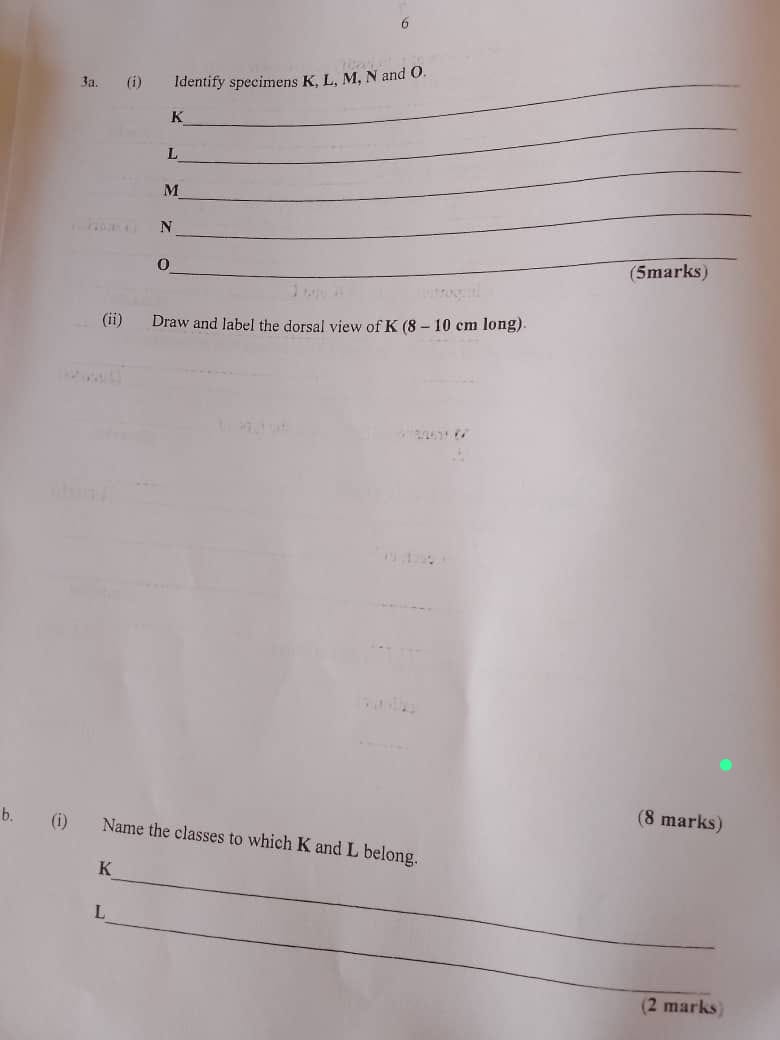
(3ai)
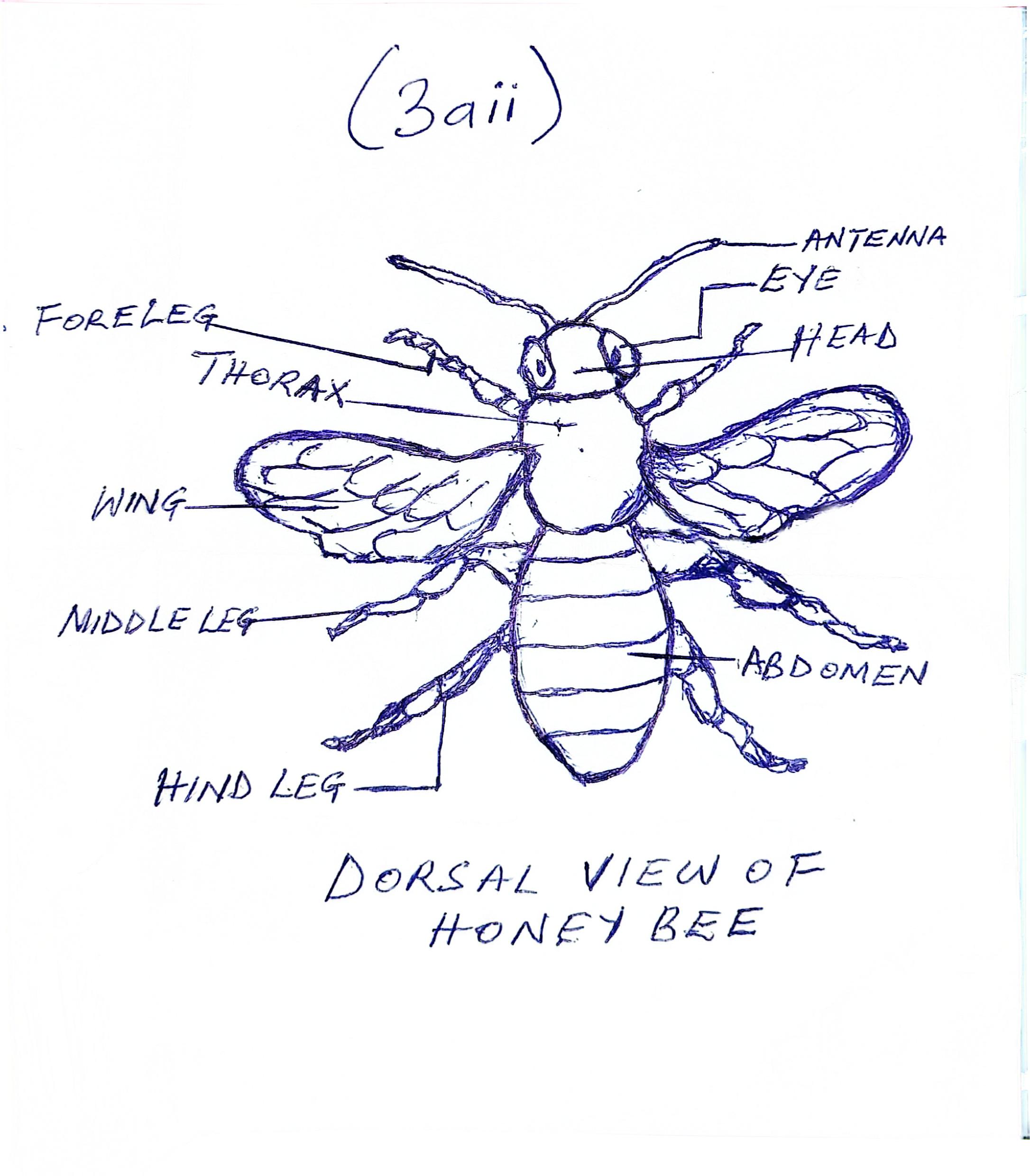
K - Honey Bee
L - Land Snail
M - Guava Fruit
N - Irish Potato tuber
O - Sweet Potato tuber
(3aii)
(3bi)
K: Insecta
L: Gastropoda
(3bii)
(PICK ANY FOUR)
(i) Presence of a coiled shell
(ii) Muscular foot visible for movement
(iii) Two pairs of tentacles on the head
(iv) Slime trail or moist body surface
(v) Soft, unsegmented body
(vi) Eyes located at the tips of the longer tentacles
(vii) Body can retract into the shell for protection
(3biii)
K:
(PICK ONLY ONE)
(i) It help plants grow by pollinating flowers.
(ii) They produce honey, which is used as food.
(iii) Beeswax from their hives is used in candles and cosmetics.
(iv) Beekeeping provides jobs for many people.
L:
(PICK ONLY ONE)
(i) They serve as food
(ii) Snail farming is a good source of income for farmers.
(iii) Its mucus is used in skincare products.
(iv)Their waste helps enrich the soil.
(3biv)
Axile placentation
(3ci)
N: Stem tuber
O: Root tuber
(3cii)
Vegetative propagation
COMPLETED.
SPECIMEN: 👇
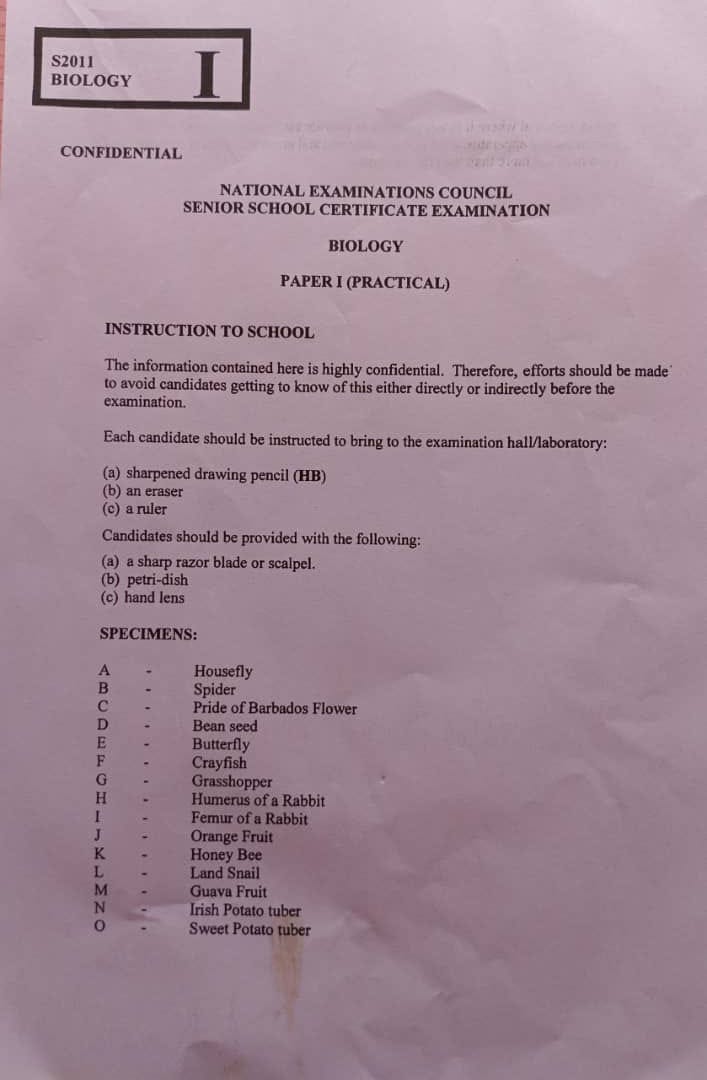
QUESTIONS: 👇