Physical Education (Objective & Essay) — 2:00pm – 4:00pm
PHYSICAL EDU OBJ:
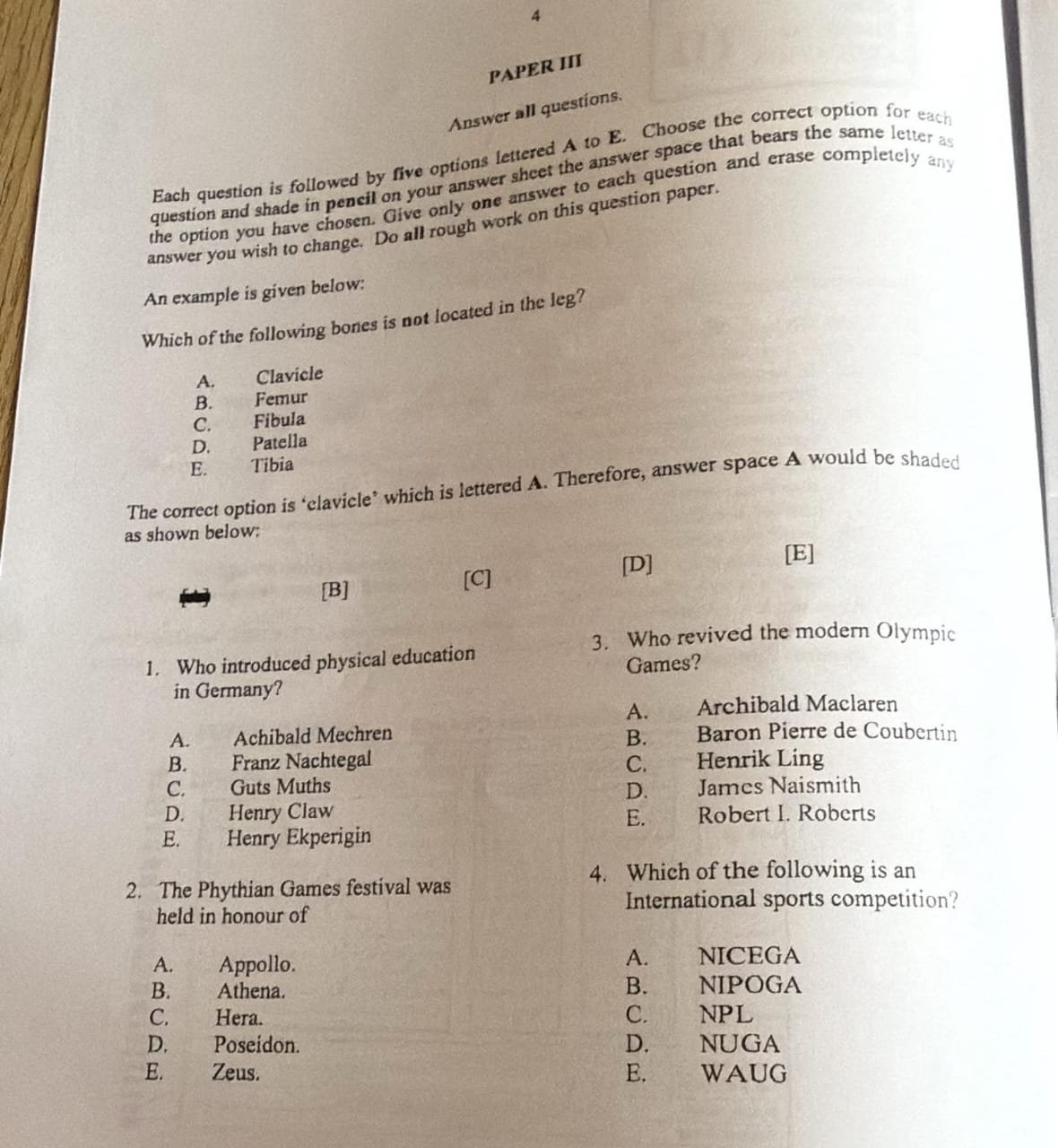
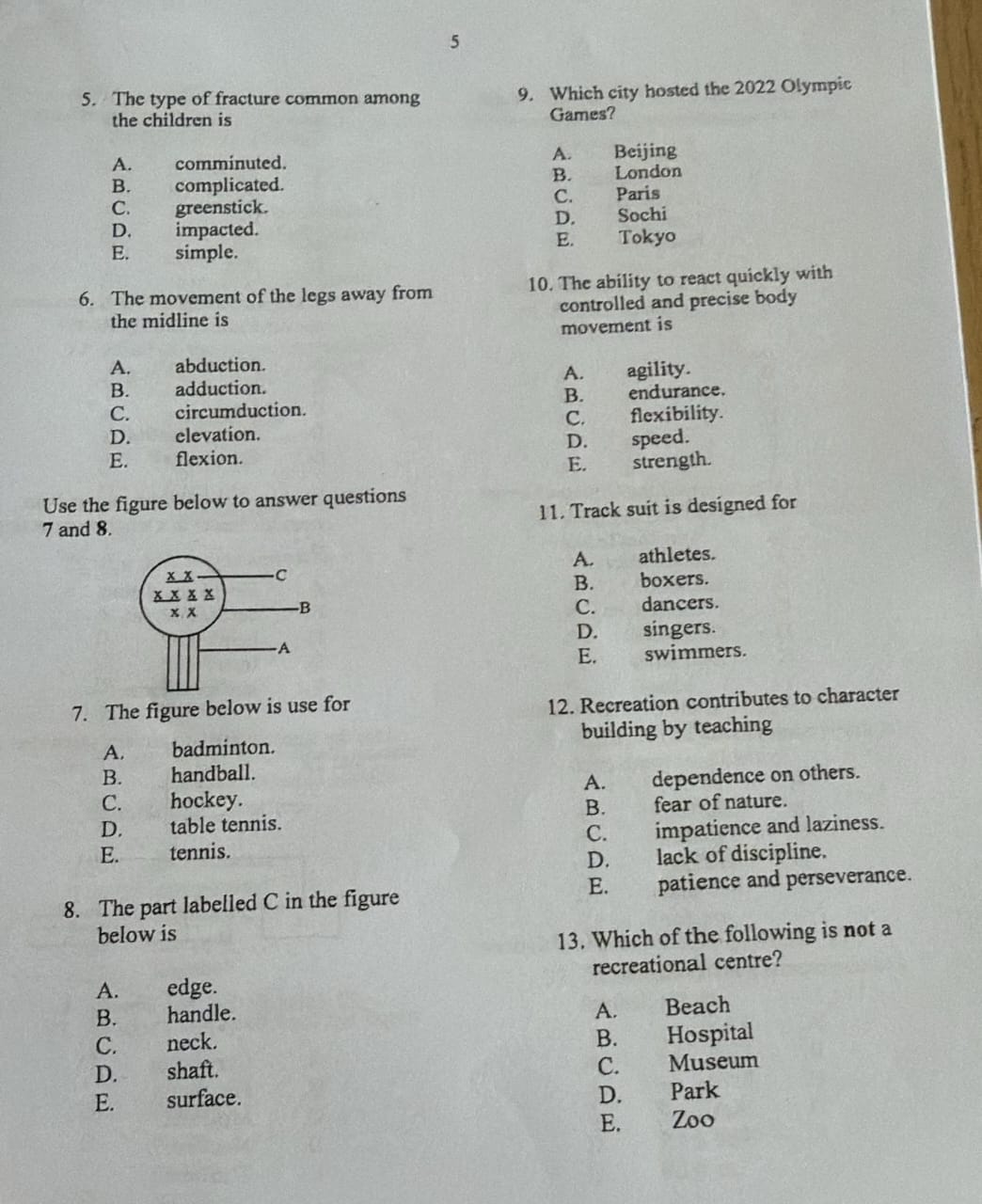
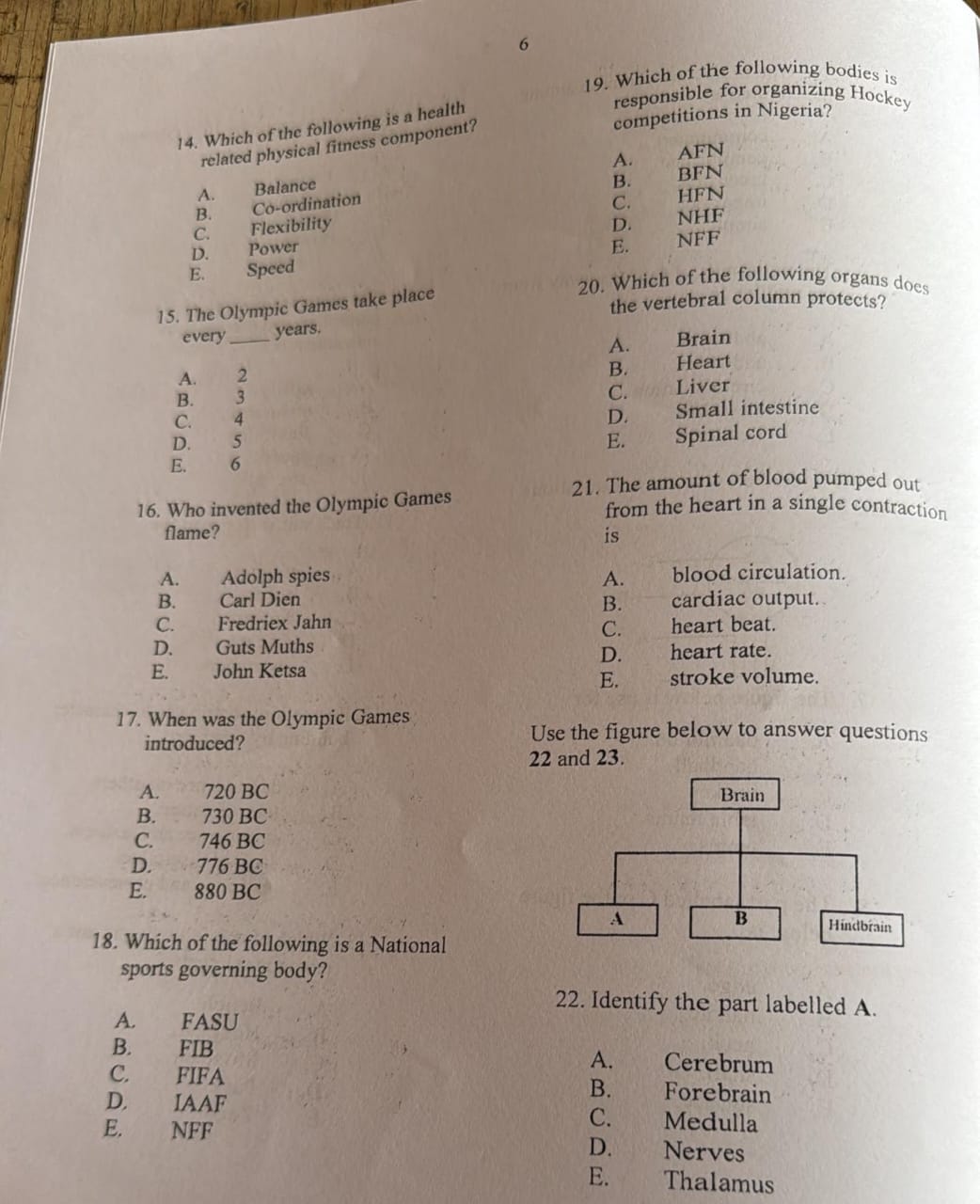
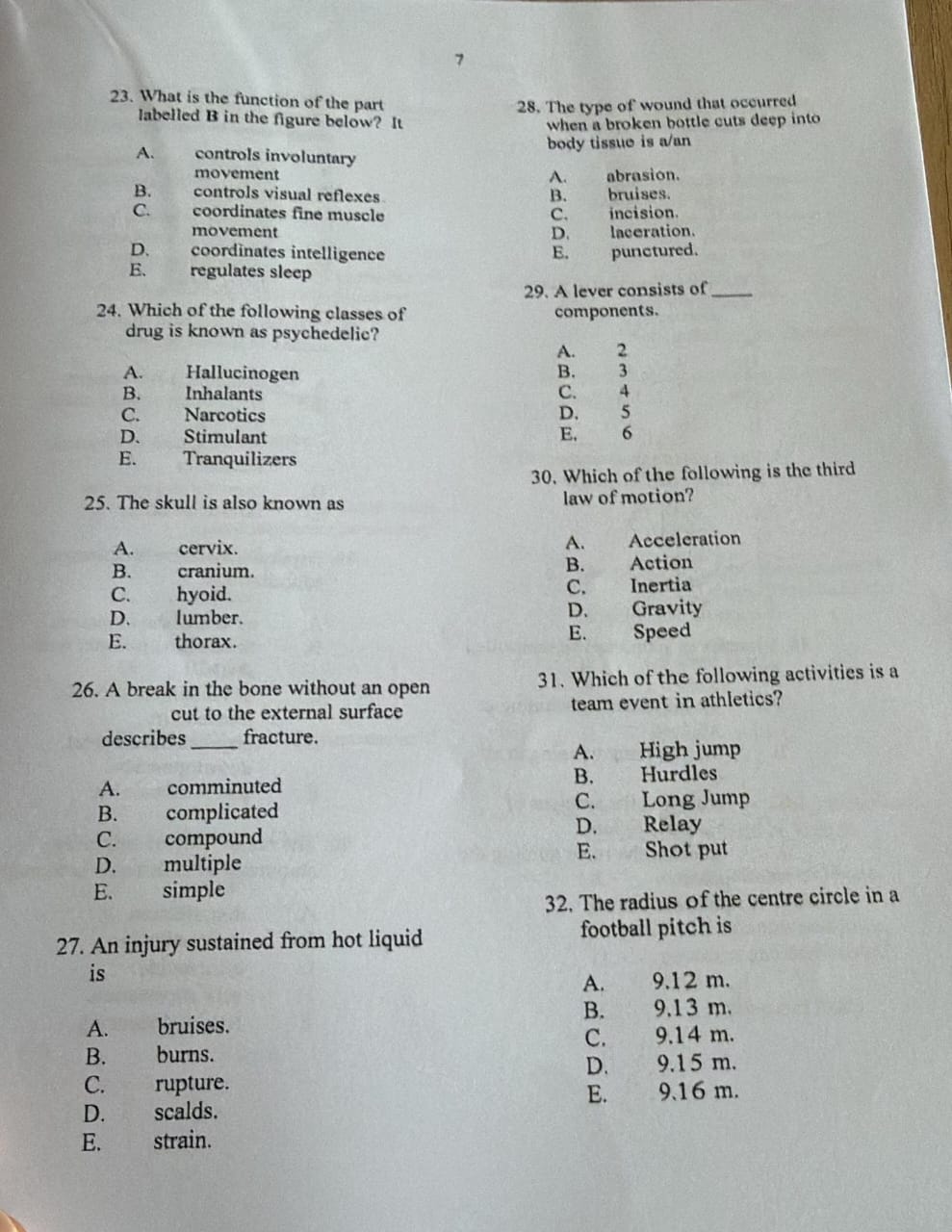
1-10: CABECADCAA11-20: AEBCCBDEDE
21-30: EBBABEDDBD
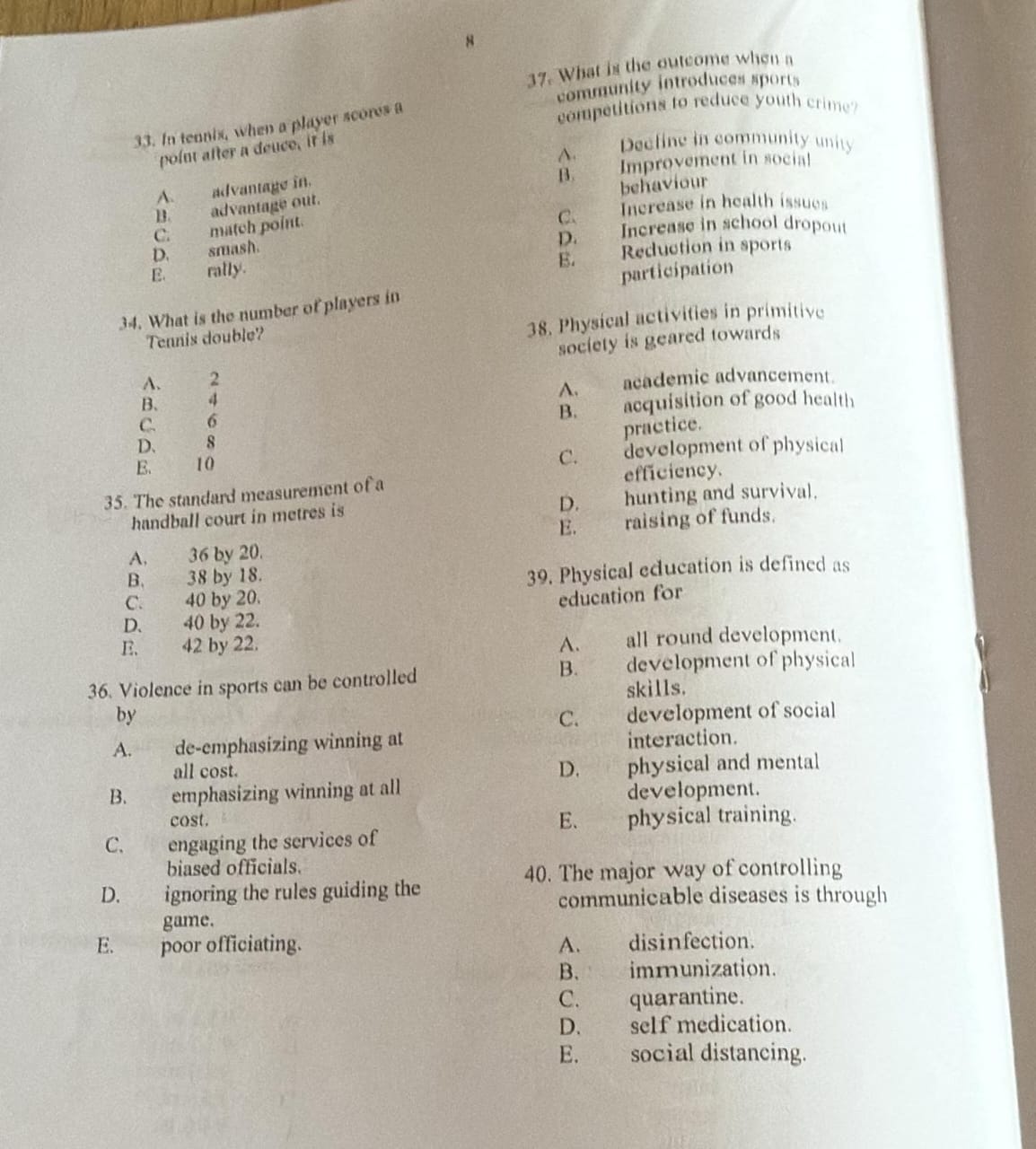
31-40: DDABDABDAB
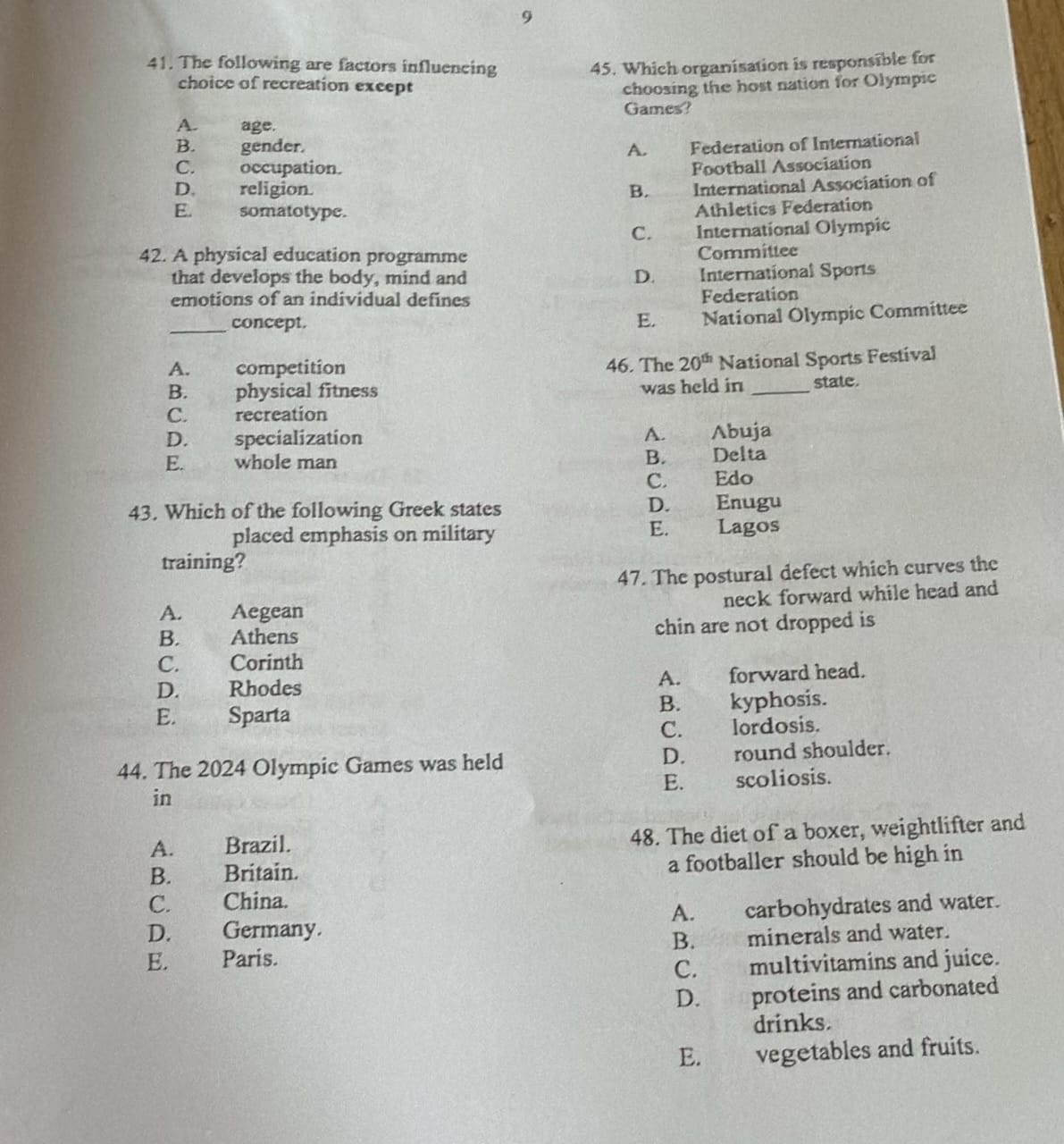
41-50: DEEECCAADE
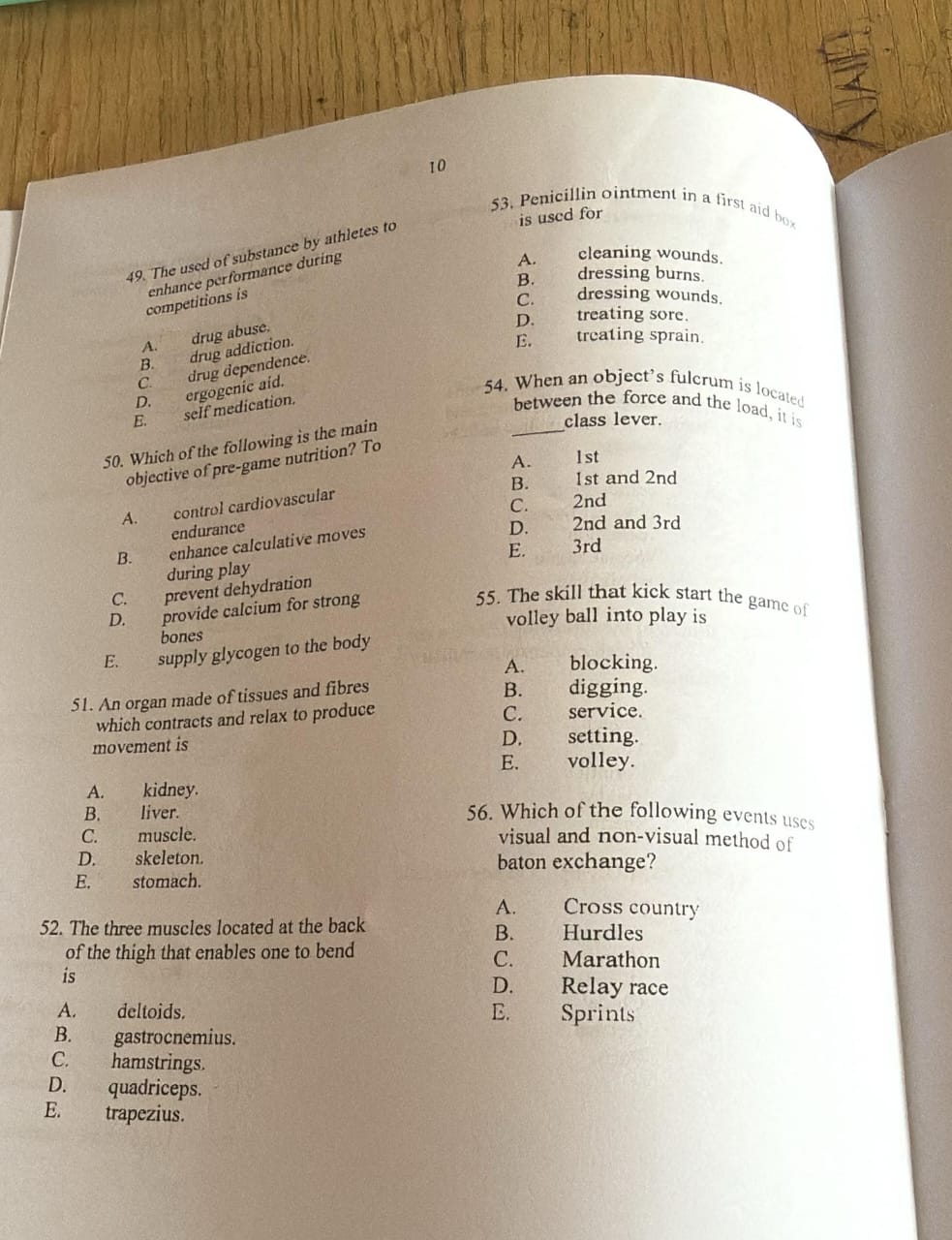
51-60: CCDACDAEEB
(WITH NUMBERING)
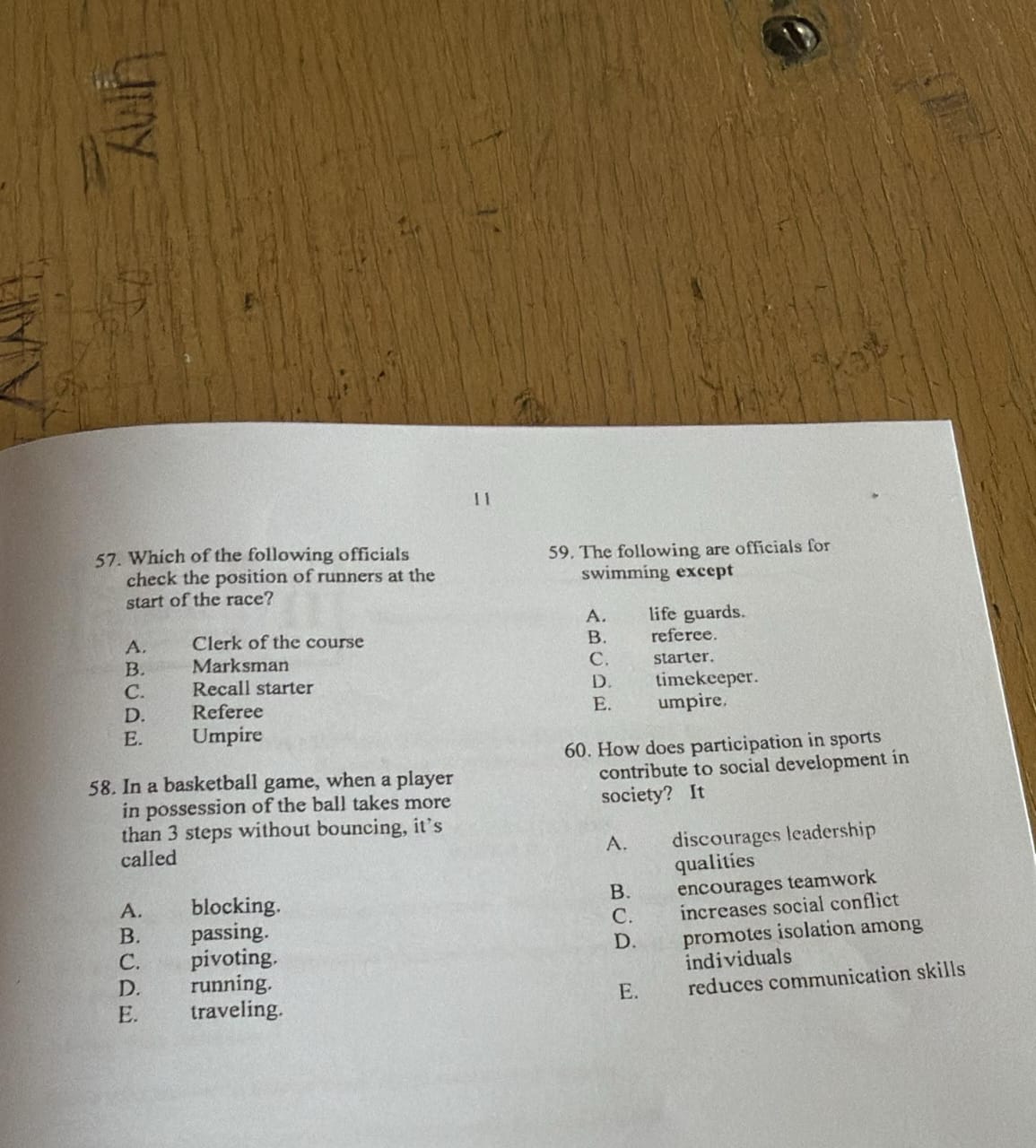
1.C 2.A 3.B 4.E 5.C 6.A 7.D 8.C 9.A 10.A
11.A 12.E 13.B 14.C 15.C 16.B 17.D 18.E 19.D 20.E
21.E 22.B 23.B 24.A 25.B 26.E 27.D 28.D 29.B 30.D
31.D 32.D 33.A 34.B 35.D 36.A 37.B 38.D 39.A 40.B
41.D 42.E 43.E 44.E 45.C 46.C 47.A 48.A 49.D 50.E
51.C 52.C 53.D 54.A 55.C 56.D 57.A 58.E 59.E 60.B
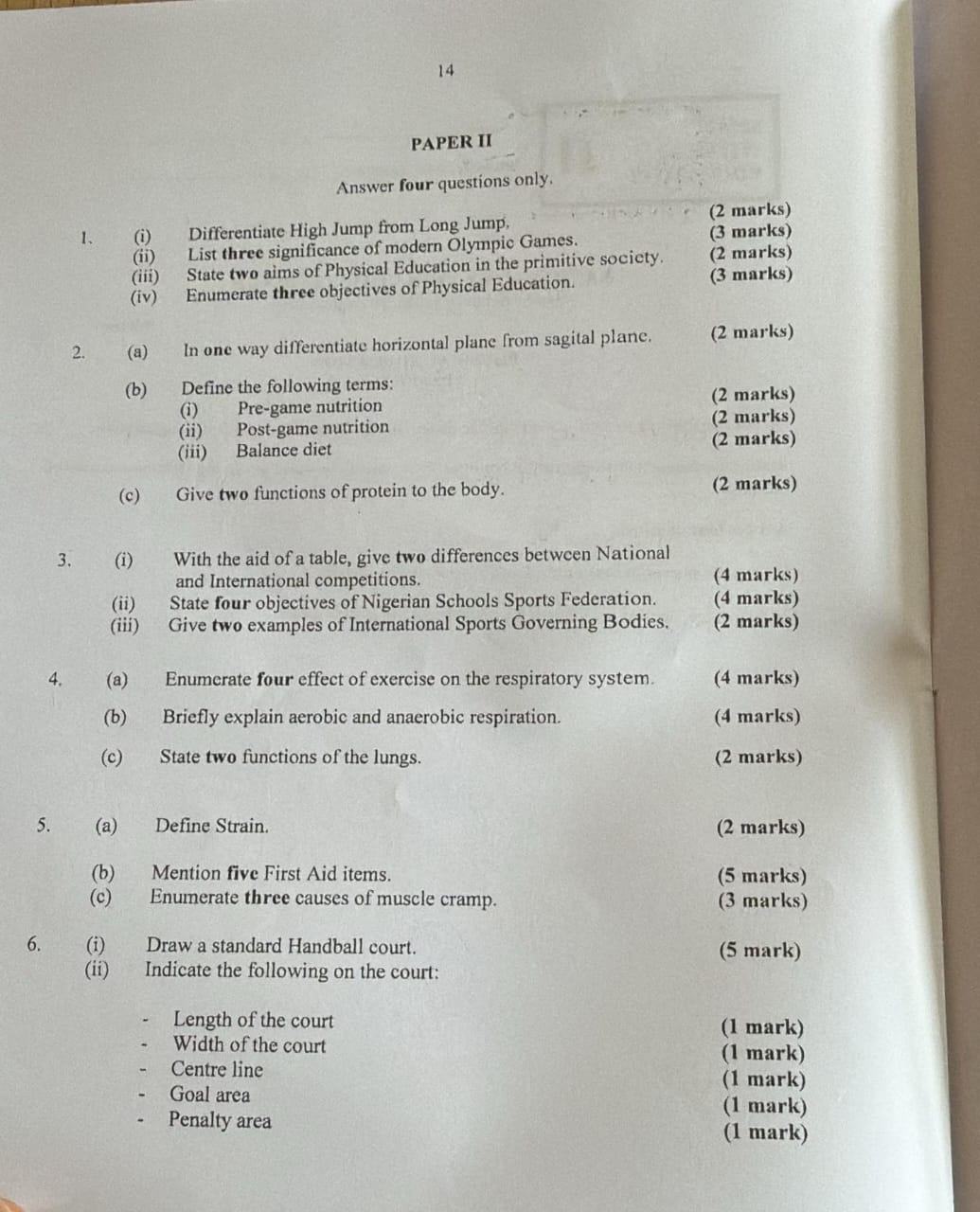
(1i)
High Jump is an athletic event in which an athlete jumps over a horizontal bar without knocking it down, while Long Jump is an athletic event in which an athlete runs and jumps forward to cover the greatest horizontal distance from the take-off board.
(1ii)
(PICK ANY THREE)
(i) Promotes world peace and unity.
(ii) Encourages friendship among nations.
(iii) Develops sportsmanship.
(iv) Promotes physical fitness and good health.
(v) Discovers and nurtures sporting talents.
(vi) Encourages international cooperation.
(vii) Promotes cultural exchange among nations.
(viii) Creates employment opportunities.
(ix) Boosts tourism and economic development.
(x) Inspires youth participation in sports.
(1iii)
(PICK ANY TWO)
(i) To develop hunting skills.
(ii) To prepare people for warfare.
(iii) To promote physical strength and endurance.
(iv) To develop survival skills.
(v) To encourage cooperation within the community.
(vi) To preserve cultural traditions through games and physical activities.
(1iv)
(PICK ANY THREE)
(i) To improve physical fitness.
(ii) To develop motor skills.
(iii) To promote good health.
(iv) To develop social skills and teamwork.
(v) To encourage good sportsmanship.
(vi) To improve emotional stability.
(vii) To develop leadership qualities.
(viii) To promote lifelong participation in physical activities.
(2a)
(PICK ANY ONE)
(i) Horizontal plane divides the body into upper and lower parts, while sagittal plane divides the body into left and right parts.
(ii) Horizontal plane runs across the body from side to side, while sagittal plane runs from the front to the back of the body.
(iii) Horizontal plane is also called the transverse plane, while sagittal plane is also called the median plane.
(iv) Rotational movements occur in the horizontal plane, while forward and backward movements occur in the sagittal plane.
(v) Horizontal plane separates the upper body from the lower body, while sagittal plane separates the left side from the right side.
(vi) Horizontal plane is used to describe twisting movements, while sagittal plane is used to describe bending movements.
(vii) Horizontal plane cuts across the body’s width, while sagittal plane cuts along the body’s length.
(viii) The upper body lies above the horizontal plane, while the right side lies on one side of the sagittal plane.
(ix) Horizontal plane is important in rotational exercises, while sagittal plane is important in walking and running.
(x) Horizontal plane divides the body into superior and inferior parts, while sagittal plane divides the body into left and right parts.
(2bi)
Pre-game nutrition is the food and drinks taken before a sporting activity to provide the body with enough energy and improve performance.
(2bii)
Post-game nutrition is the food and drinks taken after a sporting activity to replace lost nutrients, restore energy, and help the body recover.
(2biii)
A balanced diet is a diet that contains all the essential nutrients in the right proportions needed for good health, growth, and energy.
(2c)
(PICK ANY TWO)
(i) Builds body tissues.
(ii) Repairs worn-out tissues.
(iii) Promotes growth and development.
(iv) Produces enzymes.
(v) Produces hormones.
(vi) Forms antibodies that fight diseases.
(vii) Provides energy when needed.
(viii) Maintains healthy muscles.
(ix) Helps in the formation of blood cells.
(x) Supports normal body functions and metabolism.
(3i)
In a tabular form
=National competitions=
(PICK ANY TWO)
(i) National competitions are held within one country, while international competitions involve many countries.
(ii) National competitions are organized by national sports associations, while international competitions are organized by international sports bodies.
(iii) Only athletes from one country participate in national competitions, while athletes from different countries participate in international competitions.
(iv) National competitions promote sports development within a country, while international competitions promote global sports development.
(v) National competitions use national rules and regulations, while international competitions follow internationally accepted rules.
(vi) National competitions are funded mainly by the national government and local sponsors, while international competitions receive support from international sponsors and organizations.
(vii) National competitions help in selecting national athletes, while international competitions determine the best athletes among nations.
(viii) National competitions are usually less expensive to organize, while international competitions require greater financial resources.
(ix) National competitions are held in different locations within a country, while international competitions are hosted by different countries.
(x) National competitions strengthen national unity, while international competitions promote international friendship and cooperation.
=International competitions=
(PICK ANY TWO)
(i) International competitions involve participants from different countries, while national competitions involve participants from one country only.
(ii) International competitions are organized by international sports organizations, while national competitions are organized by national sports bodies.
(iii) Athletes represent their countries in international competitions, while they represent states, schools, clubs, or regions in national competitions.
(iv) International competitions promote global unity, while national competitions promote national unity.
(v) International competitions follow international rules, while national competitions mainly follow national regulations.
(vi) International competitions attract worldwide media coverage, while national competitions receive mainly local or national coverage.
(vii) International competitions are more competitive, while national competitions are less competitive.
(viii) International competitions require international travel, while national competitions are held within one country.
(ix) International competitions have participants from different cultures, while national competitions involve people of the same country.
(x) International competitions include events such as the Olympic Games and World Championships, while national competitions include national sports festivals and national championships.
(3ii)
(PICK ANY FOUR)
(i) To promote sports among school students.
(ii) To discover and develop young sporting talents.
(iii) To organize school sports competitions.
(iv) To encourage mass participation in sports.
(v) To promote discipline and sportsmanship.
(vi) To prepare students for national and international competitions.
(vii) To improve students’ physical fitness and health.
(viii) To foster unity and friendship among schools.
(ix) To encourage leadership and teamwork among students.
(x) To raise the standard of school sports in Nigeria.
(3iii)
(PICK ANY TWO)
(i) International Olympic Committee (IOC)
(ii) Fédération Internationale de Football Association (FIFA)
(iii) World Athletics
(iv) World Aquatics
(v) International Basketball Federation
(vi) Badminton World Federation
(vii) International Tennis Federation
(viii) World Rugby
(ix) International Volleyball Federation
(x) World Taekwondo
(4a)
(PICK ANY FOUR)
(i) Increases the rate of breathing during exercise.
(ii) Improves lung capacity.
(iii) Strengthens the respiratory muscles.
(iv) Increases oxygen intake into the body.
(v) Improves carbon dioxide removal from the body.
(vi) Enhances the efficiency of the lungs.
(vii) Improves oxygen supply to body tissues.
(viii) Increases respiratory endurance.
(ix) Reduces the risk of respiratory diseases.
(x) Improves overall respiratory function and fitness.
(4b)
Aerobic respiration is the process by which the body breaks down food in the presence of oxygen to release energy for muscular activities. It usually occurs during light or prolonged exercise.
WHILE
Anaerobic respiration is the process by which the body releases energy from food without using oxygen. It occurs during short, vigorous activities and produces lactic acid, which may cause muscle fatigue.
(4c)
(PICK ANY TWO)
(i) To take in oxygen during breathing.
(ii) To remove carbon dioxide from the body.
(iii) To exchange gases between the blood and the air.
(iv) To help maintain the body’s acid-base balance.
(v) To filter harmful particles from inhaled air.
(vi) To supply oxygen needed for energy production in body cells.
(5a)
Strain is an injury caused by the overstretching or tearing of a muscle or tendon, usually as a result of excessive force or overuse.
(5b)
(PICK ANY FIVE)
(i) Bandage.
(ii) Cotton wool.
(iii) Adhesive plaster.
(iv) Antiseptic solution.
(v) Scissors.
(vi) Safety pins.
(vii) Disposable gloves.
(viii) Thermometer.
(ix) Triangular bandage.
(x) First aid box.
(5c)
(PICK ANY THREE)
(i) Muscle fatigue.
(ii) Dehydration.
(iii) Excessive exercise.
(iv) Poor blood circulation.
(v) Lack of body salts (electrolytes).
(vi) Inadequate warm-up before exercise.
(vii) Prolonged standing or sitting.
(viii) Poor physical fitness.
(ix) Muscle overuse.
(x) Poor nutrition.
(6)
COMPLETED!!